
Experts point to the higher contribution of rural from the north for the growth reported by the region, a point endorsed by companies who've been pushing their presence aggressively there.
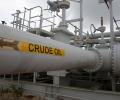
There is positive correlation between crude oil prices and Indian equities and investors can expect more upside after the recent rally in Brent crude price.

India Inc's cash pile was up 13.8 per cent last fiscal year, thanks to a combination of higher profits in sectors such as IT and fund raising by top companies such a Reliance Industries, Bharti Airtel and Tata Motors, among others.

After Maharashtra, analysts expect more states like Karnataka and Haryana to slash stamp duty rates. However, analysts, do caution that it's still a long road to recovery for the realty sector.

The combined profit before tax of 748 companies, which have declared their results for Q1FY21, is down 46 per cent YoY. Their net sales went down by a quarter as the Covid-19 lockdown led to a sharp fall in economic activity.

While sales momentum from rural areas may last another three to six months, sales growth in urban areas could stage a comeback by next year's June quarter as people learn to live with the coronavirus and economic activity gradually improves in the cities.

Puneet Wadhwa and Debashish Pachal locate real estate stocks to watch out for.

The S&P BSE Small-cap index has recovered 26 per cent as compared to a 23 per cent rise in the S&P BSE Sensex.

In the last one year, the Sensex has fallen 2.17 per cent, while the BSE midcap index has risen 2.08 per cent. And, there is scope for value picking that can yield good returns.

Not surprisingly, equity investors are bidding-up stock prices across sectors and the broader market is now more valuable than pre-Covid levels.

The firm would require it to more than triple its CAGR of revenue to 18.5% for the next decade from 6%

The trend in corporate earnings suggests that index earnings could fall to the levels last seen in early 2014.

Between now and the general elections (likely in May 2019) there are 12 assembly polls, which analysts say, in a way will also be interpreted as a referendum on the Modi-led government's key reforms

In three of the past four years, 10-year returns have been 10 per cent or lower, making equity unattractive, compared to other asset classes.

BSE PSU index rallies 10% in one month; nearly a third of the stocks on the index has gained 20% over the period

'The recent price hike would only be beneficial if the airlines continue to operate at 80 per cent airline capacity. An increase towards 90 or 100 per cent airline capacity would again add pressure to the fares as demand remains muted. Also, we are in the fourth quarter of the fiscal year which is a seasonally weaker quarter,' says an analyst.
The proposal to increase public float, hike income tax surcharge, move to tax share buybacks and lack of stimulus to shore up economic growth has hurt investor sentiment.

In the past two months alone, four companies have garnered a cumulative Rs 22,400 crore via this route.

Gold, which was hovering around $1,321 an ounce in January 2019, has already breached $1,600 per ounce in the past few sessions to a seven-year high.

'Kerala isn't as dependent on agriculture like Bihar or Odisha or even other southern states.' 'Economic losses would not be too intense, unlike other states.' 'The floods could, at best, impact India Inc's earnings for a quarter or two.'

Traditionally, most PSUs have been cash-rich, which added to their value. However, the government has been tapping regularly into their cash resources to boost revenue for the exchequer

The combined assets of the top five - Tata Consultancy Services (TCS), Infosys Technologies, Wipro, HCL Technologies and Tech Mahindra were down one per cent to Rs 27,7400 crore at the end of 2017-18, from Rs 28,0100 crore a year before.

While companies have not launched too many products in rural areas of late, easy financing has helped push up demand.

Equity markets in Pakistan and Bangladesh are tiny compared to the market capitalisation of the Indian equity market.

The Street was hoping that investors will lap up shares of high-dividend companies on optimism that their payouts will increase further, thanks to the 20 per cent tax saving. However, the trade failed to materialise as wealthy investors stayed away fearing high tax outgo, and experts raised doubts on whether companies would actually increase cash dole outs.

Indians face COVID-19 with record debt, stalled income.

The polls are being viewed as a run-up to the general elections scheduled for May 2019 and will test the popularity of the government and its policies amid rising crude oil prices


The current valuation is 38 per cent higher than the 10-year average of 22x and over 50 per cent higher than the 20-year average of around 20x.

Automobile company Tata Motors, metals and mining major Vedanta, oil marketing firm Bharat Petroleum Corporation (BPCL), private sector IndusInd Bank, and two-wheeler major Bajaj Auto have witnessed their market cap slip below the Rs 1-trillion mark this year.

Direct investors should stagger their investments over 1-2 months.
Nasik: Incessant rain continues, Godavari in spate

The markets had been on an upward trajectory since August 2013.
So far in September, the S&P BSE Small-cap index has gained nearly 3 per cent as compared to a modest 0.2 per cent dip in the S&P BSE Sensex.

Government-owned companies are more generous in rewarding their shareholders with dividends.

Combined net profit of BSE500 companies at $ 63 bn is 2.3% of GDP; global average is 5%.

The sentiment around Indian equities remains positive and unchanged.

India on track to be third largest consumer economy by 2025.

Rising oil prices and diminishing cash pile to limit capacity in 2018-19

The country's top FMCG stocks, such as Hindustan Unilever, ITC, Nestl, Britannia, Godrej Consumer Products, and Dabur, among others, are currently trading at around 41x their trailing 12-month earnings, down from their peak P/E multiple of around 48x at the end of December 2018.
