
By financial year 2024-25, Morgan Stanley expects per capita income to rise 125 per cent to $3,650.

Gandhi took a swipe at the government on Twitter by tagging a chart that showed IMF growth projections for 2020-21 for Bangladesh, Myanmar, Nepal, China, Bhutan, Pakistan, Sri Lanka, Afghanistan and India.

This will cost the government Rs 3.1 trillion, about 10 per cent of its annual expenditure, and higher than any other spending item in its Budget.

The words 'industry', 'industrial development', 'jobs', and 'employment' have been ringing with higher frequency since Mamata Banerjee stepped into her third term with landslide victory after a high-octane election last year. "Our government's next target is industrial development," the chief minister (CM) had been heard stating at different public meetings in the past few months - perhaps setting the tone for the sixth edition of the Bengal Global Business Summit (BGBS) slated for later this month. Investor summits by any state are about intent, big numbers, and tall claims. Yet in competitive federalism, its importance as a marketing tool is undeniable.
'India's output contraction in the previous year was among the worst in the world!'
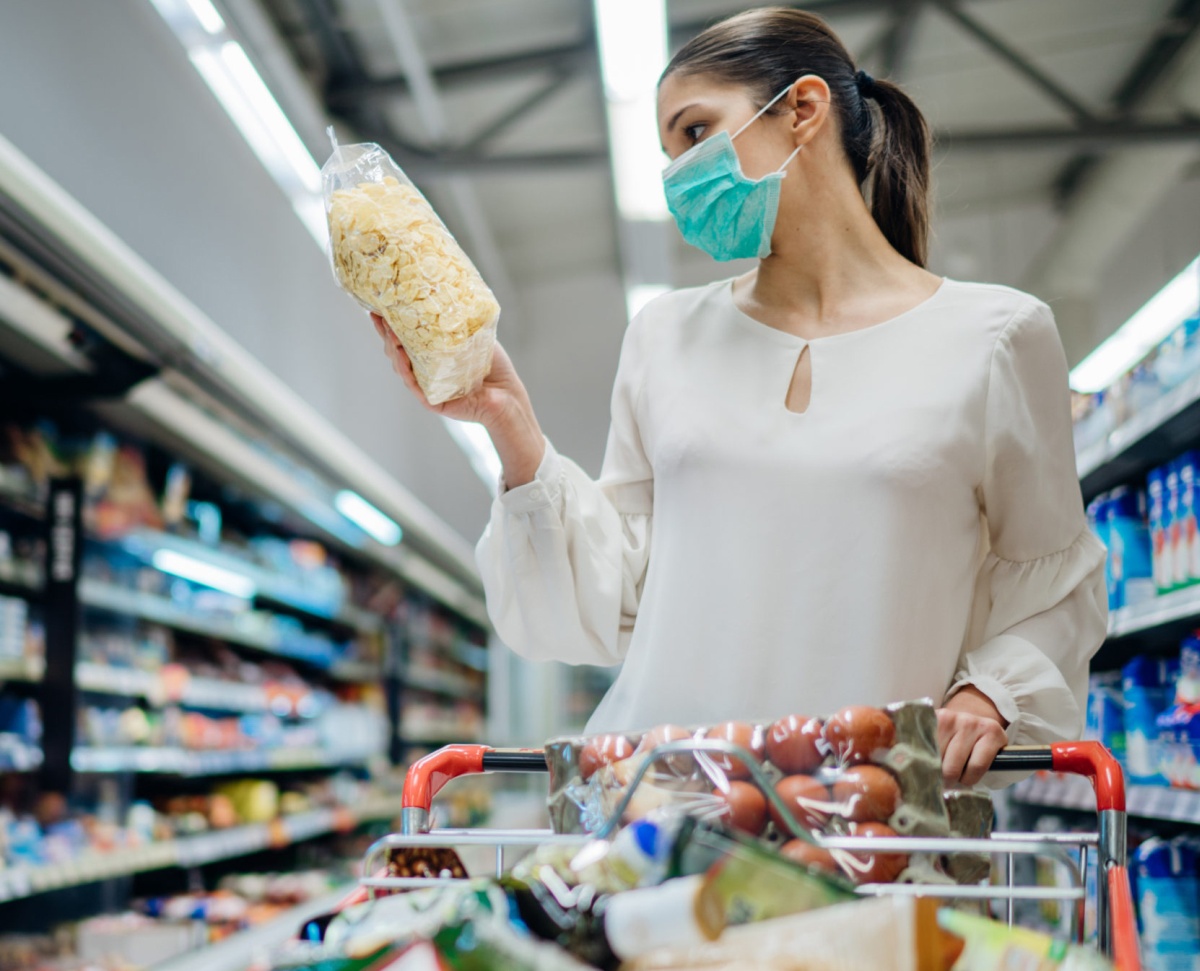
The biggest headwind to the consumption story in FY23 is a sharp decline in government subsidies on food, fertiliser and fuel, and overall decline in revenue expenditure net of interest payments. This, analysts say, will adversely impact purchasing power of households at the lower end of the income pyramid, translating into lower spending on consumer goods and services.
The correlation between withdrawal of deposits and the Covid death rate is stark, reveals Tamal Bandyopadhyay.
Making a case for an optimal fiscal stance, the Economic Survey on Friday said growth leads to debt sustainability and not necessarily vice-versa. "This is because debt sustainability depends on the 'Interest Rate Growth Rate Differential' (IRGD) i.e. the difference between the interest rate and the growth rate in an economy. "With the Indian context of potential high growth, the interest rate on debt paid by the Indian government has been less than India's growth rate by norm, not by exception," it said.

On the heels of the National Family Health Survey-5 (NFHS-5), which revealed new demographic trajectories including the replacement level of fertility, the government will, on Monday, unveil extensive economic data related to health and the broader economy. New data will relate to per capita spending on health and proportions of the GDP to health spending. Health ministry sources said the NFHS-5 marked some areas for celebration but also some markers that should cause concern.
According to a new report by international management consulting firm Arthur D Little, the worst of COVID-19's impact will be felt by India's most vulnerable in terms of job loss, poverty increase and reduced per-capita income, which in turn will result in a steep decline in the Gross Domestic Product (GDP). "Given the continued rise of COVID-19 cases, we believe that a W-shaped recovery is the most likely scenario for India. This implies a GDP contraction of 10.8 per cent in FY 2020-21 and GDP growth of 0.8 per cent in FY 2021-22," the report said.

India ranks 83, among 166 countries, in spending on mobile rates

The story of Iceland is the story of life, notes Payal Singh Mohanka after a recent journey to that fascinating land.

In the excitement over the allocation of bank licences for the private sector, a new category of licence offered by the Reserve Bank of India (RBI) last year went almost unnoticed. That was when the RBI consolidated the rules for prepaid payment instruments (PPI), popularly understood as e-wallets or gift cards. In the process, the regulator has fast-forwarded a bottom-up card usage industry in India that is completely different from the world of bank-linked credit and debit cards.

'God has given me everything -- wealth, success, a good wife and good friends. I wish He gives me good health.'

The new data comes a day after China and the US signed a long-awaited phase one deal, marking a ceasefire in the 18-month-long trade war which saw the world's two largest economies slap 25 per cent tariffs on about half a trillion-dollar worth of each other's exports. The world's second-largest economy grew by 6.1 per cent last year, its worst performance since 1990, but it remained above the psychologically important mark of six per cent, according to the National Bureau of Statistics (NBS).

The share of total health expenditure as part of the gross domestic product (GDP) went down to 3.3 per cent in 2017-18 from 3.8 per cent in the previous two years, according to the national health account data released on Monday by the health ministry. The share of government expenditure as part of total expenditure as well as GDP has gone up from from 3.78 per cent to 5.12 per cent between 2013-14 and 2017-18, which could also explain a decline seen in out of pocket expenditure in 2017-18. Health ministry also emphasised the increase in the government health expenditure as part of the total GDP from 1.15 per cent in 2013-14 to 1.35 per cent in 2017-18.

One third of the world's poor live in India.

Recently, The World Bank has come up with the latest figures on the wealthiest countries in the world.

Though COVID-19 and the subsequent lockdown left a trail of economic devastation on most countries, India can potentially build upon three positive aspects - push in the rural economy, stronger federalism and a huge consumption base, former RBI Governor Duvvuri Subbarao Rao has said. In his foreword on a Telugu book titled "Maandhyam Mungita Desam" (Nation in Recession) authored by Tummala Kishore, he said the challenge for the government in the months and years ahead is clear: to put the economy back on a healthy growth trajectory and ensure that growth is inclusive, with lower income households too enjoying the benefits of rapid growth.

'China's development is on a different scale from India's. They are very far ahead.' 'I don't think it will be possible in the next 30 years for us to catch them,' says Aakar Patel.

Fitch Solutions on Thursday said the new climate targets announced at the COP26 summit by Prime minister Narendra Modi pose an upside risk to its outlook for renewable growth in the country. With the new targets, it expected to see attempts to alleviate the issues regarding supply chains, manufacturing and project development that have long plagued renewable proliferation.

'While consumers have benefited tremendously from rock-bottom telecom tariffs, the telecom sector has been reeling under deep financial stress,' points out Rajan S Mathews, director general, Cellular Operators Association of India.

The number of Indians over 15 either working or looking for work is lower as a percentage than in the United States, China, Bangladesh or Pakistan, points out Aakar Patel.

With 56,000 dollar-millionaire households, Maharashtra leads the country in wealth creation followed by Uttar Pradesh, Tamil Nadu, Karnataka and Gujarat, says a report. These states together account for 46 per cent of the 4.12-lakh millionaire households in the country. According to a wealth report by Hurun India, known for its annual rich list, there were 4.12 lakh dollar-millionaire households last year in the country, which has been one of the fastest wealth-creating economies producing the third-most number of billionaires annually.
India has been ranked 134th among 189 countries in the World Bank's Doing Business 2014 report.

The European Union's GDP (gross domestic product) at market prices is the highest in the world, with the UK having the second largest share in it.
The poverty ratio was highest in Chhattisgarh at 39.93 per cent.

The hike in the budget is the lowest increment in recent years apparently due to the heavy disruption caused to its economy by the COVID-19, according to the official media.

Indian Oil Corporation (IOC) and two other public sector oil firms will install 22,000 electric vehicle (EV) charging stations over the next 3-5 years to support the nation's target to reduce its carbon intensity and reach net zero emissions by 2070. IOC, the country's largest state-controlled refiner by capacity, will set up EV charging facilities at 10,000 fuel outlets over the next three years, chairman Shrikant Madhav Vaidya said. Bharat Petroleum Corporation Ltd (BPCL) said it will set up 7,000 stations over the next five years while Hindustan Petroleum Corporation Ltd (HPCL) has plans for 5,000 stations.

'Health will continue to be at the centre of the government's attention as it underpins economic recovery and our collective well being.'

Singapore Grand Prix promoters have ruled out holding their Formula One race without spectators, casting further uncertainty over the likelihood of the September event going ahead. Formula One plans to start its stalled season in July with races behind closed doors in Austria and Britain due to the coronavirus pandemic.

As a politician, Yadav is amiable and a consensus-maker, not hamstrung by dogma.

You can make all the speeches you want, you cannot argue against 39 straight months of slowing, observes Aakar Patel.
Where do Indian workers stand when it comes to per capita income around the world?
Money allocated for rural India has increased, but expenditure of panchayats is not adequate and inconsistent

To propel demand, one should concentrate on indirect taxes and bring down the goods and services tax (GST) rates to a uniform 12 per cent as the Vijay Kelkar panel had recommended, said Ajit Ranade, chief economist at Aditya Birla Group.

India has much paranoia in India about a new 'Terroristan' coming up between Pakistan and a Taliban-ruled Afghanistan. Pakistan has zero ability economically, diplomatically, geostrategically or militarily to create one. If they try, it will be great for India as they will destroy themselves yet again, asserts Shekhar Gupta.

While India is witnessing slowdown, many countries have not yet been able to come off the last decade's financial crisis.
High inflation, unemployment, high interest rates and falling GDP per capita are wrecking havoc in economies across the world.

Senior Congress leader Shashi Tharoor on Tuesday attacked the Centre over the glitches in the new income tax portal, alleging that even after spending Rs 4,200 crore on it, the government had "failed" to make it user-friendly and created a "mess" instead.
 © 2026 Rediff.com - Advertise with us - Disclaimer - Privacy Policy - Sitemap - Feedback - About us - Terms of use - Grievances