
BMW is over-capitalised and is awash with cash and it could quickly lower JLR's investment costs and raise margins by leveraging its own platforms, powertrains, purchasing scale and quality control.

Foreign portfolio investors (FPIs) and mutual funds (MFs) have put in more money as anchor investors in initial public offerings (IPOs) in 2021 than any other year. FPIs' share of investments for the year stood at Rs 24,477 crore, nearly six times that put in last year and more than nine times the amount invested in 2019, the data from Prime Database showed. MFs have invested Rs 12,264 crore, four times than that invested last year and more than 10 times the investment in 2019. The total investment by FPIs and MFs put together this year is five times the amount invested last year. The amount contributed by MFs, however, is nearly half of that invested by FPIs.

In the past 10 trading sessions, shares of the state-owned company have shot up more than 50 per cent.

The firm is on course to replace state-owned Gail India in the widely-followed index during the semi-annual review set for March.

Pegging the cost of the covid-19 lockdown at USD 120 billion (approximately Rs 9 lakh crores) or 4 per cent of the GDP, analysts on Wednesday sharply cut their growth estimates and stressed on the need to announce an economic package. The Reserve Bank of India (RBI), which is scheduled to announce its first bi-monthly policy review on April 3, is set to deliver a deep rate cuts and it should also be assumed that the fiscal deficit targets will be breached, analysts said.

Categories such as washing machines, refrigerators and television sets have seen sales growth of around 8-10 per cent in August compared to last year, industry sources said, with September also reporting a similar growth trajectory.

This is the fastest the markets have taken to get out of bottom, compared to previous crises.

Having exposure to international funds and gold is a must for those who have foreign currency-denominated goals.

'Largely, new demat accounts are now being opened by the younger crowd, particularly GenZ.' 'This is great news since younger investors start their journey with very little capital, so they are risking less.'

It is the biggest issue we have ever faced in the securities market, where a sensitive and systemically important institution and first-line regulator was not only exploited by unscrupulous elements but functioned like a private fief, points out Debashis Basu.

As share of cash volumes in trading mix sees decline, it will result in moderation of profitability from core broking operations.

Channel partners have started adding more value in marketing and sales. They are increasingly acting as advisors -- sales professionals than brokers.

One of the biggest advantages of index funds and ETFs is their low cost, points out Sarbajeet K Sen.

Shares of HCL Tech hit a fresh record high of Rs 1,118.55 on Friday, up 2 per cent on the BSE in intra-day trade, surpassing its previous high of Rs 1,101 touched on Thursday in intra-day deals.

The order, a "negative" overall, will be a short term positive for corporate focused state-run and private lenders because of the possibility of delaying incremental stressed asset recognition.

Citing the massive surge in Omicron infections and the resultant impact on overall economic activities in the March quarter, Swiss brokerage UBS Securities has revised downwards its India's growth forecast for the current financial year to 9.1 per cent from 9.5 per cent earlier. However, UBS Securities does not see the third wave impact extending to the next financial year as it has revised upwards its real GDP forecast to 8.2 per cent, up from 7.7 per cent earlier, expecting the real GDP growth to remain well above the historical average. The World Bank pegs it at 8.3 per cent, unchanged from its June assessment, saying the recovery is not broad-based yet.

India's appetite for imported crude oil may wane in fiscal year (FY) 2023 from record levels in pre-pandemic 2019-20 fiscal as higher oil prices, a spillover from the conflict in Ukraine, and increasing use of biofuels affect domestic demand for petroleum products. Brent crude surged to a nine-year high, shy of a July 2008 record $147.50 a barrel, before declining to around $100 a barrel - but the volatility in commodity rates will slow global economic growth and use of fuels. Demand for all oil products may grow at only 2-3 per cent in FY23, slower than the current fiscal and nearly half the 5.5 per cent growth estimated by the petroleum ministry, according to industry officials.

Leading stock exchanges NSE and BSE on Monday said all their operations are functioning in a normal manner after HDFC Securities flagged that confirmations were not received for orders placed in the NSE cash segment due to a "technical glitch". After mentioning about the technical glitch in a tweet at 10.01 am, HDFC Securities, at around 11.53 am, issued a statement saying the issue "got resolved at 9.50 am" and that investigation is going on to find out the root cause. The episode, which happened less than one hour after markets opened for trading, comes within days of a technical glitch forcing NSE (National Stock Exchange) to halt trading for nearly four hours on Thursday. In a statement, a NSE spokesperson said that all the operations on its platforms were "functioning smooth and normal".

Analysts at foreign brokerage Bank of America Merrill Lynch said the RBI will cut rates by 0.25 per cent in December, and follow it up with a 0.15 per cent in February.

The bulk of the incremental profits will come from oil & gas and automobile sectors.

Warning that the new year will be riskier than the previous two in terms of growth, inflation and the perils of monetary policy normalisation on consumption demand in particular, along with other external risks, a Wall Street brokerage has pencilled in an 8.2 per cent GDP growth next fiscal, with more downside risks to the projection. The biggest risk to the projection is a derailed consumption demand that has been the main growth driver in the past many years, said the Bank of America Securities India house economists who still believe that consumption demand will remain the key driver of growth next fiscal as well.

This is not the first time that users of Zerodha clients have faced technical issues. As recently as February, 2019, the platform faced a connectivity issue that led to a pile-up of orders.

UBS reduced its Nifty target to 8,600 by December from 9,200.

A total of 49 companies raised Rs 81,615 crore in Samvat 2077, more than the preceding four years and almost double the amount raised in the previous year. Samvat 2078 appears even more promising with mega issues of Paytm and Life Insurance Corporation (LIC) of India. However, Paytm's record could be short-lived as state-owned LIC is planning to launch a Rs 1-trillion IPO by March 2022.

Auto sales in April have started showing the impact of lockdowns that has put the brakes on the recovery of the sector, a report said on Tuesday. With more states announcing lockdowns and some more OEMs expecting to go for maintenance shutdowns, as many as 50 per cent of the dealers are likely to be impacted by the move, it added. However, the full-year prospects remain positive if the COVID wave recedes in the April quarter and the vaccination drive goes as planned, brokerage firm Centrum said in the report.

Yes Securities, the broking and investment arm of Yes Bank, on Wednesday said the Supreme Court directive on loan moratorium due to pandemic has brought the much needed clarity and there will not be any financial impact on the banks as the compound interest waiver is to be reimbursed by the government. On its verdict on a batch of pleas seeking moratorium extension beyond August 31, 2020, the apex court on Tuesday said it is a policy decision, refusing to interfere with the Centre's and RBI's decision to not extend the loan moratorium beyond the limit. However, it observed that the benefit of moratorium should go to all set of borrowers irrespective of the loan amount and asked to refund any amount collected as penal interest and compound interest during March-August 2020.
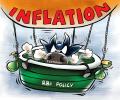
Analysts say RBI will cut rates because the liquidity crunch that began this time last year is still hurting the economy and also with an eye on the August industrial production numbers, which showed a contraction by 1.1 per cent -- the steepest in seven long years.

Indian funds did better than Asian ones in only four of the 10 months -- till October. Despite much market optimism, presumably around policy interventions and guided by buoyant flows, India's macro backdrop may be turning for the worse.
