
Allocations for new projects have diminished in relative importance, but policy pronouncements continue to have an impact. To come straight to the point on outlays, the table shows that against the country's requirement of $100 million per annum (as per the 11th Five-Year Plan), the Union Budget is able to provide only about 5-6 per cent of the requirement in 2008-09. How does this 5-6 per cent come about?
The rise in US interest rates and associated change in the direction of capital flows, the fall in oil prices and the slowdown in China will dominate the markets, say Abheek Barua and Bidisha Ganguly

Globalisation with small government has not been a successful pairing.

The majority in the markets believe that a September lift-off is likely.

The RBI must cut rates to spur growth, say experts.

The dollar gained strength with the emergence of the US as the only developed economy showing signs of recovery.

Unless there is a sharp uptick in oil prices, Fed may push back rate hike
China is keen to rebalance its economy towards higher consumption, services, technology use and value-added exports. The hope is that its currency will strengthen as the world embraces it as a global trade and reserve currency, say Abheek Barua & Bidisha Ganguly.

Saudi Arabia's deep pockets and a strong financial system could help the country to ride out a low-price environment in order to protect its market share.

The fact that the US recovery needs an elaborate defence suggests that things are far from certain.
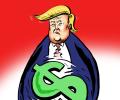
Abheek Barua & Bidisha Ganguly explain why the US treasury should intervene if the overvalued greenback continues to rise.
OPEC's move to cut output has pushed up oil prices. From here it could go either way: oil could reach $100/barrel or an analysis of demand and supply might follow, say Abheek Barua & Bidisha Ganguly.

Germany is now sitting on a mountain of savings.

The fuzziness of Trump's economic blueprint remains the biggest risk.

If banks have a surplus, they have the option of parking the money with the RBI.
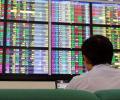
Asian emerging market stock prices did see a bounce post Fed-talk.

'China could place the currency on a par with global biggies. But it has to wait to be a serious challenger.'

Foreign exchange reserves of the oil producers have increased by $1.1 trillion over the past decade.
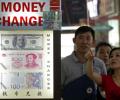
China's move to devalue its currency has exposed the fragility of its economy.
Non-performing loans in the Chinese banking system stood at RMB 1.27 trillion at the end of 2015.
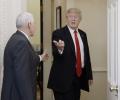
The trinity of rising stocks, rising yields and rising dollar since Donald Trump's election has already faced a setback.

The silver lining is that a pick-up in the US economy could help emerging market exports.

The markets stayed on edge last week due to the endless saga of Greece's problems.

The next round of bad news could come from Europe, where banks in a number of economies such as Italy, Portugal and Greece are sitting on mountains of bad loans.

The markets, at this point, have rallied on the view that the Fed will not budge from the zero-bound as long as inflation remains subdued

Economics and politics both have major roles in determining oil prices.
The belief that the Fed knows something that lesser mortals don't is common.
