
Russia's state-owned oil firm Rosneft has agreed to supply up to 500,000 barrels per day (bpd) of crude oil to Indian upstream oil and gas major Reliance Industries (RIL) in the largest-ever energy deal between the two countries, Reuters reported on Thursday. The 10-year agreement amounts to 0.5 per cent of global oil supply and is valued at roughly $13 billion per year at current prices, it said.

The 16th Brics Summit beginning Tuesday in Kazan, Russia, is expected to see more focus on creating a sharper energy policy for Brics that ensures closer partnership among members in both energy security and energy transition, official sources said. The same is expected to be a part of the Kazan declaration, currently being negotiated, they added.

India is preoccupied with analysing the US sanctions, which may cut off India's access to discounted Russian crude and force it to buy at market prices.

Oil and LNG prices are likely to shoot up if Iran is to block Strait of Hormuz, through which countries like India import crude oil from Saudi Arabia, Iraq and UAE, leading to a spike in inflation, analysts said on the Iran-Israel conflict. The Iran and Israel conflict has escalated over the last few days. Iran first launched drone and rocket attacks on Israel, which retaliated by firing a missile. Crude oil prices have hovered around USD 90 per barrel since the conflict.

India's crude oil imports from Russia fell for a second straight month in January to its lowest in 12 months but the nation's insatiable appetite for Russian crude remains for the long term, according to data from energy cargo tracker and industry officials. Russia supplied 1.2 million barrels per day of crude oil to India in January, down from 1.32 million barrels in December and 1.62 million barrels in November 2023, according to data from energy cargo tracker Vortexa. Russia however continues to remain India's top oil supplier, accounting for a little less than a quarter of 4.91 million barrels a day of oil that the world's third largest energy consumer imported in January.
Despite discounts on Russian crude oil - which fell to the lowest since the Ukraine war began - and the rising sanctions, import volumes from the country will remain stable for now or at least till July, said refinery officials. "There is an appetite for Russian crude, and shipments are not expected to taper off beyond this point unless something major happens. "Talks are on, and buying will continue," an official at a major refinery said.

Reliance Industries Ltd on Thursday reported a 7.4 per cent rise in its December quarter net profit, as its retail business rebounded and telecom earnings rose. Its consolidated net profit of Rs 18,540 crore, or Rs 13.70 per share, in October-December - the third quarter of April 2024 to March 2025 fiscal (FY25) - compared to Rs 17,265 crore, or Rs 12.76 a share, in the same period a year back, according to a stock exchange filing by the company.
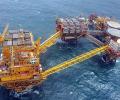
State-owned Oil and Natural Gas Corporation (ONGC) expects a USD 10.3 billion revenue boost from increased oil and gas production, achieved through a partnership with UK's BP in the Mumbai High field.

BP Plc has won a bid to operate ONGC's giant Mumbai High oil and gas field by offering up to 60 per cent increase in output over baseline, the state-owned firm said on Wednesday. State-owned Oil and Natural Gas Corporation (ONGC) had in June last year floated a tender seeking foreign partners to reverse declining output at its flagship Mumbai High fields, offering a share of revenue from incremental production plus a fixed fee but not any equity stake.

Reliance Industries Ltd, India's most valuable company, is back on a growth path after six months of challenges as it posted better than expected earnings in the December quarter, brokerages said.
India's imports of crude oil from Russia touched a new high of 1.64 million barrels per day in March and is now double of the purchases from Iraq - the nation's traditional top oil supplier. But the purchases appear to have plateaued as growth has slowed. Russia continued to be the single largest supplier of crude oil, which is converted into petrol and diesel at refineries, for a sixth straight month by supplying more than one-third of all oil India imported, according to energy cargo tracker Vortexa.

India plans to complete by 2006 a 180,000-bpd refinery, which has been under a cloud because of the proposed privatisation of the company that is building it, Oil Minister Ram Naik

India is expected to ramp up its purchase of crude oil from the United Arab Emirates (UAE) in the coming months following discussions between the two countries on the sidelines of the ongoing COP28 summit in Dubai, multiple sources in the know said. The UAE has historically been India's third-largest source of crude. It has suffered the largest drop in shipments since Indian refiners began to binge on Russian crude in 2022.

India's export of fuels like diesel to the European Union jumped 58 per cent in the first three quarters of 2024, with a bulk of them likely coming from refining discounted Russian oil, according to a monthly tracker report. The EU/G7 countries in December 2022 introduced a price cap and an embargo on the imports of Russian crude oil in a bid to cripple Kremlin's revenue and create a vacuum in its funding for the invasion of Ukraine.

India's import of cheap Russian oil scaled another record in May and is now more than the combined oil bought from Saudi Arabia, Iraq, UAE and the US, industry data showed. India took 1.96 million barrels a day from Russia in May, 15 per cent more than the previous high in April, according to data from energy cargo tracker Vortexa. Russia now makes up for nearly 42 per cent of all crude oil India imported in May.

Oil producers cartel OPEC's share in India's oil imports fell to an all-time low of 46 per cent in April as purchases of cheaper Russian oil peaked, industry data showed. Organization of the Petroleum Exporting Countries (OPEC) nations, mainly in the Middle East and Africa, had a 72 per cent share of all crude oil India imported in April 2022. This share slid to 46 per cent in April 2023, according to energy cargo tracker Vortexa.

'As the markets are expected to remain jittery in the near term, we advise investors to use this opportunity to enter quality largecaps from a long-term perspective.'

State-owned Indian Strategic Petroleum Reserves Ltd (ISPRL), which operates India's strategic crude oil storage, will make awards by December to lease around 1 million tons of crude oil storage space (7.3 million barrels) at two of the country's three existing Strategic Petroleum Reserves (SPRs), around a fifth of the total SPR capacity. This will enable the refilling of crude caverns even as escalating hostilities in the Gulf threaten disruptions in crude supplies, two industry sources said.

Most of India's oil supplies are expected to stay safe because of the country's good relations with both Russia and Iran. That would take care of over a third of India's supplies.

Indian imports of Russian oil plunged by a record in August month-on-month (M-o-M) as discounts on the fuel shrank in tandem with rising Brent oil prices. Higher crude prices will drive inflation or hurt earnings at oil companies and India's fiscal position if such spikes are not passed on to consumers. Indian purchases of Russian crude declined by around 24 per cent in August from July to the lowest level since January, with refiners expecting volumes to drop further amid rising rates of Russian benchmark Urals grade, substantial stocks at refiners, and planned maintenance at Indian refineries, according to ship tracking data and industry officials.

Equity and oil markets can breathe easy for now, as the developments in Russia are unlikely to trigger a runaway rally in crude oil prices, said analysts. India, which imports nearly 80 per cent of its crude oil requirement, has been dependent on cheap Russian oil over the past few months to keep inflation - a sore point for the equity markets - in check. For the Indian markets that are expected to remain volatile amid these developments, analysts believe, the progress of monsoon, fund flows - both foreign institutional investor (FII) and domestic - and the upcoming corporate earnings season back home remain key.

Upstream majors ONGC and Oil India (OIL) results for the January-March quarter (Q4) of FY24 suggest better production in future. But OIL missed its own production targets although it delivered higher volumes and it disappointed the market in terms of Ebitda. ONGC reported standalone Ebitda of Rs 17,400 crore (up 7 per cent year-on-year or Y-o-Y) in Q4FY24, slightly below estimates due to other higher expenses.
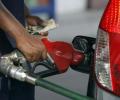
India's demand for petroleum products like petrol and diesel will grow by 7.73 per cent in 2022, the fastest pace in the world, an OPEC report said. India's demand for oil products is projected to rise from 4.77 million barrels per day (bpd) in 2021 to 5.14 million bpd in 2022, OPEC said in its monthly oil report. The growth in demand is the fastest in the world ahead of 1.23 per cent of China, 3.39 per cent of the US and 4.62 per cent of Europe.

India will soon meet Iraq and the United Arab Emirates (UAE) to seek a definitive rate of discount on crude oil similar to what Russia has provided so far, sources said. Multiple officials and industry executives said Iraq, which is India's biggest oil supplier, wants to discuss the level of discounts expected by Indian refiners. India's focus on snapping up ever-increasing volumes of Russian crude oil has led to a corresponding decline in imports from the Middle East. Flows from Iraq, Saudi Arabia, and the UAE have suffered as a result.

The Organization of Petroleum Exporting Countries (OPEC) in its latest monthly oil market report projected the world's third-biggest energy consumer to add 0.39 million barrels per day (bpd) of crude oil demand in 2022. India's oil demand rose from 4.51 million barrels per day in 2020 to 4.76 million bpd in 2021, recording a 5.61 per cent growth.

The Organization of the Petroleum Exporting Countries (Opec) and its partners, such as Russia, collectively termed Opec+, have decided to cut crude oil production by 100,000 barrels per day (bpd) from October onwards, at a meeting on Monday. In a step that may increase prices in India, the group has decided to reduce output quotas for October, after a fall in global oil demand outlook. The cut in output is equal to 0.1 per cent of global supply.
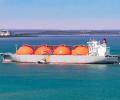
Urals and Sokol accounted for every 4 out of 5 barrels of Russian supplies to India last year.
British firm Cairn Energy, which in 2004 discovered a huge oilfield in Rajasthan, will begin early oil production from the fields in a years' time from now.

Petrol price on Saturday breached the Rs 83 per litre-mark in Delhi for the first time in more than two years after a rally in international oil prices forced a 13th increase in rates in the last fortnight. Petrol price on Saturday was raised by 27 paise per litre and diesel by 25 paise, according to a price notification of oil marketing companies. Petrol price in Delhi rose to Rs 83.13 per litre from Rs 82.86. Diesel rates went up from Rs 73.07 to Rs 73.32 per litre.
Even as the Group of Seven (G7) price cap on Russian crude oil enters into force as of December 5, India has been assured it will continue to receive the existing deep discounts on Russian oil, for the time being, informed officials. "We have been assured by our Russian partners of uninterrupted crude supplies at the existing rates for the time being. "There were a lot of reports of changes in (India's) buying patterns after the global price cap took hold.

If 4,000 workers could work round the clock for the construction of the new Parliament building, then there is no reason why all infrastructure projects too cannot follow that model, asserts Dr Sudhir Bisht.

The increase in energy consumption was driven by renewables and natural gas, which together contributed three quarters of the expansion.

These countries are feeling the heat from the US shale oil producers.

IOC, the key importer of petrol, has sought almost 700,000 tonnes for March-September delivery.
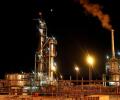
Russia on Thursday said it was not bothered at a possible price cap on its crude oil proposed by the West, saying Moscow will negotiate directly with its partners like India and China as the price should be decided between the producers and consumers, and "not someone who just decided to punish someone." Members of the G7 have agreed to impose a price cap on Russian oil in a bid to hit Moscow's ability to finance the war in Ukraine. Countries want to reach an agreement ahead of December 5, when Europe's embargo on Russian crude travelling by sea takes effect.
India's Iran imports rise to 276,800 bpd vs 195,600 bpd in 2013.

he media cited police as saying that a man wearing body armor entered a Tops Friendly Market after 2:30 pm EST (18:30 GMT) and opened fire with a rifle.

China consumed roughly 10.50 million barrels per day of oil in June.

Russia has welcomed India's decision to not support the price cap on Russian oil announced by G7 and its allies and offered it cooperation on leasing and building large-capacity ships to overcome the ban on insurance services and tanker chartering in the European Union and Britain to continue buying discounted oil. The offer came as Russian Deputy Prime Minister Alexander Novak held a meeting with the Indian Ambassador to Moscow, Pavan Kapoor, on Friday. "The Deputy Prime Minister welcomed India's decision not to support the price cap on Russian oil, which was imposed on December 5 by the G7 countries and their allies," the Russian foreign ministry said in a statement.
India has taken up the issue of high oil prices with producer nations and OPEC, demanding affordable rates, Minister of State for Petroleum and Natural Gas Rameswar Teli told the Lok Sabha on Monday. Petrol and diesel prices have shot up to record highs across the country after relentless price increases since early May. Petrol is retailing above Rs 100 a litre in more than a dozen states.
 © 2026 Rediff.com - Advertise with us - Disclaimer - Privacy Policy - Sitemap - Feedback - About us - Terms of use - Grievances