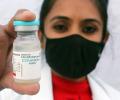
Serious AESI, which included stroke and Guillain-Barre syndrome, were reported in one per cent of individuals, the study, which looked at long-term safety of the BBV152 vaccine in adolescents and adults, claimed.
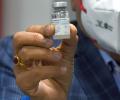
The method of data collection has a high risk of bias, the ICMR DG said.

Covaxin, a whole-virion inactivated SARS-CoV-2 vaccine used for mass immunization in the country, showed a 65.2 per cent protection against the Delta variant in a double-blind, randomized, multicentre, phase 3 clinical trial.
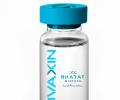
The vaccine induced robust binding and neutralising antibody responses which were comparable to those observed in the convalescent serum collected from patients who had recovered from COVID-19, according to the findings which have appeared on medRxiv, a preprint server.
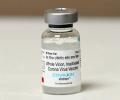
Results of an interim study recently published in The Lancet showed that two doses of Covaxin, also known as BBV152, had 77.8 per cent efficacy against symptomatic disease and present no serious safety concerns.
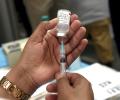
A study conducted by the Indian Council of Medical Research (ICMR) has observed that COVID-19 vaccination did not increase the risk of unexplained sudden death among young adults in India, the government informed Parliament on Friday.
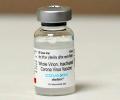
The Subject Expert Committee on COVID-19 examined the data and deliberated on the EUA application on Monday.
The first nasal vaccine against COVID-19, developed by Bharat Biotech, has received regulator's nod for conducting phase 2 clinical trials, the Department of Biotechnology said on Friday.
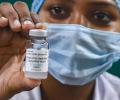
The decline in the effectiveness of Covaxin, India's indigenous COVID-19 vaccine, from 77.8 per cent to 50 per cent during a Delta-driven case surge in April and May this year is neither bad nor surprising, say scientists.
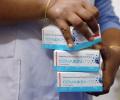
Bharat Biotech's Covaxin has demonstrated 77.8 per cent effectiveness against symptomatic COVID-19 and 65.2 per cent protection against the new Delta variant.
The Subject Expert Committee on COVID-19 of the CDSCO on October 12 after deliberating Bharat Biotech's EUA application had recommended granting emergency use approval to Covaxin for use in the 12-18 years age group with certain conditions.
The vaccine was well tolerated in all dose groups with no vaccine-related adverse events.
Bharat Biotech is targeting to manufacture one billion doses of its intra-nasal vaccine in 2022 which is under clinical trials now.

The phase 3 clinical trial will cover around 28,500 subjects, aged 18 years and above, and it will be conducted in 21 sites across ten states, including Delhi, Mumbai, Patna and Lucknow.
Poonawalla, during an interaction with Odisha Chief Minister Naveen Patnaik through a video conference, expressed optimism that the COVID-19 vaccine could be ready by October-November this year and the next phase of the trial can start in mid-August in India. According to a press note released by the CMO, Poonawalla has informed that the Oxford University vaccine has shown promising results in the first phase trial.
The study titled 'Serendipitous COVID-19 Vaccine-Mix in Uttar Pradesh, India: Safety and Immunogenicity Assessment of a Heterologous Regime' has been uploaded on medRxiv, a preprint server and is yet to be peer reviewed.

Raches Ella, project lead, Covid-19 vaccines at Bharat Biotech said in a series of tweets that he was 'surprised' that media and researchers were drawing conclusions based on non-peer reviewed work.
The study by a group of doctors showed that after two shots of the vaccines, 98 per cent recipients of Covishield showed antibody response, while the same was 80 per cent among Covaxin recipients. Sohini Das and Ruchika Chitravanshi report.
'Please don't read something which is not there in DG, ICMR's letter. The intent of the letter is only to expedite duly approved clinical trials without compromising on security and safety concerns'
ICMR says it is following all globally accepted norms to fast-track vaccine and wants to 'cut red tape'.

AIIMS-Delhi is among the 12 sites selected by the Indian Council for Medical Research (ICMR) for conducting Phase I and II randomised, double-blind and placebo-controlled clinical trials of Covaxin.
The vaccine candidate, ZyCoV-D, showed a "strong immune response" in animal studies, and the antibodies produced were able to completely neutralise the wild type virus, Zydus said. The 12 institutes have been asked by the ICMR to fast track clinical trials of the vaccine as it is being considered as one of the top priority projects which are being monitored at the topmost level of the government.
 © 2026 Rediff.com - Advertise with us - Disclaimer - Privacy Policy - Sitemap - Feedback - About us - Terms of use - Grievances