
Housing sales fell 6 per cent in April-June to 90,715 units across seven major cities on subdued demand amid economic uncertainties and also rising home prices, according to Anarock data released on Monday. As many as 96,285 units were sold in the year-ago period across the top seven cities -- Mumbai Metropolitan Region (MMR), Delhi-NCR, Pune, Bengaluru, Hyderabad, Chennai and Kolkata.

Avoid builders with very large commitments.

Real estate developers are increasingly offering flexible payment plans, such as low booking amounts and deferred payments, to stimulate housing sales and manage affordability concerns without resorting to price cuts, as sales volumes declined by 14 per cent in 2025.

Indian Real Estate Investment Trusts (REITs) are generating an average yield of 6-7.5 per cent for unitholders, better than many mature markets, including the US, according to a report by CREDAI and Anarock. CREDAI, the apex body of Indian real estate developers, and property consultant Anarock released a report 'Indian REITs - A Gateway to Institutional Real Estate' at an event in Singapore.

However, the consultant cautioned that security concern may keep prospective property buyers at bay for now.

Mixed-use real estate projects, integrating residential, commercial, retail, and hospitality segments, are gaining significant traction in India as developers seek to maximise returns, optimise land use, and diversify cash flows, with experts predicting 35-40% of urban real estate supply will be mixed-use by 2030.

Private equity investments in Indian real estate dropped 15 per cent in July-September to USD 819 million amid global uncertainties, according to property consultant Anarock.
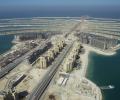
Ongoing geopolitical tensions in West Asia have slowed deal momentum in Dubai's luxury residential market, but Indian high-net-worth individuals (HNIs) are not exiting their marquee assets, with any 'discounted' resale deals attributed to investor liquidity stress rather than geopolitical flight.

Brookfield Asset Management will invest $1 billion to develop Asia's largest global capability centre (GCC) in Mumbai's Powai, the New York-based global alternative asset manager said in a statement on Friday. The infrastructure arm of Canada's investment firm will develop the campus across 6 acres with 2 million square feet that can be let out.

Developers are entering one of the busiest construction cycles, with the top four firms planning launches worth Rs 1.13 trillion over the near to medium term, even as execution faces pressure from approval delays, labour shortages, rising costs, and contractor capacity limits across the industry.

Capital value appreciation outpaced rental value growth in several key micro-markets between 2021 and 2024, with Noida Sector 150 in the National Capital Region (NCR) leading the pack with a 128 per cent rise in capital values compared to rental value growth of just 66 per cent, according to a report by property consulting firm Anarock.

Interest in green living is rising, with clean air and open spaces becoming key selling points for residential projects, particularly as Indian cities struggle with deteriorating air quality.

Housing sales have jumped over two-fold during July-September period at 62,800 units across seven major cities on better demand driven by low mortgage rates and hiring in IT/ITeS sector, according to property consultant Anarock. Sales of residential properties stood at 29,520 units in the year-ago period and 24,560 units in the previous quarter. The seven cities tracked by Anarock are Delhi-NCR, Mumbai Metropolitan Region (MMR), Chennai, Kolkata, Bengaluru, Hyderabad and Pune.
Currently, India has five publicly listed Reits: Brookfield India Real Estate Trust, Embassy Office Parks Reit, Mindspace Business Parks Reit Nexus Select Trust, and Knowledge Realty Trust.
India's leading conglomerates are stepping up investments in real estate, recasting what was once a peripheral activity into a core growth driver. Supported by strong balance sheets, established brands and access to long-term capital, major business houses including Aditya Birla, Tata, Godrej, L&T, Raymond, Wadia, Shapoorji Pallonji, Mahindra and Adani are positioning realty as a strategic pillar within their diversified portfolios.

MahaRERA, the authority under Real Estate (Regulation and Development) Act, 2016, in Maharashtra, has blacklisted 644 housing projects in the state for not meeting project deadlines. The authority has prohibited them from being sold, advertised or marketed in the state. These projects were supposed to be completed and handed over to homebuyers in 2017 and 2018. Even though most of the projects are being developed by local developers, one big name on the list is Lavasa Corporation promoted by HCC whose registration expired in 2017.

'Earlier, such beliefs were primarily observed among older buyers, but now we see younger buyers showing interest in aligning purchases with numerological or astrological significance.'

Mumbai Metropolitan Region recorded housing sales of nearly 9,200 units in Q3 of calender 2020, against 3,620 units in the preceding quarter, registering a 1.5 times growth which is the highest growth seen any city except Chennai.

Housing sales in seven major cities rose 5 per cent annually to about 1.2 lakh units during the April-June period, while demand fell 8 per cent from the preceding quarter on surge in prices, according to Anarock. Real estate consultant Anarock, which is one of the leading housing brokerage firm, on Thursday released the data of housing market for the current April-June quarter. In April-June 2024, housing sales across seven major cities are estimated at 120,340 units, up 5 per cent from 115,090 units in the year-ago period.

Mumbai metropolitan region, comprising Mumbai city, Navi Mumbai and Thane, leads the pack (in delayed projects) with 210,000 units at an approximate valuation of Rs 2.34 trillion.

Analysts, however, suggest investors remain selective on realty stocks and buy only where there is revenue visibility and a credible promoter backing.
Housing sales rose 7 per cent annually in 2024 across eight major cities to reach 12-year high at 3,50,613 units on better demand for premium homes amid stable mortgage rates and strong economic growth, according to Knight Frank. Last month, real estate consultant Anarock, however, had reported that housing sales declined 4 per cent in 2024 to nearly 4.6 lakh units across seven major cities.

'After Covid, people started looking for bigger houses with pools and landscaped gardens.' 'Even middle class buyers are looking at plots of land in smaller towns.'
The net debt of top eight realty firms fell 43 per cent to Rs 23,000 crore last fiscal, from around Rs 40,000 crore in 2019-20, as their cash flow improved on strong housing sales, according to Anarock. Real estate consultant Anarock noted that the unfettered demand for housing across the country has enabled the country's leading large and listed developers to reduce their debt. Anarock analysed financial performances of the top eight developers engaged in the development of residential real estate.

Christmas is a perfect time for most NRIs to travel back to India and include property buying in their schedule. Ahmedabad, Kochi, Ludhiana and Chandigarh are some cities that witness generous investments from NRI investors.
Leading property developers, such as Oberoi Realty, Tata Realty and Infrastructure, and Hiranandani, have turned to redevelopment of existing buildings in the expensive parts of Mumbai as a way of augmenting revenue. Experts estimate that Mumbai's redevelopment projects could be worth Rs 30,000 crore. As such, they are not new. What is new is that the big developers are interested in them. Leading the race is Oberoi Realty, which has set up a separate team for these projects.

Developers based outside Mumbai are making a beeline for India's largest real estate market through redevelopment projects. These include Delhi-based DLF, Bengaluru-based Prestige Estates and Puravankara, Pune-based Kolte-Patil Developers and Vascon Engineers, and Hyderabad-based Ramky Estates.

Average residential property prices in seven cities increased 10% to 34% due to new supplies in the luxury and ultra-luxury segments and overall demand.

For those looking for more affordable options, purchasing an under-construction property could be a smart move, as these generally cost less than ready-to-move-in properties.

Mumbai -- home to industry titans and Bollywood stars -- is witnessing a slow offtake of houses priced between Rs 10 crore and Rs 50 crore. Industry insiders and real estate watchers explain why.

In a base case, the consultant said that sales could drop 25 per cent to 1.96 lakh units this year from 2.61 lakh units in 2019 across seven major cities -- Delhi-NCR, Mumbai Metropolitan Region, Kolkata, Chennai, Bengaluru, Pune and Hyderabad.

Real estate developers are hoping that the slew of tax concessions announced in Union Budget 2025, set to take effect this financial year, will spur demand for affordable and mid-segment housing, even as the broader housing market shows signs of fatigue.

Despite a 56 per cent fall in residential launches in the first half of the year compared to the second half of 2019, Anarock Property Consultants believes that consolidation in residential real estate is expected to gain ground, and that branded players may garner a market share of 75-80 per cent.
50% of south-central Mumbai's high-end apartments remain unsold. The reasons include rocketing prices and a demand-supply mismatch. Of the unsold stock in south-central Mumbai, 38 per cent comprise units sized above 2,000 sq ft carpet area - too high for even wealthy Mumbaikars.

About 7 per cent was priced between Rs 3 crore and Rs 5 crore, 22 per cent priced between Rs 5 crore and Rs 8 crore, and 15 per cent above Rs 8 crore.

Strong demand for cultural and spiritual hubs is expected for destinations like Varanasi, Kolkata during Durga Puja, and Pushkar for the camel fair, besides leisure destinations like Goa, Udaipur, Jaipur and Coorg.
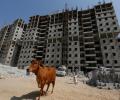
CREDAI-MCHI, a body of developers in Mumbai, has pegged the drop in sales booking at around 80 per cent in the February-March period this year. This is the second highest fall in residential sales in the past five years, after Q1, 2017, when the decline, due to the note ban, was 37 per cent.

DLF will officially launch its Mumbai housing project in the next quarter as the company has received the RERA approval a day before, while the real estate major sold out all 1,164 units in its luxury residential project Privana North securing Rs 11,000 crore revenue, DLF Homes joint managing director and chief business officer Aakash Ohri said.

Private equity (PE) investments in real estate sector fell 32 per cent to $4.3 billion in the last fiscal year mainly due to the COVID-19 pandemic, according to property consultant Anarock. PE investments in real estate stood at $6.3 billion in the 2020-21 financial year. According to Anarock Capital's FY22 year-end edition of its FLUX report, PE inflows in real estate were $5.1 billion in FY'20, $5.6 billion in FY'19 and $5.4 billion in 2017-18 fiscal. The consultant attributed the fall in PE investments in real estate to the second wave of the COVID-19, leading to multiple lockdowns in various parts of the country.
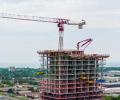
The NCR and the MMR together account for 77 per cent of 10 big housing projects stuck because of developers' bankruptcy or litigation.
