
Agriculture credit jumped seven-fold to Rs 7,00,000 crore (Rs 7 trillion) in the past ten years of UPA government, boosting foodgrains output to a record and enabling enactment of food law.

Thousands of farmers, mainly from Punjab and Haryana, are protesting at various borders of the national capital for more than a month against the laws and are demanding that these be repealed.
Among the states due for election next year are AP, Haryana and Odisha, which have a fair share of agri credit. If these states individually announced debt relief, the combined waiver would be at least around Rs 600 bn to Rs 700 bn. Clearly, this will be a frightening challenge for Indian banks.
Asserting that he will not let Punjab plunge into anarchy at any cost and nobody can be allowed to take the law into their hands, the chief minister said he has been forced to toughen his stance as his repeated appeals to perpetrators of such acts had been ignored.

Extended rounds of negotiations having failed, farm leaders now reckon that their best chance to pressure the government lay in defeating the BJP in the coming assembly poll, particularly in UP, observes Virendra Kapoor.

The protests brought home the fact that the Sri Lankan public is in no mood for halfway measures, as voices against Rajapaksa 'family rule' and 'securitisation' of the civilian administration began sidestepping the more critical economic crisis, affecting the nation and afflicting the individual, observes Sri Lanka watcher N Sathiya Moorthy.

The agriculture ministry also reiterated it is ready to find a "logical solution" to the issues raised by protesting farmer unions.
Agriculture Minister Narendra Singh Tomar on Wednesday said the government will continue with reforms in the farm sector as they are still due in many areas, even as he reiterated his hope that protesting farmers will soon come forward to resume their dialogue with the Centre to resolve their concerns over three new laws.

At the pre-Budget meeting at Niti Aayog, Modi called for a focussed effort from all stakeholders in order to achieve the target of $5 trillion economy. The participants urged the government to focus on credit expansion, exports growth, governance of PSBs, increasing consumption and job creation.
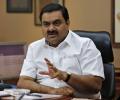
Weeks after confusion over three Mauritius-based funds whipsawing shares of Adani group firms, billionaire Gautam Adani on Monday said that "twisted narrative" seems to imply that companies have regulatory powers over their shareholders and can compel disclosures. Shares of port-to-energy group nosedived last month after reports that accounts of three of the six Mauritius-based funds that have invested most of their money in Adani group firms had been frozen by the national share depository. The three funds owned about $6 billion of shares across the conglomerate.

There will be pressure on the fiscal situation, especially at a time when the monsoon can also disappoint. More populist expenditure is on cards if the mandate is a hung Parliament or a coalition government.

A handwritten note in Punjabi, purportedly left behind by the deceased, says he was unable to bear the "pain of farmers".
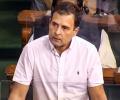
Lending his support to the ongoing farmers protests, he said in Lok Sabha that it was not an agitation of the farmers only but a movement of the country and the government will have to repeal the laws.

The BJP bagged 1,989 of the 4,371 panchayat samiti seats while the Congress won 1,852 with almost all results of the four-phase local government polls being declared.

Director general, Railway Protection Force (RPF), Arun Kumar has asked general managers of zonal railways to keep vigil to contain the impact of the nationwide strike called by farmer groups against the three agri laws.
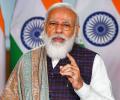
Modi said his government is carrying out "holistic reforms".

The ten trade unions are National Trades Union Congress, All India Trade Union Congress, Hind Mazdoor Sabha, Centre of Indian Trade Unions, All India United Trade Union Centre, Trade Union Coordination Centre, Self Employed Women's Association, All India Central Council of Trade Unions, Labour Progressive Federation and United Trade Union Congress.

Farmer leader Rakesh Tikait said business over hunger will not be allowed in the country and once again demanded a law on minimum support price (MSP) for crops along with the repeal of new contentious agri-marketing laws.

Eleven rounds of talks have been held over the contentious farm laws but the impasse continues as the farmer unions remain firm on their demands -- the repeal of the three laws and legal guarantee for Minimum Support Price.

Declining volumes in agriculture commodities are prompting the commodity bourses to aggressively focus on futures trading in bullion, metals and energy products.

British Parliament's Petitions Committee will consider a Westminster Hall debate in the House of Commons complex on the issue of farmers protests and press freedom in India after an online petition attracted over 106,000 signatures.

This comes after the government and opposition parties said a consensus has been reached to extend the duration of the allotted time on the discussion on a Motion Thanking the President for his Address to the Joint Sitting of Lok Sabha and Rajaya Sabha at the beginning of the Budget Session, from the currently allocated 10 hours to 15 hours.

Union leaders, who came out of the meeting venue shouting slogans, said the talks remained deadlocked and some of them threatened to boycott any further meetings if no solution was found at Thursday's meeting.
Generally, it has been seen that commodity prices are driven higher by surging demand throughout the world. But the irony is that the latest surge comes amid concerns about a weaker global economy. At present, commodities prices are rising because the U.S. interest rates are falling below the rate of inflation.
National Agricultural Cooperative Marketing Federation, the central government's procurement agency for non-cereal crops, is in talks with leading retail companies to serve as a back-end supply chain in agri-commodities.

Finance Minister Nirmala Sitharaman on Monday presented the Budget for 2021-22 in the Lok Sabha that is expected to provide relief to the pandemic-hit common man as well as focus more on driving economic recovery through higher spending on healthcare, infrastructure and defence amid rising tensions with neighbours, As India emerges from the COVID-19 crisis, the ninth Budget under the Modi government, including an interim one, is widely expected to focus on boosting spending on job creation and rural development, generous allocations for development schemes, putting more money in the hands of the average taxpayer and easing rules to attract foreign investments.

As cracks began to appear in their ongoing agitation against the agri laws, farmer unions on Wednesday cancelled their planned march to Parliament on February 1 when the Budget would be presented.
The production of major agricultural crops is likely to drop by 12 per cent for 2002-03, reflecting an adverse impact of poor monsoon, according to the Centre for Monitoring Indian Economy.\n\n\n\n

Among the lot, Rallis India, Escorts, Jubilant Life Sciences, and Crisil added half of the total gains made in the ace stock-picker's portfolio.

Defence Minister Rajnath Singh on Monday urged dialogue between the protesting farmers and the Centre while addressing a meeting of Bharatiya Janata Party office-bearers, during which he also invoked the border clashes with China and the construction of the Ram temple.

The government also proposed promoting 'one product one district' for better marketing and export of horticulture crops. It also called on states for early implementation of three key central model laws on land leasing, agriculture produce and livestock marketing and contract farming.
Nashik district, an Agri Export Zone (AEZ) for onion, grapes, keshar mango, pomegranates and flowers, is fast becoming the source of agri goods for retail companies such as Subhiksha and Reliance Retail.
Experts drawn from different parts of the country and abroad were of the view that the current boost to the agri-business through entry of large business houses would eventually benefit the farmer in a big way.

Addressing a press conference at the Singhu border protest site, farmer leaders warned of multiple actions if their main demands are not met. They said that only five per cent of the issues raised by them have so far been discussed in meetings with the government.

The government has also revised the minimum wages for unskilled non-farm workers upwards by 42 per cent to Rs 350 per day

'We are certainly open to inorganic opportunities to grow.'

With multiple health camps at these protest sites, immediate medical assistance is always at the farmers' disposal in case a protestor develops symptoms like fever or breathlessness.

Standing by his cycle, the 36-year-old from Punjab Moga's district said he could have taken a bus or a train to Delhi, but that could mean his family would have to go hungry.
The roll out of Reliance Retail's fresh food format stores has hit a wall in West Bengal, where a key constituent of the state government is against big businesses entering agriculture and allied fields.

Bharatiya Kisan Union (BKU) leader Rakesh Tikait said that the government, in its letter, mentioned that it wants to hold talks over its earlier proposal of amendments in the new agri laws.
