

Perhaps for the first time, petrol in India costs more than the superior jet fuel (ATF) used in aeroplanes, as the government has levied a record excise duty on the fuel used in two-wheelers and cars.
It is the seventh reduction in jet fuel rates since August
After eight successive price cuts, state-run oil firms on Thursday raised jet fuel prices by 3.4 per cent reflecting increase in international oil prices.In Mumbai, the home for nation's busiest airport, ATF price will rise by Rs 1,068.87 to Rs 32,447.65 per kl.
The hike comes on back of over 12 per cent hike on June 15. ATF price on that day were raised by Rs 3,949 to Rs 36,252 per kilolitre in Delhi.
State-run oil companies on Wednesday raised prices of aviation turbine fuel, or ATF, for the third time in a month, this time by about 6.7 per cent, in step with international rates, which are firming up.
Aviation industry experts expect the ATF prices to fall by 16 per cent in November, compared with the current month. This, they say, translates into bridging of nearly half the gap between the airlines' operational costs and total revenues.
State-run oil firms on Thursday cut aviation turbine fuel (ATF) or jet fuel prices by 4.3 per cent in view of halving of the customs duty on the fuel to five per cent. From today, ATF in Delhi will cost Rs 66,226.66 per kilo litre, down Rs 3,000.42 per kl, while in Mumbai the price has been cut by 4.36 per cent to Rs 68,626.87 per kl, an Indian Oil official said.
The aviation turbine fuel (ATF) prices have been raised by Rs 2,750 per kilolitre effective midnight tonight, Indian Oil Corporation (IOC).

Domestic airlines expect the fall in prices of aviation fuel to boost their earnings from the quarter ending December.
Bleeding Indian carriers, which suffered another setback in the form of a 7 per cent-hike in aviation turbine fuel (ATF) prices on Tuesday, have decided against raising fares this month. This is the first time this year that the carriers are not increasing prices in spite of a hike in ATF rates.
India has recorded the second-highest increase in domestic airfares in the Asia-Pacific (APAC) and West Asian regions, climbing by 43 per cent in the first half of 2024 compared to pre-pandemic levels in 2019, second only to Vietnam (63 per cent). India ranks third in fare increases during the same period in international skies, behind the United Arab Emirates (UAE) and Malaysia. The airfare study conducted by Airports Council International (ACI), which represents 617 airports in this region, was done in partnership with Flare Aviation Consulting.
An airlines industry body has sought reduction in customs and excise duties on aviation turbine fuel and allowing private firms to supply it to bring down prices.
Sector seeks declared goods status for ATF and withdrawal of service tax on first class and business class air tickets.
This is the second straight increase in jet fuel rates in as many months.
The government is considering a ban on export of kerosene oil (jet kero) and aviation turbine fuel (ATF), which are similar to kerosene, to boost supplies of kerosene for public distribution system.
Public sector oil companies on Sunday slashed jet fuel or Aviation Turbine Fuel prices by 3.7 per cent, the tenth reduction since September. ATF prices in Delhi were slashed to Rs 29,158 per kilolitre, effective midnight tonight, an official of Indian Oil Corporation, the nation's largest fuel retailer, said. The fuel used by airlines till today was priced at Rs 30,288 per kilolitre. After today's Rs 1,130 a kilolitre reduction, jet fuel is priced at early 2005 levels.
Jet fuel or ATF prices in Delhi were slashed to Rs 30,288 per kilolitre, effective Saturday midnight, an official of Indian Oil Corp, the nation's largest fuel retailer, said. But for the 3.3 per cent increase in rates on January 16, jet fuel prices have been reduced for the ninth time on Saturday since September 1, 2008 when international crude oil prices started to decline.
In a major relief to cash-strapped airlines, jet fuel (ATF) prices were today reduced by a massive 5 per cent, the steepest reduction in rates since February 2010.
After three consecutive hikes, state-run oil companies on Thursday reduced jet fuel or ATF prices marginally by about one per cent in tandem with international rates for the same.Indian Oil, Bharat Petroleum and Hindustan Petroleum cut aviation turbine fuel (ATF) price by Rs 311 per kilolitre in Delhi to Rs 31,615 per kl with effect from midnight tonight, an IOC official said.
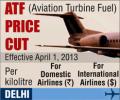
Rates at different airports vary because of differential in local sales tax or value added tax.
The Delhi government has requested airlines to come up with a detailed note on how decrease in sales tax on aviation turbine fuel (ATF) will lead to higher offtake of fuel from Delhi airport, before taking any measure for reduction in taxes. Airlines have been repeatedly making representations to the state government asking for a reduction in sales tax on ATF from the current 20 per cent to 4 per cent.

Flights from Delhi or Bengaluru, while they may still fly over Iran, depending on the route, have alternative paths that may take them through Central Asia or northern routes.

Jet fuel will cost Rs 37,300 per kl in Mumbai, home to the nation's busiest airport, from Rs 38,246.60. The reduced rates will help cash-strapped airlines cut fuel cost, which constitutes roughly 40 per cent of their operational cost.

IOC along with its sister PSUs, Bharat Petroleum Corp and Hindustan Petroleum Corp had from September 16 cut jet fuel rates by as much as 3.2 per cent to Rs 37,896.83 per kl.

Domestic air passenger traffic grew 5.1 per cent year-on-year to an estimated 138.9 million in May and was significantly higher by around 14 per cent than pre-Covid levels, credit ratings agency Icra said on Thursday. Icra also said the outlook on the Indian aviation industry is stable amid the continued recovery in domestic and international air passenger traffic with a relatively stable cost environment and expectations of the trend continuing in FY2025.
Airfares in the country are set to rise, with IndiGo on Thursday introducing a fuel charge of up to Rs 1,000 based on a flight's distance, in response to the significant rise in aviation turbine fuel (ATF) prices in the last three months. The Indian aviation sector experiences its peak travel season between October and December. The inclusion of a fuel charge component in airfares is anticipated to have a sizable impact on IndiGo's passengers, according to experts.

Kumari's dope sample, taken out-of-competition by the AIU last year, was found to contain steroids
The Asian tennis body wants 25 percent of the field at every event held in the continent is reserved for their players.
State-run oil firms on Saturday hiked jet fuel (aviation turbine fuel) prices by 18.5 per cent in step with rising international oil prices.The ATF price charged from airplanes has been raised to Rs 69,227.08 per kilolitre (kl) in Delhi from midnight on Saturday, an Indian Oil Corp, the nation's largest retailer, said.
State-owned oil companies on Tuesday slashed jet fuel prices by over 3 per cent as an appreciating rupee made imports cheaper.
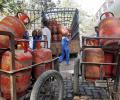
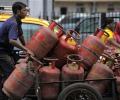
While LPG price was raised by Rs 18, kerosene saw a hike of Rs 3 per litre
No immediate comment was available from airlines on the impact of the price hike on passenger fares.
Airfares on major domestic routes such as Kolkata-Bagdogra, Delhi-Bengaluru, and Delhi-Mumbai have witnessed an increase of up to 12.7 per cent year-on-year (Y-o-Y) in May this year, according to data by Thomas Cook (India) and SOTC Travel. The recent increase in aviation turbine fuel prices, rupee depreciation, reduction of flights by key players, and grounding of planes due to engine supply issues have contributed to the rise in airfares, said aviation industry experts. However, the data also shows that summer airfares on key routes such as Delhi-Leh and Delhi-Kolkata have significantly decreased due to the introduction of new flights.

The government on Tuesday increased the windfall profit tax on crude oil produced in the country and reduced the levy on exports of diesel. The tax, levied in the form of Special Additional Excise Duty or SAED, on domestically produced crude oil was increased to Rs 9,800 per tonne from Rs 9,050 a tonne, according to an official notification. SAED on the export of diesel was reduced to Rs 2 per litre from Rs 4 a litre and on jet fuel or ATF to nil from Rs 1, the notification said.

For the second time this month, state-run oil companies on Tuesday cut jet fuel prices to ease the burden on cash-strapped airlines. Aviation turbine fuel (ATF) prices in Delhi was reduced by Rs 649 or 1.6 per cent to Rs 39,319 per kilolitre, effective midnight tonight.
Indian carriers can pass on some of the reduction in cost due to the dramatic fall in aviation turbine fuel prices to customers without taking a major hit on their bottomlines. Airlines have also cut costs on a variety of areas, including manpower and distribution, while increasing the fares steeply.

The Union Cabinet is likely to take up the airline industry's concerns over high taxes on jet fuel and airport charges at its next meeting and a Group of Ministers (GoM) may be set up to focus on ATF pricing.
