
The Indian economy requires a Rs 3 lakh crore fiscal stimulus, including cash transfer to households through Jan Dhan accounts to spur economic growth amid the pandemic, industry chamber CII said on Thursday and pitched for appointment of a 'Vaccine Czar' for speedy vaccination coverage. CII president T V Narendran also said the chamber expects GDP to grow at 9.5 per cent in 2021-22 as the strong growth in the second half of the fiscal year will be supported by robust external demand and large-scale coverage of vaccination, allowing resumption of economic activity. He also advocated for appointment of a "Vaccine Czar" for speedy vaccination coverage.
Scheduled international passenger flights have remained suspended since March 23, 2020 in the wake of the pandemic and they will now restart from Sunday.

With jet fuel prices hiked by 2.5 per cent, Jet Airways on Friday increased fuel surcharge on its tickets by Rs 200 with effect from tomorrow, raising airfares.

Jet Airways on followed its smaller rival SpiceJet and hiked fares by a steep 25 per cent to mitigate the impact of the sharp fall in the rupee value and a near 15 per cent spike in oil prices of late.
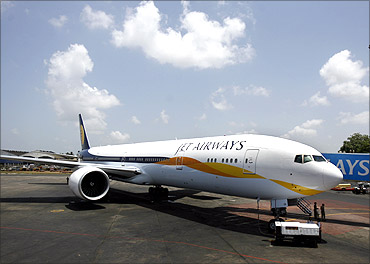
Jet fuel constitutes over 40 per cent of an airline's operating costs and the price cut will bring relief to the cash-strapped carriers.

In a thread of tweets, Mallya claimed, "The airlines struggled financially partly because of high ATF prices. Kingfisher was a fab airline that faced the highest ever crude prices of $ 140/barrel. Losses mounted and that's where banks money went. I have offered to repay 100 % of the principal amount to them. Please take it."
ATF in Delhi will cost Rs 56,324.79 per kilolitre, an increase of Rs 77.93 per litre or 0.13 per cent, from Rs 56,246.86 per kl, an official of the Indian Oil Corporation, the nation's largest fuel retailer said.

Chief Minister Manohar Parrikar yesterday said the state has already slashed Value Added Tax on Air Turbine Fuel refuelled in the state from 22 percent to mere 12.5 per cent.
Indian Oil Corp, the nation's largest fuel retailer, positioned adequate stocks of all petroleum products -- petrol, diesel, kerosene and LPG in the state.

Athletics continued to be India's achilles' heel in its anti-doping campaign, accounting for 21 of the 71 positive tests recorded by the National Anti-Doping Agency in the last one year, according to the latest WADA report.

Aviation turbine fuel rates in Delhi were raised by Rs 1,297, or 3.2 per cent, to Rs 41,489 per kilolitre effective midnight tonight, said an official of Indian Oil Corporation, the nation's largest oil marketing firm.

Passengers travelling by the nation's airliners could now have to pay increased fares as the country's oil majors have decided to hike aviation turbine fuel (ATF) prices by 8 per cent to a maximum of Rs 2,525.43 per kilolitre.

State-owned oil firms on Tuesday hiked jet fuel by 5.5 per cent in sync with rise in global rates.

The state-run oil firms will raise jet fuel price by Rs 1,338 per kl effective midnight tonight, an Indian Oil official said on Thursday.

The demand for black oils and specialty products like fuel oil, bitumen, petcoke and sulphur has also shown marked improvement, facilitating increase of refineries throughput.

Petrol price on Thursday was cut by Rs 6.07 per litre and diesel price by Rs 11.75 in Delhi as oil companies passed on a record reduction in excise duty rates to consumers. Buckling under pressure, the government had on Wednesday cut excise duty on petrol by Rs 5 per litre and that on diesel by Rs 10 a litre to give reprieve to consumers battered by record high retail fuel prices. Since states charge local sales tax or VAT not just on the base price but also on the excise duty levied by the centre, the total incidence of price reduction is higher.
The minister said airlines must reciprocate the government's gesture to help the aviation industry, which has been been going through rough weather this year. State-run oil companies on Monday slashed jet fuel prices by over 11 per cent. ATF in Delhi was cut by Rs 4,208.37 to Rs 32,691.28 per kilolitre.
As a result of crude oil prices falling to a four-year low of around $40 a barrel last fortnight, public sector oil companies today cut aviation turbine fuel (ATF) prices by 11 per cent. The rates will be effective this fortnight. The current rates were set on December 1. This is the seventh consecutive cut in ATF prices since September.
Aviation companies are set to get a major relief from high aviation turbine fuel prices. Following a steep decline in crude oil prices, oil marketing companies are looking to cut ATF prices by 5-6 per cent, or Rs 2,000-2,500 a kl across various cities beginning Thursday, said industry sources.
Air India has decided to reduce fuel surcharge on all domestic flights by Rs 400 with effect from Tuesday.
Rising aviation turbine fuel cost, poor infrastructure, regulatory controls and reluctance of consumers to take to air travel are some of the issues hurting aviation industry in the country, Deccan Aviation executive chairman Captain G R Gopinath said.
The airline industry remained largely undecided on the exact quantum of increase in fares following the hike in ATF prices. Industry sources, however, said the prices might increase by Rs 150 for short haul routes and Rs 300 for long haul routes.
Domestic airlines may soon be able to hedge their risk of jet fuel prices. The government is considering a proposal to allow Indian carriers to hedge the price risk of aviation turbine fuel purchased from oil marketing companies in the country.
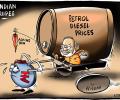
The Union government has collected Rs 94,181 crore through levy of excise duty on petrol and diesel in the first three months of the current fiscal on the back of a record tax on fuel that yielded 88 per cent higher revenue the previous financial year, the Lok Sabha was informed on Monday. Excise duty on petrol was hiked from Rs 19.98 per litre to Rs 32.9 last year to recoup gain arising from international oil prices plunging to multi-year low as pandemic gulped demand. The same on diesel was raised to Rs 31.8 from Rs 15.83 a litre, according to a written reply by Minister of State for Petroleum and Natural Gas Rameswar Teli in the Lok Sabha. This led to excise collections on petrol and diesel jumping to Rs 3.35 lakh crore in 2020-21 (April 2020 to March 2021), from Rs 1.78 lakh crore a year back, he said.
While the national carrier Air India has decided against a hike, private carriers like Jet Airways and SpiceJet have concrete plans to increase their fuel surcharge on domestic flights.
SpiceJet COO says ATF price cut is need of the hour.
ATF price in Delhi has been raised to Rs 53,309.30 per kilolitre from Rs 47,048.86 per kilolitre, an Indian Oil Corporation, the nation's largest fuel retailer, said. In Mumbai, the price rose by Rs 6,536.35 a kilolitre to Rs 55,191.58 per kilolitre.

The source said logistics became a big issue for almost all the participating countries.
Rates have been on the upswing since October, 2016.
The civil aviation ministry is hopeful of further reduction in the price of aviation turbine fuel this year.
The price of non-subsidised cooking gas (LPG) was on cut by Rs 21 per cylinder and that of jet fuel (ATF) by a steep 3 per cent on the back of falling international oil rates.
State oil companies have raised aviation turbine fuel (or jet fuel) prices by 2.86 per cent in line with rising international oil prices.
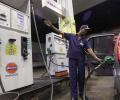
The demand, which had fallen by as much as 70 per cent, has since recovered after lockdown restrictions were eased beginning early May.

West Bengal government has 1.2 per cent stake in BAPL.
Public sector oil firms on Tuesday slashed aviation turbine fuel prices by 7.9 per cent in line with fall in international oil prices.

The economy is gaining traction with gradual pick up in manufacturing activity and moderation in contraction of services, spurred by comfortable liquidity conditions, an RBI article on Tuesday said. Observing that the retreat of the second wave of coronavirus pandemic has been slow, the RBI in an article on the 'State of Economy' said, the aggregate demand conditions are buoyed by the release of pent-up demand post unlock, while the supply situation is improving with the monsoon catching up to its normal levels and sowing activity gaining pace. "Reaffirming the traction that the economy is gaining, the manufacturing activity is gradually turning around, while contraction in services has moderated.
.jpg)
Such direct import was formally allowed in February 2012 but the aviation companies lack the infrastructure to do so.
Lower taxes on ATF on international routes certainly help in making operations more viable.
