
IndiGo and Air India Group will progressively shift flights from Mumbai's Chhatrapati Shivaji Maharaj International Airport (CSMIA) to the newly built Navi Mumbai International Airport (NMIA) starting from December. This phased transition, expected to complete by the 2027 summer aviation season, aims to ease capacity constraints at CSMIA, facilitate its Terminal 1 redevelopment, and establish a dual-airport system for Mumbai, enhancing connectivity and future growth.
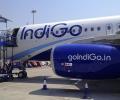
IndiGo is undertaking a comprehensive review of its long-standing policy against fuel hedging, particularly in light of rising jet fuel prices and its ambitious long-haul expansion plans. CEO Willie Walsh stated that while domestic competitors don't hedge, international expansion necessitates a re-evaluation to manage risk and provide stability against volatile fuel costs.
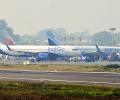
An IndiGo flight from Delhi to Manchester was forced to return to its origin due to last-minute airspace restrictions related to the ongoing situation in West Asia. The flight was using a leased Boeing 787 aircraft.

The country's largest airline IndiGo on Tuesday reported a loss of Rs 2,582.10 crore in the September quarter as higher forex losses and expenses impacted the bottom line, and it expects to induct the first long range Airbus A321 XLR aircraft in December. The airline, which had a loss of Rs 986.7 crore in the year-ago period, said hedging actions and more revenues in foreign currencies from international operations will help cushion the currency movements.

In 2025, the total net induction was 35 planes -- 79 added and 44 returned -- making it much lower than even 2024.
IndiGo will introduce business class seats in select flights on 12 domestic routes starting from November 14 and also launch a customer loyalty programme, as the 18-year-old airline seeks to expand business and strengthen global presence. The announcements, made at an event in the national capital on Monday to mark 18 years of operations, also highlights a pivotal trajectory for the airline.
The trails of mega-mergers, tailwinds of expanding fleets, flights and airports will dot the fast-growing Indian aviation firmament in 2025, though the dark clouds of supply chain woes will persist longer. Also, new airline takeoffs, the future trajectory of revised norms to tackle pilot fatigue and efforts to reduce carbon emissions will be on the radar.
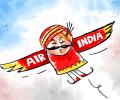
The Tata Group-owned Air India has readied a five-year transformation plan, which is expected to take its domestic market share to 30 per cent, up from 8.4 per cent logged in June. IndiGo leads with a market share of 58.8 per cent. The transformation plan--Vihaan.AI-unveiled on Thursday revolves around tripling the domestic market share with investments in new aircraft, technology and improvements in customer service.
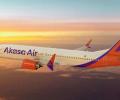
'I hope they all survive, but it is a tough world.' 'The carriers who are already established are already struggling.'
IndiGo has the flexibility to decide what would be the precise size of its aircraft fleet by 2035, its chief executive officer (CEO) Pieter Elbers said on Monday. IndiGo - the country's largest airline - has 312 aircraft in its fleet. Elbers said the airline will double in size by 2030, indicating the airline will have a fleet of about 625 by 2030.

No-frills airline IndiGo on Monday announced placing a firm order for 500 A320 family planes with European aviation major Airbus at the Paris Air Show. This is the largest ever aircraft order placed by any airline with Airbus, IndiGo said in a statement. Financial details of the order were not disclosed.

West Asian carriers are up against Air India and IndiGo in the battle for seats on lucrative international routes.

The acquisition will give the Tatas a firm footing on international routes and generate economies of scale.
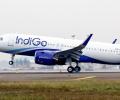
'We should have calmed down the child. We will do an internal analysis on that.'
While IndiGo had 11.8 per cent of all the international seats to and fro India in the last week of August, Air India's seat share was 11.4 per cent. Emirates came third with 8.1 per cent, and rest of the airlines constituted 68 per cent of the seat share.
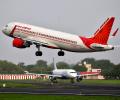
We live in hope that India and its airlines might finally grow up, notes Anuli Bhargava.
