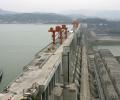
China defends its construction of a dam on the Brahmaputra river in Tibet, addressing concerns from India and Bangladesh about its potential impact on water flow and the environment.
China has formally started the construction of a USD 167.8 billion dam over the Brahmaputra River in Tibet, close to the Indian border in Arunachal Pradesh, raising concerns in India and Bangladesh.

China has reiterated its plan to build the world's largest dam over the Brahmaputra River in Tibet, near the Indian border. The Chinese Foreign Ministry has assured that the project, estimated to cost around USD 137 billion, will not have any negative impact on downstream countries, India and Bangladesh. The ministry has stated that the project has undergone rigorous scientific verification and will be conducive to disaster prevention and mitigation, as well as climate change response. India has expressed concerns about the dam, raising the issue during talks with the visiting US National Security Advisor, Jake Sullivan. China has maintained that the project will not negatively affect the lower reaches and has committed to maintaining communication with downstream countries.
China has approved the construction of the world's largest dam on the Brahmaputra River in Tibet, close to the Indian border. The USD 137 billion project, which is expected to dwarf even China's own Three Gorges Dam, has raised concerns in India and Bangladesh, the downstream riparian states. Concerns in India are centered around China's potential to control water flow, potentially enabling the release of large amounts of water to flood border areas in times of hostilities. The dam is part of China's 14th Five-Year Plan, and the Chinese government claims that the project is safe and prioritizes ecological protection.
China has defended its plan to build the world's largest dam on the Brahmaputra River in Tibet, assuring that the project will not affect riparian states and safety issues have been addressed through decades of studies. The dam, estimated to cost USD 137 billion, has raised concerns in India and Bangladesh, but Chinese authorities maintain that the project has been thoroughly studied and safeguards are in place. The dam is part of China's efforts to develop clean energy and respond to climate change.

In the talks, China emphasised that the two sides should proceed from the fundamental interests of China, India and adhere to the strategic height and long-term perspective of China-India relations, the readout said.
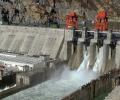
The over 3,800-km-long Brahmaputra, one of the longest rivers in the world passes through China, India and Bangladesh and has several tributaries and sub-tributaries.

China's parliament on Thursday adopted the 14th Five-Year Plan, the mega blueprint containing billions of dollars worth of projects, including the controversial hydropower project on the Brahmaputra river in Tibet close to the Arunachal Pradesh border over which India has raised concerns.
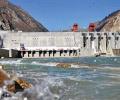
The MEA said that the Chinese side has conveyed to India on several occasions that it was only undertaking run-of-the-river hydropower projects, which do not involve diversion of the waters of the Brahmaputra.
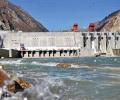
"The reservoir capacity of the project is less than 0.02 per cent of the average annual runoff of the Yarlung Zangbo-Brahmaputra. It cannot have an adverse impact on the downstream," Chinese foreign ministry said to a question on concerns over the dam.
The mighty Brahmaputra, one of the longest rivers in the world passes through China, India and Bangladesh and has several tributaries and sub-tributaries.
The government on Wednesday said any attempt by China to set up a hydropower station on the Brahmaputra river will act as an encroachment on the entitled rights of lower riparian states like India and Bangladesh and adversely affect the availability of water in its basin during the lean season.

China on Friday operationalised its first fully electrified bullet train in the remote Himalayan region of Tibet, connecting the provincial capital Lhasa and Nyingchi, a strategically located Tibetan border town close to Arunachal Pradesh.

The Standing Committee on Water Resources has recommended renegotiating the Indus Water Treaty with Pakistan to address the impact of climate change on water availability in the river basin and other challenges which are not covered under the agreement.

It is not clear yet what impact the blockade of the river will have on the flow of water from the Brahmaputra into the lower riparian countries like India and Bangladesh as a result.

Xi arrived at the Nyingchi Mainling Airport on Wednesday and was warmly welcomed by local people and officials of various ethnic groups, Xinhua news agency reported.
India will pay China over Rs 82 lakh annually for crucial flood data of the Brahmaputra to improve flood forecasting even as the two sides agreed to allow their water experts to conduct study tours on both sides of the river which originates in Tibet.

The brigade that conducted the drills was from the PLA's Tibet Military Command and is one of China's two plateau mountain brigades.
 © 2026 Rediff.com - Investor Information - Advertise with us - Disclaimer - Privacy Policy - Sitemap - Feedback - About us - Terms of use - Grievances