
Experts say the state's economy is grappling with hidden debt, rising welfare costs, and lack of transparency.

'On the weekly chart, the Nifty 50 index has formed a bearish candle and remains below all short-term moving averages.'

The Reserve Bank of India (RBI) on Wednesday announced an extension of interim ways and means advances (WMAs) limit of Rs 51,560 crore to state governments till September, to help them tide over the financial stress posed by the second wave of COVID-19. WMAs are temporary advances given by the RBI to the states to tide over any mismatch in receipts and payments. There are two types of WMA - normal and special. While normal WMA are clean advances, special WMA are secured advances provided against the pledge of the government of India dated securities.

The RBI on Wednesday provided more time to exporters to collect payment of goods and software sold to overseas buyers and repatriate that to India, as the central bank announced more measures to deal with the economic fallout of the Covid-19 pandemic. The central bank has also decided to increase the limit of advances it gives to states and UTs by 30 per cent under the Ways and Means (WMA).
This permission was given some time late last month, before the Reserve Bank of India (RBI) on March 31 issued the indicative borrowing calendar for the states for April-June and the one for the Centre for April-September.

A summary of sports events and persons who made news on Friday
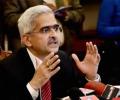
'No one cares about fiscal deficit now. Or for that matter, inflation.' 'The focus is on growth and growth alone.' 'RBI needs to break the risk aversion of banks and infuse adrenaline in their veins', says Tamal Bandyopadhyay.

Dr Sanjiv Malik is national president-elect of Indian Medical Association.

'One can start accumulating economy driven stocks in the next few months with a two-three year view.'


Parliament has approved a gross borrowing for Rs 7.1 lakh crore for the entire 2019-20 fiscal.

The disruptions caused by COVID-19 have more severely impacted small and mid-sized corporates, including NBFCs and MFIs, in terms of access to liquidity.

With the Rs 1.45 lakh crore tax dole threatening to upset budgeted numbers, Economic Affairs Secretary Atanu Chakraborty sought to allay concerns saying the government is sticking to the glide path of keeping fiscal deficit at 3.3 per cent of the GDP in the current fiscal.
The government could tap the bond market soon as its short-term borrowings from the Reserve Bank of India were close to the ceiling of Rs 100 billion, a banking source said on Wednesday.\n\n\n\n

The central government's deposits with the RBI had fallen to just Rs 100 crore as of June 8.

Double Olympic champion Caster Semenya's future was in doubt on Friday after she said she would not take medication to lower her testosterone levels to comply with new rules for the 800 metres.

In the first half of the fiscal year, government had borrowed Rs 3.44 lakh crore.

Expenditure on health in India is at a global low of 1.2% of GDP.

'The Reserve Bank's independence has remained a work in progress, an enduring challenge that the nation has been grappling with on an ongoing basis,' says RBI Deputy Governor Dr Viral Acharya.
 © 2026 Rediff.com - Investor Information - Advertise with us - Disclaimer - Privacy Policy - Sitemap - Feedback - About us - Terms of use - Grievances