
Inflation rose to 4.67 per cent for the week ended July 22, from 4.52 per cent in the previous week mainly due to increase in the prices of vegetables, pulses, industrial fuel and some manufactured items.
The previous low was recorded at 5.69 per cent for the week ended February 23, 2008. The index of food articles group declined by 0.7 per cent as prices of jowar fell by five per cent, fruits and vegetables by three per cent, eggs and bajra by one per cent each.
The wholesale prices-based index stood at 4.72 per cent during the corresponding week previous year.
Weights of the fuel group are set to rise in the revised Wholesale Price Index.
The government's statistical system is being overhauled with painful slowness. The base years for the indices are too far back in time, the weights for different sub-sets are out of date, the methods of data collection are defective, and the statistical methods used simplistic.
Inflation declined further to 6.61 per cent for the week ended December 13 from 6.84 per cent in the previous week.
Inflation rose to 3.83 per cent for the week ended January 12, against 3.79 per cent in the previous week mainly due to rise in prices of manufactured items and some food articles. The wholesale price-based inflation stood at 6.15 per cent in the corresponding week a year ago.
Kartaar Singh, a farmer of Mokha village in Punjab's Kapurthala district, used to travel about 50 km on his scooter to Jalandhar's new sabzi mandi, or wholesale vegetable market, to sell his vegetables every day.
Inflation rose to 3.79 per cent for the first week of the New Year from 3.50 per cent during the previous week even as prices of some essential food items like vegetables and fruits fell.
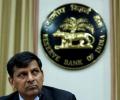
Here is some background on the candidates seen as potential successors to Rajan at the RBI
Inflation increased to 4.13 per cent for the week ended June 23 compared to 4.03 per cent in the previous week mainly due to rising prices of food articles and manufactured products.
The wholesale price-based inflation stood at 5.78 per cent in the corresponding week a year ago. Among manufactured items, prices of bread and buns went up by seven per cent, while those of butter and cottonseed oil rose by two per cent, and maida one per cent.
It's time to focus on building a modern information system for Union excise and state VAT.
"Overheating is premature," Chidambaram told reporters on the sidelines of a United Bank of India programme in Kolkata.
As far as outcomes are concerned, the evidence on a soft landing, while not yet conclusive, shows movement in the right direction.
Inflation declined to 5.06 per cent for the week ended May 19 as compared to 5.27 per cent in the previous week due to lower prices of food articles including moong and wheat, and manufactured products.
Inflation declined to 5.44 per cent for the week ended May 5 against 5.66 per cent in the previous week owing to lower prices of essential food items and some manufactured products.
Amid stock market crash and global financial crisis causing concern among the investors, a fall in inflation rate definitely comes as a relief.
Inflation increased to 3.11 per cent for the week ended November 3, compared to 2.97 per cent a week ago, mainly due to rise in prices of food items, petroleum products and manufactured articles.
Reversing its upward trend, inflation fell to a two-year low of 4.07 per cent in the week ended July 23 due to cheaper food products even as prices shot up for minerals, including iron ore
Inflation declines to 5.66 per cent for the week ended April 28 as compared to 5.77 per cent in the previous week.
Inflation rose to 3.42 per cent for the week ended September 22, compared to 3.23 per cent in the previous week, mainly due to rise in prices of manufactured items like salt, imported edible oil and some food products. The wholesale price-based index stood at 5.43 per cent in the corresponding week a year ago.
Inflation further eased to 3.23 per cent for the week ended September 15, compared to 3.32 per cent for the previous week, mainly due to fall in prices of fruits and vegetables, pulses, milk and some manufactured items.
The food articles group rose by 0.2 per cent due to higher prices of fruits and vegetables, condiments and spices, barley and wheat (one per cent each).
The wholesale price-based index stood at 5.27 per cent in the corresponding week a year ago.
Credit as a proportion of GDP is low in India by international standards.
Inflation rose to 5.91 per cent during the week ended April 23 as vegetables, fruits, edible oil, industrial fuel and manufactured products became costlier.
Inflation declined to below four per cent for the first time in more than 15 months to touch 3.94 per cent for the week ended August 18, much less than the Reserve Bank's projection for this fiscal.
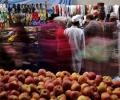
Recent estimates show that foodgrain production in 2016-17 has touched a new record of 273.4 million tonnes or 8.7 per cent higher as compared to last year.
Economic think-tank, Institute of Economic Growth said on Wednesday it expected widely tracked wholesale prices-based inflation to hover above 6 per cent for the present quarter.
Inflation rose to 4.10 per cent for the week ended August 11, against 4.05 per cent in the previous week, mainly due to higher prices of fruits and vegetables, bajra, masoor, gram and some manufactured goods.
Inflation at 6 per cent was a matter of concern in the evolving macro-economic outlook and the Reserve Bank of India fears that consumer prices could be even higher at 7 to 8 per cent.
Inflation is likely to remain above 11 per cent this year and may come down to around 9 per cent by March next year, says a survey of economists conducted by the Reserve Bank.
The major task in emerging economies now is how best to tackle high or rising food prices.
However, prices of certain other food items like vegetables and most manufactured products rose. Fuels like naphtha also became dearer.
Inflation based on the wholesale price index zoomed to 6.12 per cent for the week ended January 6
The inflation numbers are still within the five per cent annual target of the Reserve Bank, which is due to review the monetary policy on July 31.

RBI watchers are going to be on tenterhooks for the next 3 weeks.
Inflation remained unchanged at the previous week's level of 4.27 per cent for the week ended July 7, despite a fall in prices of fruit and vegetables, poultry chicken, moong and masur, and some manufactured items.
Inflation rose to 4.27 per cent for the week ended June 30 as compared to 4.13 per cent in the previous week mainly due to increase in prices of food articles and some manufactured items.
 © 2026 Rediff.com - Advertise with us - Disclaimer - Privacy Policy - Sitemap - Feedback - About us - Terms of use - Grievances