
Vir Das' comedy amuses even those who didn't expect to be amused in the first place, discovers Utkarsh Mishra.

'Handling or mitigating a rebellion is not a corporate plan with quarterly, half-yearly and annual goals and results but an aggregation of the effort of several years.'

On his 200th birth anniversary, Utkarsh Mishra traces the life, thought, and legacy of Dadabhai Naoroji, the Grand Old Man of India.

'Whenever present-day politics do get involved, history sinks to the level of a morality play, with advocates for this or that cause seeking to praise their heroes or condemn their villains.'

'When I undertook a study of temple desecration in precolonial India, it was not enough simply to document what temples were desecrated, by whom, when, and where.' 'It was also important to explore the total historical context of such incidents, with a view to discovering patterns, which in turn could reveal the reasons why they occurred.'

One hundred years ago, a group of 10 revolutionaries carried out an operation that shook the British Empire. Utkarsh Mishra revisits the 'Kakori Conspiracy Case', a turning point in the armed struggle for independence.
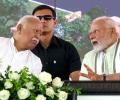
'It is something like traditional Indian families.' 'The family might be run by younger people, but if the patriarch says that you should consider someone for some task, it is very difficult for the others to ignore it.'
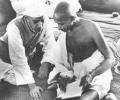
On the 83rd anniversary of the Quit India movement, Utkarsh Mishra recalls the conditions under which the Congress, led by Mahatma Gandhi, launched the final struggle for independence.
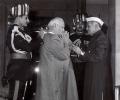
Vice President V V Giri's resignation in 1969 triggered political upheavals that saw the ruling party defy its own presidential nominee, the expulsion of a sitting prime minister by her party president, and a historic split in the Indian National Congress, recounts Utkarsh Mishra.
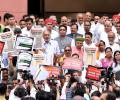
While India today is vastly different from the India of 1975, the need for vigilance against authoritarianism remains the same, asserts Utkarsh Mishra.

Utkarsh Mishra's impressions of the Narendra Modi roadshow in Varanasi.
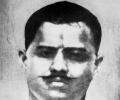
Standing near the noose, he recited a couplet in which he said he wished nothing but to sacrifice his life for the motherland. Utkarsh Mishra remembers Ram Prasad Bismil on the revolutionary leader's 128th birth anniversary.

'India enjoys conventional superiority, but nuclear deterrence imposes clear boundaries.'

'There is no independently verified imagery or battlefield evidence to support Pakistan's claim.'
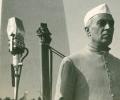
On Jawaharlal Nehru's 61st death anniversary, Utkarsh Mishra recalls how India's first prime minister cultivated a unique role for the newly independent country on the world stage.

'There's a lot of sense in what Prime Minister Modi did, but the Indian government has to be really prepared for a really sharp escalation spiral.'

If you disregard history and are ready to watch Kesari 2 purely as an entertainer, you are definitely going to enjoy it, feels Utkarsh Mishra.
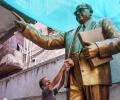
On the 134th birth anniversary of the chief architect of the Indian Constitution, Utkarsh Mishra revisits three incidents from Dr B R Ambedkar's life that lay bare the deeply entrenched nature of caste prejudice.

The grilling of Brigadier-General Dyer by Akshay Kumar's Sir C Sankaran Nair, as shown in Kesari 2, is purely an imaginary sequence, proves Utkarsh Mishra.

The latest biopic on Jyotibai Phule has come at a time when the Department of Taking Offence is super-active. Utkarsh Mishra feels it will be interesting to see if it portrays his attack on Brahminism in the same 'no holds barred' manner-- and, if it does, what reaction it provokes.
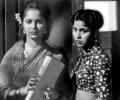
'At a time when the 'my country, right or wrong' attitude is sweeping over the majority, the Pyaasa song Jinhe Naaz Hai Hind Par Woh Kahan Hain brings a much-needed sense of reality. It questions: How can one feel any sense of pride when women are treated like this? Utkarsh Mishra salutes Guru Dutt's classic that turns 68 this month.

On its 177th anniversary, Utkarsh Mishra explores the history and relevance of The Communist Manifesto.
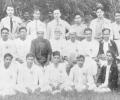
The Meerut Conspiracy Case was aimed at curbing communist influence in India. However, it fueled nationwide sympathy, shaping the course of leftist politics in the country.

'If we truly wish to understand and apply Marx's insights today, we must reject the rigid dogmas that later 'Marxists' imposed in his name.'
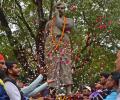
On the 94th anniversary of the revolutionary giant's martyrdom, Utkarsh Mishra revisits the events of February 27, 1931.
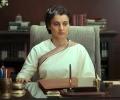
Kangana Ranaut's decline as an actor feels complete, observes Utkarsh Mishra.
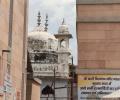
The Supreme Court's 2023 order refusing to stay a scientific survey at the Gyanvapi Mosque complex has sparked claims over several other disputed places of worship across India. This has led to several court cases, including one in Mathura where a survey of the Shahi Idgah Mosque complex was ordered, and another in Ajmer where a claim was made that a Shiva temple existed within the dargah of Sufi saint Moinuddin Chishti. The article also highlights a dispute over the Bhojshala in Madhya Pradesh, which Hindus consider a temple and Muslims consider a mosque. The Supreme Court's order has reignited debates about the Places of Worship (Special Provisions) Act, 1991, which prohibits the change of character of religious places as they existed on August 15, 1947.

Freedom At Midnight is a bold attempt to revisit the whole discourse about Partition, its causes, and the predicament under which the Congress leaders accepted it. It perfectly captures the extremely confused and complicated situation to which it seemed the only viable solution, observes Utkarsh Mishra.

As with biopics these days, Kangana Ranaut's films may be less about telling the story of a dark chapter of Indian history and more about giving fodder to those who seek to defend or justify government highhandedness today, observes Utkarsh Mishra.

On Bhagat Singh's 117th birth anniversary, Utkarsh Mishra recounts fascinating incidents from the legend's life.

Captain Sharan and Flight Engineer Anil Jaggia both confirm that the hijackers seemed to know a lot about flying an aircraft. Without help from the ISI or the Pakistan army, it was impossible, points out Utkarsh Mishra.

From the time he first rose to prominence during the movement against the then UPA government, Arvind Kejriwal has regularly grabbed headlines for his surprise moves and decisions. Here are 10 such instances.

The petitions filed by the Anjuman Intezamia Masjid Committee (AIMC) and the Uttar Pradesh Sunni Central Waqf Board had also challenged a Varanasi court order of April 8, 2021 to conduct a comprehensive survey of the Gyanvapi mosque.
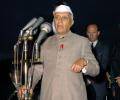
'Nehru remains central to the polemic between the Congress and the BJP, or stated ideologically, between secular and Hindu nationalism.' 'The reason is that Nehru represents what is optimally possible as a secular politics along with liberalism and democracy in a country like India.'

With the kind of money and talent that has gone into making this movie, a really good biopic of a personality like Savarkar could be made. But this film is lost in polemics, as is the case with almost every biopic and period drama today, observes Utkarsh Mishra.

As Ae Watan Mere Watan and Swatantra Veer Savarkar release this week, Utkarsh Mishra takes us down history and reminds us about India's freedom struggle.
Rediff.com's Utkarsh Mishra visits the Kashi Vishwanath-Gyanvapi mosque in Varanasi, which is fast being turned into another mandir-masjid dispute.
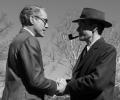
'Hinduism meshed with his sense that the world was paradoxical and puzzling.'

An entertaining spy thriller with world politics bunged in: Utkarsh Mishra endorses Jack Ryan, Season 3.
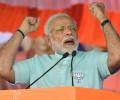
But what have the slogans achieved? Utkarsh Mishra/Rediff.com does a quick reality check.
 © 2026 Rediff.com - Investor Information - Advertise with us - Disclaimer - Privacy Policy - Sitemap - Feedback - About us - Terms of use - Grievances