
A presidential advisory sub-committee has recommended the federal government to extend the grace period for H1-B workers, who have lost their jobs, from the existing 60 days to 180 days so that the workers have enough opportunities to find a new job or other alternatives. "The immigration subcommittee recommends the Department of Homeland Security and the US Citizenship and Immigration Services (USCIS) to extend the grace period for H1-B workers, who have lost their jobs, from 60 days to 180 days," Ajay Jain Bhutoria, member of the President's Advisory Commission on Asian Americans, Native Hawaiians, and Pacific Islanders, said on Tuesday. In his presentation, Bhutoria highlighted the significant challenges faced by H1-B workers laid off from their jobs.
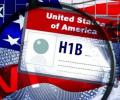
In what can be good news for hundreds of Indian IT professionals seeking the H-1B work visa, the US' immigration agency has decided to conduct a rare second lottery for the most sought-after visas to decide on the successful applicants who could not make it in the first random selection. The US Citizenship and Immigration Services (USCIS) said on Thursday that a decision was taken after determining that the computerised draw of lots for H-1B visas conducted early this year did not give them enough numbers of the Congressional mandated H-1B visas. The H-1B visa, the most sought-after among Indian IT professionals, is a non-immigrant visa that allows US companies to employ foreign workers in speciality occupations that require theoretical or technical expertise.

The Biden administration has announced that it is delaying the H-1B policy of the previous Trump administration on allocation of the popular foreign work visas by continuing with the lottery system until December 31, 2021, to give the immigration agency more time to develop, test and implement the modifications to the registration system. On January 7, the US Citizenship and Immigration Services (USCIS) announced to do away with the traditional lottery system in deciding the successful applicants for the H-1B visas. The H-1B visa is a non-immigrant visa that allows US companies to employ foreign workers in specialty occupations that require theoretical or technical expertise.

Some foreign guest workers in the US will be able to re-submit their applications for the H1-B visa, the most sought-after non-immigrant visa among Indian IT professionals, if their petition was solely rejected because it was based on the initial registration period, according to a federal agency. According to the US Citizenship and Immigration Services (USCIS), such re-submission of applications is for those whose applications have been rejected or administratively closed solely because the requested start date was after October 1, 2020. The H-1B visa allows US companies to employ foreign workers in speciality occupations that require theoretical or technical expertise.
The US has received enough electronic applications during the initial registration period to reach the 2022 fiscal year cap for the H-1B foreign workers visa, the most sought-after work visa among Indian professionals. The US Citizenship and Immigration Services, the federal agency which screens and allocates H-1B applications, said it was randomly selected from among the registrations properly submitted to reach the cap. The H-1B visa is a non-immigrant visa that allows the US companies to employ foreign workers in speciality occupations that require theoretical or technical expertise. The technology companies depend on it to hire tens of thousands of employees each year from countries like India and China.
Two US lawmakers have introduced a bill in the House of Representatives that aims at granting an automatic right to H-4 visa holders to work in the country, a move which will benefit the spouses of thousands of foreigners, including Indians, and also address the labour shortage affecting American businesses. H-4 visas are issued to dependent spouses and children who accompany H-1B, H-2A, H-2B, and H-3 visa holders to the United States. Many H-4 visa holders are highly skilled people in their own right and previously had careers of their own or worked to support their families.

This non-refundable fee will support the new electronic registration system to make the H-1B cap selection process more efficient for both petitioners and the federal agency, USCIS said.

A US federal judge in Houston has declared illegal a federal policy that prevents the deportation of hundreds of thousands of undocumented immigrants, including hundreds of Indians, brought to the US as children, but noted that the government can continue to process renewals of its current recipients.
The US is planning to resume the process of domestic visa revalidation in certain categories, like H-1B and L1 visas, on a pilot basis later this year, a move that will benefit tens of thousands of foreign tech workers, particularly from India. Until 2004, certain categories of non-immigrant visas, particularly the H-1B, could be renewed or stamped inside the US. After that, for the renewal of these visas, in particular, those on H-1B, the foreign tech workers have to go out of the country, mostly to their own country to get the H-1B extension stamped on their passport.

Those on H-1B visas have to find a new job within 60 days or head back to India.

The US has received enough petitions needed to reach the Congressionally-mandated 65,000 H-1B visa cap for the fiscal year 2021 and successful candidates for the most sought-after work visa among foreign professionals, including Indians, would be decided by a computerised draw of lots. The H-1B visa is a non-immigrant visa that allows the US companies to employ foreign workers in speciality occupations that require theoretical or technical expertise. The technology companies depend on it to hire tens of thousands of employees each year from countries like India and China.
ITServe's lawsuit against the USCIS alleges that the agency has no authority to misinterpret the existing regulations and shorten the approval durations.
In yet another immigration-friendly move that would benefit thousands of Indian-American women, the Biden administration has agreed to provide automatic work authorisation permits to the spouses of H-1B visa holders, most of whom are Indian IT professionals.
The move may result in a short-term cost impact for IT Indian companies, according to experts, despite the firms ramping up their local hiring and offshoring projects elsewhere to overcome visa-related issues.

The Congressional-mandated cap of 65,000 H-1B visas and another 20,000 in the advanced degree categories were reached within the first five days after USCIS started accepted H-1B applications in April.

This provides for H-1B extensions beyond the 6-year limit.
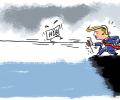
'If you are so blinded by the Buy American, Hire American policy, if you are not going to be fair, consistent and welcoming, in the end America will lose out.'
The company's H-1B petition on behalf of Anisetty was denied on the sole ground that the job offered to him did not qualify as an H-1B specialty occupation.

Lower numbers signal that that companies, especially the technology services firms, are steadily reducing the dependency on non-immigrant visas.
"Removing H-4 Dependent Spouses From the Class of Aliens Eligible for Employment Authorisation," said the US department of homeland security's unified agenda in the federal register notification of its semi-annual regulatory agenda.
The move will have a major impact on Indian women as they are the major beneficiary of the Obama-era rule.

USCIS received over 2,36,000 H-1B petitions during the filing period, which began April 1, including petitions filed for the advanced degree exemption.

The ruling by a federal judge in Oregon means that there will be no change in the H-1B visa issuance process for the fiscal 2018 which begins on April 3.
All advanced degree petitions not selected then became part of the random selection process for the 65,000 limit.
Rescinding its more than 13-year-old policy, the US Citizenship and Immigration Services has said that the burden of proof in establishing eligibility is, at all times, on the petitioner.

The USCIS announcement indicated that the US government is going to be tough and stringent in approval of H-1B visas this year.
The lawsuit has been filed by American Immigration Council and American Immigration Lawyers Association.

The US Citizenship and Immigration Services will determine from today the allocation of visas -- highly popular among IT professionals -- through computerised draw of lots.

As in the previous years, the US Citizenship and Immigration Services can issue a maximum of 65,000 H-1B visas, which is most popular among IT professionals and companies in IT services.

US H1-B visa cap reached within 5 days for 3rd straight year.

In addition, for those applying for certain L-1A and L-1B must submit an additional $4,500.
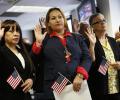
Political asylum is the right to live in a foreign country, and is given by the government of that country to people who have to leave their own country because they are in danger of persecution.

Indian IT firms - which have to incur an additional burden of about $400 million annually - have called it "discriminatory".

In a big relief for thousands of stranded Indian professionals in America due to the coronavirus pandemic, the US government has decided to allow applications by H-1B visa holders for an extended stay in the country. The US department of homeland security in a new notification has said it recognises that there are immigration-related challenges as a direct result of the coronavirus pandemic.

This is not a new rule, but very few people know about it.
United States Citizenship and Immigration Services, which is the federal agency responsible to process the visas, on Monday started accepting applications for H-1B visas for the fiscal year 2019, beginning October 1.

Extensions of H-1B visas have become even tougher, in particular if the employee has been on a bench for any part of their previous duration.

Once the most sought after H-1B American work visa is still having nearly 20,000 slots open seven weeks after the US Citizenship and Immigration Services (USCIS) started receiving applications for the financial year 2010 beginning October this year.

This move is expected to restrict movement of H-1B visa holders.
As predicted the US Citizenship and Immigration Services received a sufficient number of H-1B petitions to reach the statutory cap for fiscal year-2014 before the end of the fifth day of starting the filing.
 © 2026 Rediff.com - Advertise with us - Disclaimer - Privacy Policy - Sitemap - Feedback - About us - Terms of use - Grievances