
From the Sensex basket, NTPC, Power Grid, IndusInd Bank, Tata Steel, Tata Motors, JSW Steel, Tech Mahindra and Larsen & Toubro were the biggest gainers. Bharti Airtel, Maruti, ICICI Bank and Asian Paints were the laggards.

The last batch of quarterly earnings, global trends and trading activity of foreign investors will guide the equity market movement in a holiday-shortened week ahead, analysts said. Volatility may continue amid investors' cautious approach in the election season. Markets will remain closed on Monday due to the fifth phase of the Lok Sabha elections in Mumbai.

With an expected earnings growth of 15 per cent, benchmark index Nifty 50 may hit 24,500 level by December 2024 and move further to surpass the level of 26,500 by December 2025, Emkay Investment Managers said on Tuesday. The 50-share Nifty settled at 22,888.15 on Tuesday. In the previous day, it hit a new lifetime peak of 23,110.80.

Among the 30 Sensex companies, Kotak Mahindra Bank, Asian Paints, Reliance Industries, ITC, Sun Pharma, ICICI Bank, Axis Bank and JSW Steel were the major laggards. Larsen & Toubro, Tata Motors, Maruti, NTPC, Mahindra & Mahindra and UltraTech Cement were among the gainers.
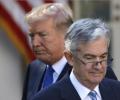
In a drastic measure to stem any major disruption to the US economy as a result of the coronavirus outbreak, the Federal Reserve has cut its benchmark interest rate to almost zero and said it would buy USD700 billion in bonds. The covid-19 pandemic has sickened more than 156,000 people worldwide and left more than 5,800 dead. The death toll in the US stands at 68, while infections neared 3,700.

From the Sensex basket, Titan, Reliance Industries, Asian Paints, Tech Mahindra, IndusInd Bank, UltraTech Cement, Wipro and ITC were the major laggards. ICICI Bank, Infosys, Bajaj Finserv, Tata Steel, Axis Bank, Bajaj Finance, Nestle and Mahindra & Mahindra were among the major gainers.
President Donald Trump has tapped Jerome "Jay" Powell to lead the US central bank, bypassing Janet Yellen for a second term despite praising her excellent management of the world's largest economy over the past four years.

From the Sensex basket, Sun Pharma, Maruti, Power Grid, Titan, JSW Steel, Tech Mahindra, Larsen & Toubro and State Bank of India were the major laggards. Tata Motors, Tata Consultancy Services and Nestle were the gainers.

PowerGrid was the top laggard in the Sensex pack, shedding around 2 per cent, followed by IndusInd Bank, Reliance, L&T, UltraTech Cement and Bajaj Finance.

Among the Sensex firms, Kotak Mahindra Bank, Axis Bank, Bharti Airtel, Sun Pharma, HCL Technologies, Mahindra & Mahindra, Titan and Tata Consultancy Services were the biggest gainers. UltraTech Cement, NTPC, Maruti, JSW Steel, Power Grid and Tata Motors were among the laggards.

The 30-share Sensex ended down 66 points at 28,438 and the Nifty ended down 15 points at 8,633.

The decline was led by index heavyweight Reliance Industries along with ITC and HDFC.

Benchmark equity indices climbed nearly 1 per cent on Wednesday on buying in HDFC Bank and Reliance Industries. Investors are eyeing the two important events lined up ahead -- the interim budget and the US Fed interest rate decision -- to derive further cues from. Recovering all the early lost ground, the 30-share BSE Sensex jumped 612.21 points or 0.86 per cent to settle at 71,752.11.

Foreign investors have pulled out a massive Rs 22,000 crore from Indian equities so far this month, due to uncertainty surrounding the outcome of the Lok Sabha elections and outperformance of Chinese markets.

An expected withdrawal of FIIs from the market likely to weaken the rupee against the dollar.

In the Sensex pack, 20 stocks ended in the red while 37 of the Nifty constituents closed the session with losses. NTPC was the biggest loser among the Sensex constituents, ending with a loss of 2.71 per cent.
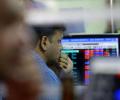
From the Sensex basket, Tech Mahindra, Tata Steel, JSW Steel, HCL Technologies, Tata Consultancy Services, Larsen & Toubro and Kotak Mahindra Bank were the biggest laggards. Mahindra & Mahindra, Power Grid, Bajaj Finance, IndusInd Bank and Maruti were the major gainers.
Among the Sensex firms, NTPC, Mahindra & Mahindra, Wipro, Kotak Mahindra Bank, Tata Steel, Asian Paints, Bharti Airtel, Power Grid, Titan and HDFC Bank were the major gainers. Bajaj Finance, Bajaj Finserv, Infosys, Tata Consultancy Services, Tata Motors and HCL Technologies were the laggards.

The market capitalisation of BSE-listed companies soared to an all-time high of Rs 406.52 lakh crore on Monday thanks to a rally in equities where the BSE Sensex climbed over 1 per cent. The 30-share BSE Sensex rallied 941.12 points or 1.28 per cent to finish at 74,671.28. During the day, it zoomed 990.99 points or 1.34 per cent to 74,721.15.

Trends in the global markets, trading activity of foreign investors and announcement of domestic macroeconomic data are the major factors that would drive investors' sentiment in a holiday-shortened week ahead, analysts said. Benchmark indices had a record-breaking rally in the past week driven by impressive GDP data. Equity markets would remain closed on Friday for Mahashivratri.

Among the Sensex firms, UltraTech Cement, JSW Steel, Tata Motors, Bharti Airtel, State Bank of India, Larsen & Toubro, Infosys and Bajaj Finserv were the major gainers. On the other hand, NTPC and Tech Mahindra were the laggards.
The Reserve Bank of India's interest rate decision, macroeconomic data and global trends will drive investors' sentiment this week, with markets hoping to continue the positive momentum after ending FY24 on a buoyant note, analysts said. In addition, the trading activity of foreign investors, the rupee-dollar trend and the movement of global oil benchmark Brent crude would also influence trading in equity markets. The 30-share BSE Sensex climbed 14,659.83 points or 24.85 per cent in the 2023-24.
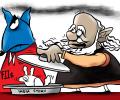
The value of FPIs (Foreign Portfolio Investors) holding in Indian equities reached $738 billion in the three months ended December 2023, marking a surge of 13 per cent from the preceding quarter, driven by the strong performance of the domestic stock market, according to a report by Morningstar. The value of FPIs investment was at $651 billion in the September quarter of the current fiscal. On a year-on-year basis, the value of such investments rose 26 per cent from $584 billion in December 2022.
Global fund managers remain bullish on the Japanese stock markets, which is now their most preferred destination in the Asian region. Both Morgan Stanley and Jefferies in their recent reports, have cited their preference for the Land Of The Rising Sun, which is fast becoming the land of the rising equities, too.

Stock markets will be driven by quarterly earnings by index majors, global trends and the RBI's interest rate decision this week after digesting news on budget proposals and US Federal policy outcome, say analysts. The trading activity of foreign investors and the movement of global oil benchmark Brent crude would also dictate trends in equities. "On the domestic front, the MPC (Monetary Policy Committee) meeting is scheduled from February 6-8.

In August, the Fed announced that it would develop a "new interbank 24x7x365 RTGS with integrated clearing functionality to support faster payments in the United States". The Fed Board asked for comments on FedNow by November. In reply to this, Google mentioned its experience of launching Google Pay -- Google's payments app which uses the UPI -- in India.

US's terrible political and economic leadership will ultimately cost the dollar its value. India must act early to avoid being dragged down, suggests R Jagannathan.
Foreign Portfolio Investors (FPIs) continued their buying spree and poured close to Rs 4,800 crore in the Indian equity markets in the first week of January driven by confidence in the country's robust economic fundamentals. Additionally, they injected Rs 4,000 crore in the debt market during the period under review, data with the depositories showed. With expectations of a prolonged decline in US interest rates in 2024, there is an anticipation that FPIs will likely escalate their purchase, particularly in the initial months of the New Year leading up to the general elections, V K Vijayakumar, chief investment strategist at Geojit Financial Services, said.

While the markets have factored in a number close to 350 for the BJP and almost 400 for the NDA, 50 seats fewer could trigger a market correction

Among the Sensex firms, Infosys, NTPC, Power Grid, Titan, ITC, Tech Mahindra, Hindustan Unilever, Axis Bank, Tata Consultancy Services, Bajaj Finserv, Reliance Industries and UltraTech Cement were the biggest gainers. In contrast, IndusInd Bank, Kotak Mahindra Bank, Mahindra & Mahindra, JSW Steel, HDFC Bank and Maruti were the major laggards.

Gold prices have been on an uptrend in the last few months, rising nearly 28 per cent to $2387 per ounce now. This rise in gold price, according to Christopher Wood, global head of equity strategy at Jefferies, is attributed to the demand from China amid lack of investor euphoria as regards the yellow metal. "Recent developments show a distinct lack of investor euphoria as regards gold, the question remains what is driving the current rally.

Among the Sensex firms, IndusInd Bank, Maruti, Titan, Reliance Industries, NTPC, Mahindra & Mahindra, Larsen & Toubro, Kotak Mahindra Bank and HDFC Bank were the major laggards. UltraTech Cement, JSW Steel, Axis Bank, Tata Consultancy Services, Wipro and ITC were the major gainers.

A higher-than-expected consumer price inflation (CPI) print for March in the US has dashed hopes of an interest rate cut by the US Federal Reserve (US Fed) in June. Analysts now expect the US central bank to start cutting rates in September, provided inflation remains in check and oil prices remain supportive. The markets, analysts believe, partially factored in this possibility.

Reserve Bank of India (RBI) is unlikely to cut the benchmark interest rate at its upcoming monetary policy review meeting, taking place soon after the announcement of the Lok Sabha election results, amid inflation challenges, said experts. The Monetary Policy Committee (MPC) may also refrain from rate cut as economic growth is picking up, notwithstanding the elevated interest rate of 6.5 per cent (repo) prevailing since February 2023. The meeting of the Reserve Bank Governor Shaktikanta Das headed MPC is scheduled for June 5 to 7.

An aggressive rate hike by the US Fed and the possibility of a recession can trigger a slide in these stocks, which will be a good opportunity to buy from a long-term perspective.

'Returns can be very variable in equity markets.' 'That is why I tell small investors don't put 100 per cent of your money in equities, even if you are young.'

For one thing, US Fed Chairman Ben Bernanke was perhaps right in postponing the quantitative easing taper even though the markets had complained at that time that they were primed for some reduction in QE3 and the Fed had missed an opportunity to execute their plans without causing too much of a flutter.

Analysts remain bullish on the road ahead for the equity markets, but warn against volatility on account of domestic and global cues. The upcoming Lok Sabha elections back home and the interest rate trajectory of the US Federal Reserve, they said, will be the two most important factors that the markets will keep a tab on. That apart, the valuation of the Indian markets, they feel, will also be eyed in context of how global peers are performing.

Global trends and trading activity of foreign investors would largely dictate terms in the equity markets this week amid a lack of major domestic triggers, analysts said. Markets may face near-term consolidation due to elevated valuations, they noted. "While the previous week was predominantly shaped by developments in the US Federal Reserve policy, attention will now shift to the Bank of Japan's policy decision on December 19," Santosh Meena, Head of Research, Swastika Investmart Ltd, said.

Among the Sensex firms, Infosys, Tech Mahindra, HCL Technologies, Tata Consultancy Services, Wipro and JSW Steel were the major gainers during the morning deals. Nestle, Bharti Airtel, Axis Bank ITC were among the laggards.
