
RBI governor Raghuram Rajan, on Monday, said the current level of the rupee is "pretty reasonable" and any attempt to devalue it may lead to a surge in inflationary pressures and "offset any benefits"

Among the Sensex firms, JSW Steel, Titan, Tata Steel, Sun Pharma, Reliance Industries, Bharti Airtel, Tata Motors and HDFC Bank were the biggest gainers. NTPC, Tech Mahindra, Maruti, State Bank of India and Larsen & Toubro were among the laggards.

Indian airline industry is expecting to prune its net losses to Rs 3,000-5,000 crore in this fiscal from an estimated Rs 17,000-17,500 crore in FY2023 on the back of improved yields and stable cost environment, credit ratings agency ICRA said on Tuesday. At the same time, ICRA also estimated that domestic air passenger traffic will expand by 8-13 per cent each in FY2024 and FY2025. The rating agency has also maintained its stable outlook on the industry in view of healthy passenger traffic growth, improved yields and a stable cost environment.

The International Monetary Fund (IMF) warned on Tuesday that India's general government debt (comprising both central and state government debt) could exceed 100 per cent of gross domestic product (GDP) in the medium term. It also cautioned that long-term debt sustainability risks are high due to the significant investment required to meet India's climate change mitigation targets. The Indian government, however, disagreed, arguing that risks from sovereign debt are extremely limited as it is predominantly denominated in domestic currency.

Forex dealers attributed the fall to increased demand for the dollar.

Indian market probably has more headroom than the US, says Geoff Lewis, senior strategist for Asia, Manulife Asset Management.

The domestic currency had lost 15 paise to close at 63.82 on Wednesday.
.jpg)
Demand for the dollar from importers weighed on the local currency.

Russian oil supplies to India will continue to flow unhindered and suppliers will come up with ways to sidestep secondary sanctions, a Russian official told Business Standard.

Heavy dollar demand from some banks and importers, mainly oil refiners, weighed on the rupee's fortunes.

A whirlwind trip of the dark underbelly of global finance, covering everything from tax law changes to aiding criminals to decamp with money from bank accounts.

Businesspersons who have the potential to contribute to the economy of a country are given a red carpet welcome by way of a start-up visa.

'Gold prices thrive on volatility and more so when the stock markets trend downward.'

In worldwide trade, the American dollar traded with solid strength against all major emerging currencies

Foreign Portfolio Investors (FPIs) selling spree continued as they dumped Indian equity worth over Rs 5,800 crore this month so far on rising interest rates and geopolitical tensions in the Middle East. This came after such investors withdrew Rs 24,548 crore in October and Rs 14,767 crore in September, data with the depositories showed. Before the outflow, FPIs were incessantly buying Indian equities in the last six months from March to August and brought in Rs 1.74 lakh crore during the period.

Global trends, trading activity of foreign investors and movement of oil benchmark Brent crude would dictate terms in the domestic markets this week, analysts said. Equity markets, which fell nearly 3 per cent last week, may face volatile trends amid the monthly derivatives expiry on Thursday. "This week marks the September month Futures and Options (F&O) expiry, which is expected to bring about volatility in the market," said Santosh Meena, Head of Research, Swastika Investmart Ltd.
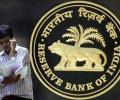
The Reserve Bank has told the International Monetary Fund (IMF) that the objective of frequent interventions in the forex market is to curb excessive volatility, dismissing the Fund's rationale for reclassifying India's exchange rate regime. The IMF, following the Article IV consultation with the Indian authorities, reclassified the status of the exchange rate regime to "stabilised arrangement" from "floating" for period between December 2022 to October 2023. India's Executive Director at IMF K V Subramanian and Senior Advisors Sanjay Kumar Hansda and Anand Singh questioned the selection period adopted by the Fund for analysis and also reclassification of the country's exchange rate regime.

Reiterating warnings made in dropped leaflets, the IDF's Arabic spokesman Lieutenant Colonel Avichay Adraee directed Palestinians to continue moving south of Wadi Gaza.

Bajaj Finserv was the biggest loser among the Sensex constituents, sliding 3.81 per cent, followed by Bajaj Finance, Tata Steel, Reliance Industries, HCL Tech, SBI, Larsen & Toubro and Mahindra & Mahindra, Axis Bank and Titan. On the other hand, Kotak Mahindra Bank, Infosys, Tech Mahindra, Power Grid, Asian Paints and Wipro were the gainers.

The rupee hovered in a narrow range of 62.20 and 62.28

A smart rebound in the stock market and sustained capital inflows restricted the rupee loss

'From a risk-return perspective, large-cap funds may generate lower-than-historical average returns in 2024, whereas mid-, and small-cap funds hardly have any upside left.'

Fresh foreign capital outflows also affected the rupee sentiment, a forex dealer said.

Foreign Portfolio Investors' (FPIs) selling spree continues as they pulled out over Rs 3,400 crore from the Indian equity markets in the first three trading sessions of November on rising interest rates and geopolitical tensions in the Middle East. This came after such investors withdrew Rs 24,548 crore in October and Rs 14,767 crore in September, data with the depositories showed. Before the outflow, FPIs were incessantly buying Indian equities in the last six months from March to August and brought in Rs 1.74 lakh crore during the period.

RBI's interest rate decision, macroeconomic data, global trends and trading activity of foreign investors are the crucial factors to drive equity markets in a holiday-shortened week ahead, analysts said. Markets would remain closed on Monday for Gandhi Jayanti. "While global cues will continue to dictate trends in local markets, focus will shift to RBI's monetary policy announcement on Friday. "Although the market is expecting a status quo on interest rates, global concerns like rising US dollar index and bond yields coupled with surging crude oil prices continue to weigh on investors' minds.

Those who consider the rupee as a proxy for virility have started thumping their chests and dreaming of dethroning the dollar from its coveted position, observes Tamal Bandyopadhyay.

Reserve Bank governor Shaktikanta Das on Friday cautioned banks against any build-up of asset-liability mismatches, saying both are detrimental to financial stability and hinted that the ongoing crisis in the US banking system seems to have emanated from such mismatches. Delivering the annual KP Hormis (Federal Bank founder) commemorative lecture in Kochi this evening, the governor was quick to acknowledge and assure that the domestic financial sector is stable and the worst of inflation is behind us. Amid the continuing volatility in exchange rates, especially due to the excessive appreciation of the US dollar, and its impact on the external debt servicing ability of nations, Das said, "We have nothing to fear as our external debt is manageable and thus appreciation of the greenback does not pose any problem to us."

The Indian rupee may remain under depreciation pressure on account of plateauing of exports and subsequent widening of the current account deficit, said the Economic Survey 2022-23 tabled in Parliament on Tuesday. It said the "risks to the current account balance stem from multiple sources". The country's current account deficit (CAD) widened to 4.4 per cent of the GDP in the quarter ended September from 2.2 per cent in April-June due to higher trade gap, as per latest data of the Reserve Bank of India.

Equity markets rallied after softer-than-expected inflation data in the US and UK rekindled hopes of the end of the rate-hiking cycle by major central banks. The soft inflation reading drove down bond yields and the US dollar, whetting the appetite for risky assets. The 10-year US bond yield fell below 4.5 per cent after topping 5 per cent less than a month ago.

With the first quarter earnings season coming to an end, the domestic equity markets would be driven by global trends and trading activity of foreign investors this week, analysts said. The movement of global oil benchmark Brent crude and the rupee against the dollar would also drive trends in the market. "Macroeconomic indicators, trends in global stock markets and FII activities will be pivotal in shaping market trends in the coming days," Pravesh Gour, senior technical analyst at Swastika Investmart Ltd, said.
Foreign portfolio investors (FPIs) have withdrawn over Rs 12,000 crore from Indian equities this month so far, mainly due to a sustained rise in US bond yields and the uncertain environment resulting from the Israel-Hamas conflict. However, the story takes an intriguing turn on observing FPI activity in Indian debt as they have infused over Rs 5,700 crore into the debt market during the period under review, data with the depositories showed. Going ahead, the trajectory of FPIs' investments in India will be influenced not only by global inflation and interest rate dynamics but also by the developments and intensity of the Israel-Hamas conflict, Himanshu Srivastava, associate director - manager research, Morningstar Investment Adviser India, said.

Reliance Industries, the Tata group, Bharti Airtel and Aditya Birla are among Indian conglomerates that have hedged their revenue and costs linked to the US dollar, giving them financial cover as the rupee fell past 80 against the greenback on Tuesday.

The American currency regained its buoyant strength after a brief sideways movement following overnight US Fed's optimistic tone about the future of the US economy

The OCCRP report alleges that at one point, EIFF and EMRF held free-floating shares ranging from 8 per cent to nearly 14 per cent in the four Adani Group companies.

The rupee largely shrugged off the high volatility in stocks and rebounded sharply towards the fag-end trade following bout of dollar selling by exporters

Macroeconomic data announcements, global trends and trading activity of foreign investors would guide momentum in the equity market this week, analysts said. Markets ended a five-week losing streak and gained nearly a per cent last week, helped by a sharp rebound on Friday. Last week, the BSE benchmark jumped 500.65 points or 0.77 per cent and the Nifty gained 169.5 points or 0.87 per cent.

After falling 10 per cent against the greenback in 2022, the rupee staged a comeback in 2023 as it appreciated, albeit marginally, on the back of strong portfolio inflows, in addition to timely intervention by the Reserve Bank of India. The Indian unit appreciated by 0.16 percent in six months until June 28. The rupee stood in third place in terms of appreciation against the US dollar among the 12 Asian currencies and in 12th place of the 23 emerging-market currencies.

Reserve Bank Governor Shaktikanta Das on Wednesday said in the wake of appreciating US dollar, the movement of rupee has remained least disruptive as compared to its peers, and the size of foreign exchange reserve is comfortable. On a financial year basis (from April to October 2022), the rupee has appreciated by 3.2 per cent in real terms, even as several major currencies have depreciated, he said while announcing the latest set of bi-monthly monetary policy. "The story of the rupee has been one of India's resilience and stability," the Governor said while pointing out that the appreciation of the US dollar this year, which precipitated large-scale depreciation of all major global currencies including the Indian rupee, has drawn wide attention.

In forward market, premium for dollar declined in view of mild receivings from exporters.

FIFA chief Gianni Infantino said the Women's World Cup had generated more than $570 million in revenue
 © 2026 Rediff.com - Investor Information - Advertise with us - Disclaimer - Privacy Policy - Sitemap - Feedback - About us - Terms of use - Grievances