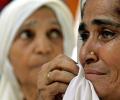
As a consequence of prominence given to the brutality during those few days, a very important aspect of that episode got almost glossed over. This was the intervention by a very significant section of people who restored faith in humanity, and conveyed the message that only a small section of Indians, that too politically backed, were consumed by anti-Sikh majoritarianism. The overlooked facet of the events of 1984 was the story of significant sections of the city's populace, public figures and nondescript ones, stepping out hand-in-hand, to first stand with little but bravery in hands, in the way of attackers, and thereafter to provide immediate relief to those who lives were uprooted and who lost family members in the violence, recalls Nilanjan Mukhopadhyay.

According to a media report published on Saturday, only one of the outfits to which eight of the arrested activists belonged was declared as unlawful.

It's impossible to get the actual number of people dying and not getting compensation but the number is obviously much more than stingy official estimates. In any case, nowhere in the world are people sent inside gas chambers without oxygen cylinders and masks. Unofficial estimates suggest that on an average, one sanitation worker dies every five days all over the country, writes Shyamal Majumdar.

JNU student union president Kanhaiya Kumar came under strong criticism for his remarks that 1984 anti-Sikh riot was a "mob-led massacre" while 2002 Gujarat riots were a "state sponsored violence."
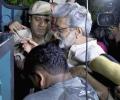
The top court directed the Maharashtra government to place before it the material which was collected during the investigation against Navlakha and placed before the high court in a sealed cover.

The Allahabad high court on Monday extended the stay on the execution of death sentence awarded to Nithari killings prime accused Surinder Koli till December 23.
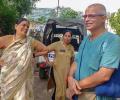
Maharashtra police on Tuesday raided the homes of prominent Left-wing activists in several states and arrested at least five of them for suspected Maoist links. Near simultaneous searches were carried out at the residences of prominent Telugu poet Varavara Rao in Hyderabad, activists Vernon Gonzalves and Arun Farreira in Mumbai, trade union activist Sudha Bhardwaj in Faridabad, and civil liberties activist Gautam Navalakha in New Delhi. Subsequently, Rao, Bhardwaj and Farreira were arrested. Although Navalakha was also arrested, the Delhi high court ordered police not to take him out of the national capital at least until Wednesday. According to unconfirmed reports, others whose residences were raided are Susan Abraham, Kranthi Tekula, Father Stan Swamy in Ranchi and Anand Teltumbde in Goa. The raids were carried out as part of a probe into the violence between Dalits and the upper caste Peshwas at Koregaon-Bhima village near Pune after an event called Elgar Parishad, or conclave, on December 31 last year. Here are their brief profiles:
The apex court questioning the police about the arrests said that 'dissent is the safety valve of democracy and if you don't allow these safety valves, it will burst.'

Earlier in January this year, the death sentence of Surender Koli was commuted to life imprisonment by the Allahabad high court.
"Inordinate delay" in deciding Koli's mercy plea led to the HC verdict.

'Muslims and Dalits must erase the way they remember their past, or carry out their their performances in private,' says Jyoti Punwani, as Maharashtra's Censor Board denies permission to a play Jai Bhim, Jai Bharat.

The families of the Muslim youth from Hashimpura who were shot dead 28 years ago had some committed supporters in their long struggle for justice.
 © 2026 Rediff.com - Investor Information - Advertise with us - Disclaimer - Privacy Policy - Sitemap - Feedback - About us - Terms of use - Grievances