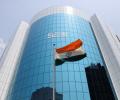
Sebi Chairman Tuhin Kanta Pandey announced intensified surveillance and technology-driven enforcement to combat pre-investment scams targeting retail investors, who are increasingly being lured by fake trading apps and promises of high returns.

The Securities and Exchange Board of India (Sebi) has, in principle, agreed to the proposed settlement of the long-pending colocation and dark fibre cases filed by the National Stock Exchange (NSE), Sebi chairman Tuhin Kanta Pandey said on Wednesday.

Sebi is working with other regulators to expand the CAS framework.

Securities and Exchange Board of India (Sebi) Chairman Tuhin Kanta Pandey on Thursday called for sharper disclosures in IPO (initial public offering) offer documents, particularly around risk factors, valuation rationale, objects of the issue, and utilisation of proceeds.
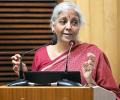
Finance Minister Nirmala Sitharaman on Thursday said the government cannot restrain retailers from trading in Futures and Options (F&O) but will definitely create awareness regarding the risks involved in putting money in such instruments.

Stock market regulator Sebi's board on Friday cleared significant reforms, focusing on IPO regulations, simplified entry for foreign investors, and a new framework for anchor investors in public issues.

The rise of algorithmic and high-frequency trading brings efficiency but also demands robust risk controls, real-time monitoring and compliance safeguards, Securities and Exchange Board of India Chairman Tuhin Kanta Pandey told the Morningstar Investment Conference India 2025.

The Securities and Exchange Board of India (Sebi) on Wednesday overhauled the cost framework for the 80 trillion domestic mutual fund (MF) industry, introducing a simplified structure aimed at improving transparency for investors while balancing the impact on asset managers.

Market experts say India's IPO ecosystem has matured to support both primary and secondary issuance, rendering the mix less consequential.

Days after an outage at MCX, Sebi chairman Tuhin Kanta Pandey on Tuesday expressed his displeasure over "repeated" instances of breakdowns at exchanges.

Markets regulator Sebi will soon set up a working group to undertake a comprehensive review of short selling and the Securities Lending and Borrowing (SLB) frameworks, its chairman Tuhin Kanta Pandey said on Friday. The framework for short selling, introduced in 2007, has largely remained unchanged since its inception.
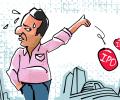
India's equity markets may have expanded rapidly, but initial public offerings (IPOs) are increasingly becoming exit vehicles for early investors rather than as engines for raising long-term capital, a shift that undermines the spirit of public markets, Chief Economic Advisor V Anantha Nageswaran warned on Monday at a CII event.
All board members and staff of the Securities and Exchange Board of India (Sebi) will be required to declare their assets, liabilities, trading activities, and relevant relationships at multiple stages - at the time of appointment, annually, upon key events, and at exit. This is part of a series of recommendations by a high-level committee constituted by the markets regulator in a bid to overhaul conflict-of-interest and disclosure rules.

India's market regulator is moving ahead to include real estate investment trusts (Reits) in benchmark indices in a phased manner, Sebi chief Tuhin Kanta Pandey said, while asserting that the regulator was working to strengthen the link between infrastructure building and the markets.

Algo trading should be segregated in a separate account with only risk capital deployed.
The Securities and Exchange Board of India (Sebi) has planned a slew of further relaxations to facilitate easier registrations of foreign portfolio investors (FPIs), including a common know-your-client (KYC) and smoother documentation through India digital signature.
The Securities and Exchange Board of India (Sebi) has identified around Rs 77,800 crore as "difficult-to-recover" or DTR dues in its annual report for 2024-25 (FY26), marking a nearly 2 per cent increase from the previous year. These dues remain unrecovered despite exhaustive recovery efforts.

Chartered accountants' apex body ICAI will be preparing a research paper to help markets watchdog Sebi in dealing with financial frauds. ICAI president Charanjot Singh Nanda on Saturday said the institute will set up a working group and hold discussions with Sebi to finalise the various aspects that will be looked into with respect to tackling financial fraud.

'Such stocks may be useful for aggressive portfolios, but should not be part of the core holdings.'

The Indian government has appointed Finance Secretary Tuhin Kanta Pandey as the new chairman of the Securities and Exchange Board of India (SEBI). Pandey, a 1987-batch IAS officer, will replace Madhabi Puri Buch, whose three-year tenure ends on February 28. Pandey's appointment comes at a time when the markets are experiencing bear pressure due to withdrawals by foreign institutional investors (FIIs). Pandey has extensive experience in the finance ministry, having served as the longest-serving secretary in the Department of Investment and Public Asset Management (DIPAM) and the Department of Public Enterprises (DPE). He also played a key role in the framing of the 2025-26 Budget and the drafting of the new Income Tax Bill. Pandey's appointment is for an initial period of three years.

The National Stock Exchange (NSE) has offered to pay Rs 1,388 crore to the Securities and Exchange Board of India (Sebi) to settle the colocation and dark fibre cases, potentially clearing the way for its much-awaited initial public offering (IPO). This is the biggest-ever settlement plea made with the markets regulator.

The Securities and Exchange Board of India (Sebi) on Wednesday announced a slew of measures to ease the compliance burden in the stock markets ecosystem, encourage more companies to list on the bourses after reverse flipping to India, and facilitate greater foreign fund flows into government bonds.

Markets regulator Sebi is actively working with the Ministry of Finance and other financial regulators on setting up a centralised KYC (Know Your Customer) system, chairman Tuhin Kanta Pandey has said. The Central KYC is an online database that maintains KYC records of customers in a centralised manner, aiming to streamline compliance across financial institutions.

This will be the first full-year Budget of the BJP-led National Democratic Alliance government since it came to power for a third consecutive term in July last year.

The RBI under new Governor Sanjay Malhotra on Friday cut interest rate for the first time in nearly five years as the central bank pivoted the policy stance to support a shuttering economy. The 25 basis points rate cut to 6.25 per cent comes after last rate reduction in May 2020. The last revision of rates happened in February 2023 when the policy rate was hiked by 25 basis points to 6.5 per cent.

Stock exchanges' levy of penalties, ranging from Rs 3 lakh to Rs 12 lakh, on public-sector undertakings (PSUs) for lapses in board composition for the 2024-25 October-December quarter has brought forth issues of governance. Last month, 16 PSUs requested bourses to waive these penalties, arguing that these lapses were neither due to negligence nor within their control, as the appointment of directors is managed by the government.

'We are not incentivising the old tax scheme. These taxpayers will also shift to the new regime after comparison.'

The Jane Street-Sebi saga is more than a legal dispute -- it's a litmus test for India's ambitions as a global financial hub.

Seasoned bureaucrat and a stickler for rules Finance Secretary Tuhin Kanta Pandey will be at the helm of capital market regulator, Securities and Exchange Board of India (SEBI), for three years. The 1987-batch Odisha-cadre Indian Administrative Service (IAS) officer, Pandey, would replace Madhabi Puri Buch, whose three-year term ends on Friday.
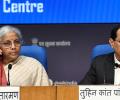
Under its new chairman Tuhin Kanta Pandey, the Securities and Exchange Board of India (Sebi) has gravitated towards greater transparency and ease of doing business, setting an objective of "effective and optimum" regulation. On Monday, during its first board meeting under Pandey, the regulator has decided to constitute a high-level committee (HLC) to review conflicts of interest and unveiled initiatives to simplify regulatory processes.

Finance Minister Nirmala Sitharaman on Friday participated in a traditional 'halwa' ceremony, marking the final stage for the preparation of Union Budget 2025-26 to be unveiled on February 1 in the Lok Sabha. The ceremony is a customary ritual in which traditional dessert 'halwa' is prepared and served to officials and staff members of the finance ministry who are involved in the preparation of the Budget.

The finance minister continues to be backed by the same policy team in charting out the broad strategy as in the few earlier Budgets.

'Nearly 10 million people will benefit from the increase in the rebate limit for those earning up to Rs 12 lakh.' 'We expect all that money will come back into the economy in either savings, consumption, or investments.'

The Budget announcement of zero tax for earnings upto Rs 12 lakh per annum and the rejig of tax slabs across the board should prompt more than 90 per cent of individual taxpayers to embrace the new tax regime as compared to the about 75 per cent as of now, CBDT Chairman Ravi Agrawal said. Agrawal also highlighted the government's focus on "non-intrusive" tax administration through enhanced use of Artificial Intelligence (AI) and simplified tax processes for common taxpayers. He emphasized the benefits of the new tax regime (NTR), which offers simple calculations and allows taxpayers to file their ITR without professional help. The CBDT chief stated that the Budget provisions related to income tax payment benefit all income earners, not just those earning Rs 12 lakh per annum, creating a positive sentiment in the economy and propelling growth. The department is also harnessing technology, including AI and data analytics, to widen and deepen the tax base, resulting in increased compliance and tax revenue. Agrawal further highlighted the positive impact of data availability and simplified tax processes on compliance rates, citing examples of taxpayers filing revised returns and paying taxes after being prompted by the department's data analysis.
'Our attempt to honour the taxpayer has been since 2014 and more actively since 2019-2020 onwards.'

The Maharashtra government has become the owner of iconic Air India building with the Union government approving transfer of the asset on Thursday. The Maharashtra government bought the Air India building at Nariman Point in Mumbai for Rs 1,601 crore. "GoI has approved transfer of Air India building, Mumbai of AI Assets Holding Company Ltd (AIAHL) to Government of Maharashtra (GoM) at consideration of Rs.1601 cr. GoM has agreed to waive dues of Rs. 298.42 cr, which would have been otherwise payable by AIAHL to GoM for this transaction," DIPAM secretary Tuhin Kanta Pandey said in a post on X.

Institutional investors lapped up Coal India shares in this fiscal's maiden government stake-sale, with Rs 6,500 crore bids pouring in on the first day of the offer-for-sale. The government had offered over 8.31 crore shares to institutional investors on Thursday under the offer-for-sale (OFS), but received bids for 28.76 crore shares or 3.46 times. At the indicative price of Rs 226.12 a share, the bids of institutional buyers are worth Rs 6,500 crore.

The government on Tuesday said it has received Rs 4,353 crore as dividend tranches from seven public sector enterprises, including Coal India and PFC. Government has respectively received about Rs 575 crore and Rs 2038 crore from Nuclear Power Corporation of India Ltd and Coal India Ltd as dividend tranches," Department of Investment and Public Asset Management (DIPAM) secretary Tuhin Kanta Pandey tweeted. Besides, about Rs 887 crore and Rs 653 crore have been received from Power Finance Corporation (PFC) and Hindustan Aeronautics Ltd as dividend tranches.
The government has received Rs 413 crore as dividend tranches from five CPSEs, including NLC and NALCO. "Government has received Rs 78 crore and Rs 165 crore respectively from Antariksh corp and NLC as dividend tranches," DIPAM secretary Tuhin Kanta Pandey tweeted.

'The Budget needs to focus more on social welfare schemes.'
 © 2026 Rediff.com - Investor Information - Advertise with us - Disclaimer - Privacy Policy - Sitemap - Feedback - About us - Terms of use - Grievances