
The amount involved in banking system frauds surged to Rs 21,515 crore in the first half of FY26, up 30 per cent from the same period last year, even as the number of frauds fell 2.8 times to 5,092.

The country's banking system, while remaining "resilient" with bad loans at over a decade low and strong capital buffers, will continue to face intense competition from non-bank sources for resource mobilisation, said the Reserve Bank of India's (RBI's) Trend and Progress of Banking in India 2024-25 report.

Last fortnight, State Bank of India Chairman C S Setty lifted the veil on a subject long spoken of in corporate corridors: Why can't our banks finance mergers and acquisitions (M&As)? Change is in the air: Indian Banks' Association (of which Setty is the chairman) is to "make a formal request" to Mint Road to make way for it. Thus far the exclusive turf of foreign banks even though its funding remains offshore - as in, it's not on these entities rupee-book (and a few select shadow banks) - a most lucrative segment in the investment banking suite, M&As, will be homeward-bound.

Commercial banks in India reported a sixth consecutive year of rise in their net profits in 2023-24 while bad loans continued to fall, according to the Reserve Bank of India's (RBI's) annual publication "Trends and Progress of Banking in India", released on Thursday. "Banks' profitability rose for the sixth consecutive year in 2023-24 and continued to rise in H1:2024-25 with the return on assets (RoA) at 1.4 per cent and return on equity (RoE) at 14.6 per cent," the report said.

The average value of retail digital payments dropped 48 per cent from Rs 8,769 in March 2021 to Rs 4,560 in March 2024 due to a growing preference to use digital modes of transactions for small value payments, according to the Reserve Bank of India's (RBI) report on the trend and progress of banking in India.

RBI's exercise will take into account standards of governance, the viability of the payment bank (PB) business model, and changes, if any, if needed.

The number of frauds in the banking sector during the first half of the current financial year has increased substantially to 14,483 cases, although the amount involved is only 14.9 per cent of the previous year's amount, according to a RBI report. The report on Trend and Progress of Banking in India 2022-23, underlined the need to protect the banking system and the payments system from the risks of fraud and data breaches emanating from cyber threats. As many as 14,483 frauds were reported involving an amount of Rs 2,642 crore in the first half of current financial year, as compared to 5,396 cases (Rs 17,685 crore) in the same period a year ago.

The top 50 exposures, amounting to Rs 7.8 trillion, of government-registered non-banking financial companies (G-NBFCs) constitute about 40 per cent of corporate credit within the NBFC sector, indicating concentration risk, according to the Reserve Bank of India's report "Trend and Progress of Banking in India 2022-23". Notably, all the 50 are tied to the power sector, a domain fraught with inherent challenges, the report said. The report highlighted recognising the escalating systemic importance of G-NBFCs, the Prompt Corrective Action (PCA) framework had been expanded to include G-NBFCs excluding those falling within the base layer.

The banking regulator was uncomfortable with the runaway pace at which consumer credit was growing.

'The last year's growth is a foretaste of things to come in the retail credit market.'

"We will raise Rs 300 crore via bonds of two-, three- and five-year tenures. This will be our maiden bond issuance and is part of our effort to widen funding sources," says Vimal Bhandari, executive vice-chairman and chief executive officer (CEO), Arka Fincap. The firm, a subsidiary of Kirloskar Oil, is only five years old and small (assets of around Rs 5,000 crore with an "AA" rating), but the response to this float will be closely watched: It would be the first by a non-banking finance company (NBFC) after Mint Road upped the risk weights on bank exposures to them by 25 percentage points. The move by the Reserve Bank of India (RBI) has caught NBFCs off guard even though the issue had been flagged by Governor Shaktikanta Das with their corner-room occupants (and that of banks) in July and August 2023 - on consumer credit and the dependency on bank borrowings.

In the June quarter of FY24, 51 per cent of consumers who took small-ticket personal loans already had more than four credit products at the time of accessing yet another new loan, compared with just 17 per cent in the June quarter of FY20, points out Tamal Bandyopadhyay.

In FY23, the State Bank of India (SBI) reported a 57.4 per cent jump in its net profit to Rs 55,684.17 crore. But the chairman of the country's largest bank, Dinesh Khara's annual pay for this creditable performance was just Rs 37 lakh (his peers at state-run banks are no better off). Look at his private bank rivals - most pocketed in excess of Rs 7 crore annually - plus stock options.

Companies don't have to be in the field to nudge people to return money they owe lenders.

The health of Indian banks continued to improve in 2021-22 with their balance sheet growing at double digits after a gap of seven years and their asset quality and capital position bettering, the Reserve Bank of India (RBI) said in its annual report on trend and progress of banking in India. At the same time, the banking regulator flagged the issue of slippages from restructured accounts. "Going forward, it is imperative that banks ensure due diligence and robust credit appraisal to limit credit risk," the report said.
During the first half of the financial year 2021-22, the reported number of fraud cases in various banking operations increased to 4,071 as against 3,499 in the year-ago period, the RBI's Report on Trend and Progress of Banking in India 2020-21 showed. However, the amount involved in frauds in various banking operations based on the date of reporting declined to Rs 36,342 crore during April-September 2021 from Rs 64,261 crore in the corresponding period of the previous financial year, the report said on Tuesday. In H1 2021-22, banks saw 1,802 reported cases of frauds amounting to Rs 35,060 crore which were related to advances.

Days after the government said the Reserve Bank will introduce a digital currency in 2022-23, Governor Shaktikanta Das on Thursday said the central bank does not want to rush and is carefully examining all aspects before introduction of the Central Bank Digital Currency (CBDC). He, however, declined to give any timeline for the launch of the CBDC. In her Budget 2022-23 speech, Finance Minister Nirmala Sitharaman had announced that the RBI will introduce a digital currency in the next financial year beginning April 2022 to boost the digital economy and for more efficient currency management.
They straddle many different (non-financial) lines of business with sometimes opaque overarching governance structures.

Is the worst over for Indian banks? The past two years saw them ride on treasury trades as deposits soared and credit growth dipped sharply. Gross and net non-performing assets (NPAs) moved south, and the provision coverage ratio (PCR), capital buffers, and profitability indicators are back at pre-pandemic levels. So, what's the plot ahead?

Suitors for Punjab and Maharashtra Co-operative Bank (PMC Bank) may have to infuse additional capital of nearly Rs 750 crore so that the payout per depositor is more than the Rs 5 lakh sum assured by the Deposit Insurance and Credit Guarantee Corporation (DICGC). The Reserve Bank of India (RBI) has also slotted its board meeting on March 19 in Mumbai - a fortnight short of the current deadline to find a resolution for the beleaguered bank and the moratorium placed on it comes to an end. Sources close to the PMC Bank transaction said that the central bank wants the suitors "to go the extra mile so that depositors can get more than the Rs 5 lakh insured by the DICGC". This is also to ensure that the new owners of the bank - who are to be issued a small finance bank (SFB) licence - are serious and have deep pockets.

Public sector banks accounted for a bulk of frauds reported in 2018-19 -- 55.4 per cent of the number of cases reported and 90.2 per cent of the amount involved -- mainly reflecting the lack of adequate internal processes, people and systems to tackle operational risks, the RBI report said.

State-run banks accounted for nearly two-third of the customer complaints received during the last financial year, the Reserve Bank of India (RBI) on Thursday said in its report on trend and progress of banking in the country.
The Reserve Bank of India (RBI) has said that any disorderly adjustments in the global financial markets may result in a sharp rise in interest rates. This, in turn, will result in an increase in defaults in home loan portfolios and mark-to-market losses on investments by banks in India.

'He's at best a holding-CEO. Not one who will re-imagine the bank,' a senior banker and former colleague tells Raghu Mohan about HDFC Bank CEO & MD Sashidhar Jagdishan.
Surging stock markets have helped 11 banks to garner a whopping Rs 11,067 crore (Rs 110.67 billion) to meet their capital requirements during 2005-06.
Lured by the unprecedented growth in the real estate and boom in the stock market, banks exposure to these high risk sectors witnessed a whopping 75 per cent growth in 2005-06.

The finance minister's meeting with chief executives and managing directors of banks ahead of the Union Budget assumes significance in view of the critical role the banking sector plays in boosting consumer demand across sectors.
Banking on better credit growth prospects alone may not be the right strategy as far as investing in bank stocks are concerned.
Demand for money from infrastructure-related sectors like power, roads, electricity and telecom has witnessed a faster rise.

Banks now ride on what is defined as a "banking outlet". This is a fixed-point service unit, manned by either the bank's staff or its business correspondent (BC), where all kinds of services - acceptance of deposits, encashment of cheques, cash withdrawal or lending of money - are provided for a minimum of four hours per day, for at least five days a week. Banks are now turning to reposition the manner in which they acquire customers, report Abhijit Lele and Raghu Mohan.
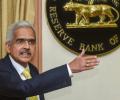
The board deliberated on the governance framework of the RBI and it was decided that the matter needs further examination

In the aftermath of the PMC Bank mess which was in the RBI's highest rating of 'A' category, trustworthiness of these ratings may be up for a review.

A common feature in India is the lag between the occurrence of frauds and the time they are actually reported.

Vodafone Idea, the promoter of Aditya Bira Idea Payments Bank, said in a notification to the exchanges late on Friday that the board of the bank approved winding up the business, subject to approval from the Reserve Bank of India.

RBI said the improvement in asset quality was driven by state-run lenders which saw a drop both in both GNPA and in the net NPA ratios.

The PNB fiasco falls into a family line that involves non-fund limits - read contingent liabilities which are off-books. Harshad Mehta did it with bankers' receipts in 1992. Ketan Parekh exploited the ignorance of bankers who did not know the difference between a cheque and a pay-order. And the RBI blinked when it failed to insist the SWIFT platform be linked to the core banking solution. Raghu Mohan & Abhijit Lele trace the banking mess that was just waiting to happen.
RBI says haste in easing norms for banks harmful to economy.

The reason why private banks will play the deposit pricing game strategically is the weakening of banks' deposits base given the competition from MFs and insurance companies due to tax-savings schemes.

Large urban co-operative banks may come to be solely under the provisions of the Banking Regulation Act, even as the smaller among them are to remain within the exclusive fold of the Registrar of Co-operative Societies. The upcoming changes will bring the curtains down on the vexed issue of dual control of UCBs, which has been in vogue for 54 years. The new framework will affect 1,551 UCBs in the country, which had a total business of Rs 7.36 trillion.

While payments banks surely lose money, their operating ratios were looking better in 2017-18 compared to the year before. This implies that as customer volumes start picking up, the business models may perk up too, says R Jagannathan.
 © 2026 Rediff.com - Investor Information - Advertise with us - Disclaimer - Privacy Policy - Sitemap - Feedback - About us - Terms of use - Grievances