
Jio Platforms Limited (JPL) believes satellite broadband services are unlikely to achieve significant scale or compete effectively on price in India's highly connected and affordable market, despite developing its own satellite constellation solutions and flagging it as a potential disruptor.

The Delhi Police's Financial Monitoring Cell prevented potential losses of Rs 1.53 crore in "digital arrest" scams across five states. Their Proactive Victim Identification and Protection Team intervened to save multiple victims, including senior citizens, from transferring additional money to fraudsters who impersonated officials and threatened arrest for fabricated crimes.

Isha Ambani, a director on the board of Jio Platforms, revealed that a failed attempt to upload a college assignment in 2009-10 due to poor internet connectivity in Mumbai sparked the idea and subsequent conversations that led to the creation of Jio.

The Centre has announced a major bureaucratic reshuffle, appointing Prakash Rajpurohit as Deputy Election Commissioner and approving appointments for 27 civil servants at joint secretary and equivalent levels across various ministries and departments.

The Enforcement Directorate (ED) has claimed that Rs 860-Rs 880 crore generated from an alleged liquor scam in Chhattisgarh during the previous Congress regime was delivered to the Pradesh Congress Committee office in Raipur. The agency filed a supplementary chargesheet against former PCC treasurer Ramgopal Agrawal and provisionally attached his properties worth Rs 9.06 crore. The ED alleges a liquor syndicate controlled the state excise department, generating over Rs 2,883 crore in illegal proceeds.

Ericsson CEO Andres Vicente emphasised the critical need for technology alignment and ecosystem collaboration to ensure security in the age of Artificial Intelligence. Speaking on Wednesday, he highlighted that AI's benefits in productivity and innovation cannot be forgone, making shared security concerns across interconnected tech layers paramount. Ericsson is actively working with partners through the Trusted Tech Alliance to establish common AI-era security understandings.

A report by IIT Bombay suggests that the proposed Merchant Discount Rate (MDR) framework for Unified Payments Interface (UPI) transactions needs rationalisation before implementation to safeguard public trust in the digital payments system, highlighting that UPI's long-term economic benefits outweigh potential incremental income from merchant fees.

They had bought Rs 29,631 crore worth of shares in August.

Union Minister Ashwini Vaishnaw warned of increased global turbulence from tech disruptions, AI, and financial risks in the coming years. He stated that India is strengthening its economic and technological resilience to protect its growth from external shocks. India is focusing on domestic manufacturing and design in critical tech areas while maintaining global integration, with trust becoming as crucial as cost in supply chains.

A dozen companies, including major players like Jio Platforms and Zetwerk Manufacturing Business, are poised to launch Initial Public Offerings (IPOs) in October, continuing India's strong fundraising momentum in the primary market. These offerings span diverse sectors, reflecting sustained investor interest in businesses with robust growth prospects.

Prime Minister Narendra Modi emphasised the democratisation of technology to ensure no section of society is left behind, advocating for affordable and accessible digital services, especially for the Global South. He highlighted the potential of Digital Public Infrastructure (DPI) and called for solutions to cyber fraud, global standards for emerging tech, and mechanisms to identify AI-generated content during his interaction with GSMA board members.

A report by IIT-Bombay professors recommends reducing the Merchant Discount Rate (MDR) on UPI transactions from 0.40 per cent to 0.08 per cent. It suggests that banks should fund the UPI ecosystem using their net interest margins from CASA deposits, rather than relying on MDR. The report also addresses transaction costs, credit card MDR, and ATM withdrawal allowances, aiming to ensure UPI's long-term sustainability and public trust by proposing remuneration only from large merchants.
Airtel Africa's mobile payments arm, Airtel Money, has filed for an initial public offering (IPO) on the London Stock Exchange, with the International Finance Corporation (IFC) agreeing to purchase shares worth up to $90 million at the final offer price.

Trai has brought app-based spam calls under tighter regulations through new A2P call rules.
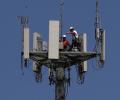
The Department of Telecommunications (DoT) has introduced a new authorisation regime, replacing multiple licences with a single permission for principal telecom services, aiming to simplify compliance and accommodate evolving technologies. This move is expected to ease business operations, enhance fraud prevention with AI, and expand connectivity, especially through satellite networks.
The Enforcement Directorate has arrested Sateesh Seth and Gautam Doshi, former directors of Reliance Telecom Ltd, under the Prevention of Money Laundering Act (PMLA) in Mumbai. They are being taken to Delhi for a case registered in the national capital.

Customer experience firm Fusion CX is significantly investing in AI-enabled services and data infrastructure, aiming to increase its share in total turnover to 25% within 12-18 months. The company, which reported a turnover of Rs 1,818.13 crore in FY26, is preparing for an IPO of Rs 800-1,000 crore in October, driven by organic growth, acquisitions, and its AI strategy.

Festival shoppers are increasingly turning to EMIs and other affordability options for high-value purchases, especially beyond metro cities.
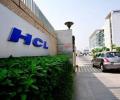
HCL Technologies' software division, HCLSoftware, is set to acquire Croatia-based enterprise RPA provider Robotiq.ai for 9 million euro. This strategic acquisition aims to enhance HCLSoftware's AI-driven workflow capabilities and automate tasks in complex business environments, with the deal expected to close by November 2026.
Telecom industry body COAI and the British High Commission signed an MoU to boost cooperation in AI, connectivity, and digital trust, fostering responsible tech innovation. The pact, signed at the CO.AI 2026 event, focused on AI's role in intelligent networks, security, and public services. Discussions highlighted AI's importance in combating fraud, improving network efficiency, and ensuring secure digital services. TRAI Chairman Anil Kumar Lahoti and Acting British High Commissioner Ben Mellor emphasised the need for balanced governance and international collaboration to ensure secure, inclusive, and responsible digital transformation.

The portfolio could be split between listed and unlisted investments, or structured along sectoral lines.

India has achieved its highest-ever annual Foreign Direct Investment (FDI) inflow of USD 94.53 billion in FY 2025-26, with cumulative FDI reaching USD 843 billion since 2014-15, announced Commerce and Industry Minister Piyush Goyal. Production Linked Incentive (PLI) schemes have also significantly boosted investment, production, exports, and job creation.
UPI transactions saw a 27% volume increase and 20% value increase in the first half of the current fiscal year. Despite a slight moderation in September, the digital payment system is set to implement a 0.4% merchant discount rate on transactions over Rs 2,000, aiming for a sustainable revenue model. Small merchants and person-to-person payments remain exempt, and UPI's global presence continues to expand.

Experts laud the decision to impose a 0.4 per cent Merchant Discount Rate (MDR) on UPI transactions exceeding Rs 2,000, effective October 15. This move, along with a dedicated fund for small merchants, is seen as crucial for creating a sustainable digital payments ecosystem, incentivising expansion in rural areas, and funding innovation while keeping most transactions free for users.

State Bank of India (SBI) is developing an innovative solution to assess the creditworthiness of small businesses lacking GST registration by utilising UPI transaction data. This initiative aims to provide end-to-end digital loans within a day, addressing the financial exclusion of many small enterprises.

Finance Minister Nirmala Sitharaman has strongly refuted Opposition allegations that the decision to levy a 0.4 per cent Merchant Discount Rate (MDR) on specific UPI transactions above Rs 2,000 was influenced by external pressure. She clarified that the decision was a professional one made by the payment ecosystem, not a government imposition or a tax on consumers, with collected funds distributed among banks and UPI entities to ensure a sustainable digital payments framework.

The Supreme Court has refused to grant an interim stay on the imposition of Merchant Discount Rate (MDR) on UPI person-to-merchant transactions exceeding Rs 2,000, which is set to take effect from October 15. The court has agreed to examine the challenge to this new fee and has issued notices to the Centre, RBI, and NPCI, seeking their responses within four weeks. A Public Interest Litigation (PIL) argues that the levy lacks statutory safeguards, transparency, and public consultation, and could adversely affect merchants and consumers.
Finance Minister Nirmala Sitharaman clarified that the proposed Merchant Discount Rate (MDR) on select high-value UPI transactions is not a tax or cess, and its collections will not go to the government. She explained that MDR is a charge within the digital payments ecosystem, shared among participants to maintain infrastructure, and will not be passed on to consumers. The NPCI's new framework, effective October 15, applies a 0.4% MDR on person-to-merchant UPI transactions above Rs 2,000, with most transactions remaining free and small merchants exempt.
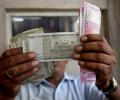
Government sources clarify that the 0.4% merchant discount rate (MDR) on UPI transactions above Rs 2,000, effective October 15, will not be passed on to consumers. The charge, paid by merchants, aims to create a sustainable revenue framework for the digital payments ecosystem, with funds shared among banks and UPI entities. Small merchants using QR codes for up to Rs 1 lakh monthly are exempt.

Union Communications Minister Jyotiraditya Scindia announced India's ambition to lead the world in 6G mobile technology and become a designer of global technology standards. Speaking at the Global Fintech Fest 2026, Scindia highlighted India's shift from being a technology market to a technology maker, emphasizing progress in 5G rollout, affordable data, and digital infrastructure driving fintech growth, while also stressing the importance of digital security.

The central government has introduced a 0.4 per cent fee on UPI transactions exceeding Rs 2,000, prompting traders' associations to advocate for cash payments to avoid additional costs on digital payments. This move ends the zero-Merchant Discount Rate (MDR) regime, with traders expressing concerns about operating on tight margins and the potential for increased charges.

The Indian government has introduced a 0.4 per cent Merchant Discount Rate (MDR) on UPI payments exceeding Rs 2,000 made to merchants, effective from October 15, with a comprehensive framework set to take full effect by October 15, 2026. This policy aims to regulate transaction fees while protecting small merchants and person-to-person transactions.

Former NITI Aayog vice-chairman Rajiv Kumar has urged the government to maintain zero-fee UPI transactions for several more years, arguing that the benefits of UPI as a public good outweigh the costs. This comes amidst the government's recent decision to introduce a 0.4% fee on person-to-merchant UPI transactions above Rs 2,000 from October 15, a move that has drawn criticism.

Tax experts clarify that merchants will pay 18% GST on Merchant Discount Rate (MDR) for UPI payments exceeding Rs 2,000, effective October 15. However, registered merchants can claim Input Tax Credit (ITC), mitigating the tax burden. This move is expected to generate significant GST revenue for the exchequer while funding payment infrastructure.

The Department of Telecommunications (DoT) has instructed telecom operators to refuse new mobile connections to individuals who already possess nine or more SIM cards, effective from August 24, 2026.

The Indian government has introduced a 0.4 per cent charge on UPI payments exceeding Rs 2,000 made to merchants, with a cap of Rs 300 for transactions of Rs 75,000 and above. This policy shift ends the zero-MDR regime, which was previously criticised by financial institutions. While essential sectors and capital markets have specific fee structures, small merchants with monthly UPI QR code earnings up to Rs 1 lakh remain exempt. Person-to-person transfers are unaffected, and measures are in place to prevent merchants from passing these costs to customers.

The CBI has registered a case against Reliance Capital Limited (RCAP), its former chairman Anil Ambani, and others for an alleged Rs 2,684.57-crore fraud. The case stems from a complaint by the Life Insurance Corporation of India (LIC) regarding investments in RCAP's non-convertible debentures, alleging criminal conspiracy, misrepresentation, and fraudulent diversion of funds causing significant loss to LIC.

The CBI has registered a case against Reliance Capital Limited (RCAP), its former chairman Anil Ambani, and others for an alleged Rs 2,684.57-crore fraud involving investments made by the Life Insurance Corporation of India (LIC). Anil Ambani has denied any wrongdoing. The LIC alleges criminal conspiracy, misrepresentation, and fraudulent diversion of funds.

The Indian government has introduced a 0.4% transaction fee on Unified Payments Interface (UPI) payments exceeding Rs 2,000 for merchants, effective October 15, marking the end of nearly six years of free service. Person-to-person transfers and small-value transactions below Rs 2,000 remain free. The new Merchant Discount Rate (MDR) is capped at Rs 300 for transactions above Rs 75,000, with differentiated rates for essential sectors and investments, and safeguards to prevent costs from being passed to consumers.
A new Merchant Discount Rate (MDR) on UPI transactions above Rs 2,000, effective October 15, could force small merchants and price-sensitive consumers to revert to cash, according to economic think tank GTRI. The move, which introduces a 0.4 per cent MDR with a Rs 300 cap and concessional rates for specific categories, is questioned by GTRI founder Ajay Srivastava, who suggests it's not a revenue issue for the government but potentially a response to US pressure regarding UPI and RuPay's preferential market position.
