
'Except for extremely conservative investors, others can consider allocating 10 to 20 per cent of their portfolio to small caps.'

After two years of strong gains, smallcap stocks fell sharply in 2025, but the correction may be setting up opportunities for long-term investors.

The BSE Smallcap index hit an over eight-month low of 47,627.96, falling 3 per cent in Tuesday's intraday trade amid selling pressure due to ongoing tariff-related concerns and rising geopolitical tensions.

Companies in the lower mcap deciles have recorded the fastest growth in median mcap.

Unless the primary market momentum slows, smallcap stocks will stay subdued.

Over 50 per cent, or 660 stocks, from the BSE 1000 index recorded negative returns during CY25.

Investors seeking higher returns at relatively higher risk should consider allocation to smallcap equity funds.

This marks a rebound after more than two years of underperformance during a strong rally in smallcap stocks.

'Defence, capital goods, engineering, capital market-related stocks, autos, and cement sectors are my bullish bets for Samvat 2082.'

Indian stock market indices Sensex and Nifty closed nearly 1 per cent higher, marking their third consecutive day of gains, supported by a slight decrease in crude oil prices and positive global market trends.

'The next phase of India's IPO cycle will be defined by quality, pricing discipline and investor selectivity.'

The BSE Sensex and the Nifty 50 declined around 4.5 per cent each since the start of the West Asia conflict.

Trade deals ease risks for Indian equities, but weak demand and stretched valuations raise questions over whether optimism -- especially in smallcaps -- can turn into a sustained bull run, points out Debashis Basu.

Ask rediffGURU Reetika Sharma your insurance, mutual fund and personal finance-related questions.

Indian equity investors experienced a significant loss of 16.32 lakh crore due to a two-day stock market decline fueled by escalating geopolitical tensions involving the US, Israel, and Iran.

Flexicap fund performance depends heavily on the fund manager's decisions.

Indian equities on Dalal Street saw volatility as global market trends and fresh tariff concerns linked to Donald Trump impacted investor sentiment. Track Sensex, Nifty50 movement and key market drivers for Feb 24, 2026.
Equity benchmark indices Sensex and Nifty experienced a significant decline, primarily driven by a selloff in IT stocks due to concerns about AI disruption and renewed worries over global trade.

'Retail portfolios were going nowhere even as headline indices moved higher, prompting investors to sell holdings and shift money to IPOs, attracted by listing-day gains.'

'The problem is not just slower growth, but also the quality of growth.'

The BSE Sensex plummeted 1,236 points, wiping out nearly Rs 7 lakh crore in investor wealth, driven by escalating tensions between the US and Iran and subsequent market selloff.

Stock markets closed higher for the second straight session on Tuesday, driven by gains in bank, IT and capital goods shares.
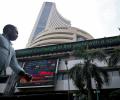
Benchmark stock indices Sensex and Nifty closed on a flat note in a choppy session on Wednesday as gains in PSU banks and auto shares were offset by losses in IT stocks.

Benchmark BSE Sensex fell 558 points on Thursday amid heavy selling in IT shares, as concerns over AI-led disruptions and waning hopes of a Fed rate cut after firm US economic data weighed on investor sentiment.

Overlap refers to the same stocks appearing across fund portfolios.

Retail investors' equity portfolios have significantly underperformed benchmark indices over the past 16 to 18 months.

Market sentiment is likely to remain cautious as investors position themselves for the upcoming Union Budget and the US Fed's interest rate decision, where expectations are muted.

2025 marked a shift in investor preference when it comes to MF schemes.

The 2025 contraction marks the steepest decline in both the number of billionaire promoters and their aggregate wealth since 2012.

'The bigger unknown remains global geopolitics, which is inherently unpredictable, including developments in our neighbourhood.' 'Another concern is the increasing tilt of government finances towards welfare subsidies, especially at the state level.' 'This could constrain capital expenditure, which is critical for long-term growth.'

'When markets go into a budget with excessive optimism, the risk of disappointment is higher.'

'Stopping now would defeat the core purpose of an SIP, which is to average out the purchase cost over market cycles.'

Passive funds have resumed gaining ground in the mutual fund (MF) industry after a slowdown in 2024, with their share of assets under management (AUM) reaching an all-time high in 2025. The surge has been driven largely by robust inflows into gold and silver exchange-traded funds (ETFs).

Worries about global politics and trade are pulling the Nifty 50 down. Experts say the market could drop further low.

Global risks include a potential delay in the US-India trade agreement, the possibility of a sharp correction in US equity markets, and renewed geopolitical tensions.

Investing in gold trumped most other asset classes in terms of compounded annualised returns over the long term, suggests a report by FundsIndia.

Despite trailing the benchmark Nifty 50, small and midcap (SMID) stocks appear pricey on a 12-month forward price-to-earnings (P/E) basis. The Nifty trades at roughly 21x forward earnings, compared with around 28x for both the Nifty Smallcap 100 and Nifty Midcap 100 indices.

Retail investors are moving away from a buy-and-hold approach and towards more informed short-term positioning, recent investment patterns show.

'The volatility in the stock markets since September 2024 has hurt the pace of accretion of new investors.'

The number of rights issues more than doubled and hit a 28-year high in 2025, even as qualified institutional placements (QIPs) shrank amid a broader market correction and the Securities and Exchange Board of India's (Sebi's) revised framework for rights issues.
 © 2026 Rediff.com - Advertise with us - Disclaimer - Privacy Policy - Sitemap - Feedback - About us - Terms of use - Grievances