
The Reserve Bank on Friday accepted most of the recommendations of its working group on corporate ownership of private sector banks, by allowing unrestrained promoter shareholding in the first five years of operations and hiking the same to 26 per cent after 15 years from the extant 15 per cent and also the new capital requirements. The move will benefit leading banks like Kotak Mahindra Bank and IndusInd Bank, among others, which have been seeking more time from the regulator to divest their stakes for many years now. Accepting 21 of the 33 recommendations of the internal working group, the central bank said the remaining suggestions are under its consideration.

Your promise to protect bankers for their commercial decisions is a huge confidence booster, but how does one define a commercial decision? Are our investigative agencies well equipped to dissect lending decisions of bankers?

The RBI has shelved its plan for polymer notes more than a decade after it invited interest from global manufacturers for one billion pieces of Rs 10 denomination polymer banknotes, reveals Tamal Bandyopadhyay.

If there were an Olympics for bank frauds in India, Rishi Agarwal, founder and former chairman of ABG Shipyard Ltd, a nephew of the Ruia brothers of the Essar group, would bag the gold, pushing Nirav Modi to his right, says Tamal Bandyopadhyay.

The draft amalgamation scheme of Punjab and Maharashtra Co-operative (PMC) Bank with Unity Small Finance Bank (SFB) allowed quick relief to depositors with savings of up to Rs 5 lakh, but a long wait for those who had their nest egg with the scam-tainted bank. If the scheme gets approved, 96 per cent (or 880,000 of 924,000) depositors will get their full money straightaway after PMC is merged with Unity SFB. According to the draft scheme, retail investors may get up to Rs 5 lakh from the Deposit Insurance and Credit Guarantee Corporation (DICGC) instantly, and then some more in phases till they can recall their full deposits after 10 years.

C S Ghosh, founder of Bandhan Bank, believes his unique business model is not comparable to any financial institution in India -- neither small finance banks, nor big private sector banks -- and hence the valuations are justified.

Hectic fundraising through initial public offerings (IPOs) is expected in October-November, with at least 30 companies are looking to collectively raise over Rs 45,000 crore through initial share-sales, merchant banking sources said. Of the total fundraising, a large chunk would be garnered by technology-driven companies. The successful IPO of food delivery company Zomato, which was overwhelmingly subscribed by over 38 times, encouraged new-age tech companies to come out with their primary share-sales.

New norms are in place to strengthen regulations for this set of lenders which has been playing a critical role in Asia's third largest economy, notes Tamal Bandyopadhyay.

If you invest for the shorter-term now, you will be able to roll over to higher rates when the interest-rate cycle turns, advises Sarbajeet K Sen.
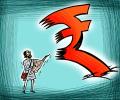
The origin of the challenge is the so-called "fresh start" process. Many in the MFI industry apprehend that such a law in India will encourage small unsecured borrowers to default and destroy the credit culture. So, while'Fresh start' is a welcome step as it will free up the debtors from the archaic laws of the colonial era, debtors need handholding and counselling to prevent any misuse, says Tamal Bandyopadhyay.

Why can't we have a sunset clause for the ARCs, which is a global norm? questions Tamal Bandyopadhyay.

While a DFI will help banks derisk their loan portfolios, creation of a bad bank will clean up their balance sheets.

RBL Bank is no Yes Bank. It's not fraught with fraud. It's a story of limitless ambition and greed for growth under a leader who doesn't want to give up, says Tamal Bandyopadhyay.

Unlike any other national asset, which is typically sold to the highest bidder, the profile of the bidder is the most important criterion for a licence to bank, and even for acquiring more than 5 per cent stake, explains Tamal Bandyopadhyay.

Barring stray references such as the 'dual control' of banks and shifting the goalposts during demonetisation, he is not in a fault-finding mode with the government, notes Tamal Bandyopadhyay.

India's forex reserves recently declined by $704 million to $354.517 billion.

Fitch Ratings on Monday said the shock to economic activity from the latest wave of COVID-19 pandemic will be less severe than the one in 2020, but recovery is likely to be delayed as economic activity dropped in April-May. The global rating agency said there are growing indications that the latest wave of COVID-19 infections will add to risks among financial institutions (FIs) and anticipates that the Reserve Bank of India (RBI) may introduce additional measures to support the financial sector if indications of economic stress mount.

For now, the concerns over bad loans have taken a back seat; a bigger challenge for the banking community is credit growth, explains Tamal Bandyopadhyay.

Penalty must act as a deterrent. If it is too low, it could encourage the regulated entities to lap up penalty instead of complying with the norms, suggests Tamal Bandyopadhyay.

The Reserve Bank on Monday asked all banks and financial institutions to assess the impact on their balance sheet, asset quality, liquidity, among others, in the wake of the potential threat arising out of the spread of coronavirus disease in India. Several confirmed cases have also been detected in India, which highlight the need of a co-ordinated strategy for handling the emerging situations to protect the resilience of the Indian financial system, RBI said in a notification addressed to banks, urban cooperative banks, NBFCs, payment and small finance banks.
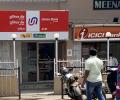
The annual earnings of a non-executive chairman of a PSB is capped at Rs 10 lakh, inclusive of fees for attending board meetings. This is way below the compensation of the chairman of any private bank, reveals Tamal Bandyopadhyay.
The correlation between withdrawal of deposits and the Covid death rate is stark, reveals Tamal Bandyopadhyay.

If the CBDCs don't offer interest, why will people shift from cash to CBDCs?, asks Tamal Bandyopadhyay.
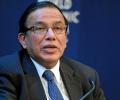
The account turned bad before Chaudhari took over as SBI chairman and the asset was sold to AARC following an open bidding process, months after Chaudhari retired, explains Tamal Bandyopadhyay.
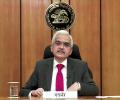
'There are some high-frequency indicators where uptick is visible and some where it is not'

Finance Minister Nirmala Sitharaman's Rs 30,600 crore government guarantee for the bad bank has changed the body language of bankers for the better, observes Tamal Bandyopadhyay.

'We may bite the bullet and draw up plans for privatisation.' 'If that is done now, the sale of the government stake will fetch money; a delay will see erosion in whatever value is left in these banks,' says Tamal Bandyopadhyay.

Short-term lending rate unchanged at 7.75 pc.

While the overall loan disbursements stood strong at 15 per cent YoY in Q2, pockets such as vehicle finance, loans to NBFCs, and business banking showed some weakness. A continued fall in these numbers may make it tough for AU SFB to defend its valuations under the current circumstances.

Ajit Mishra, vice president, research, Religare Broking, answers your queries.

While banks are not as exposed as the corporate sector during the initial stage of the pandemic, the strain on lenders could ultimately be profound. Banks face a second-order hit compared with the corporate and household sectors.

If the earnings in the first quarter of the current financial year are an indication, most banks, particularly those majority-owned by the government, have fared well, reveals Tamal Bandyopadhyay.
The new circular provides for a framework for early recognition, reporting and time-bound resolution of bad loans.

Although the RBI's open market operations have ensured sufficient system-level liquidity, some sectors are finding liquidity to be a challenge owing to their credit profile.

The mid-cap universe - comprising firms that rank 101-250 in terms of m-cap - could see as many as 17 new stocks move out. Similarly, over half a dozen stocks could exit the large-cap universe, which is defined as the top 100 entities in terms of m-cap.

'Are they assuming that by the end of May or the 15th of June, we will see the end of the pandemic?'

Maruti is not an online outlier, of course; other heavyweights have rolled out similar services. But as an analyst pointed out, Maruti's all-India roll-out has significant impact given that it accounts for over half of all cars sold, reports, reports Pavan Lall.

Ajit Mishra, vice president, Research, Religare Broking, answers your queries.

One smells a rat when cases are settled for too small a price offered either by the highest bidder or the promoter -- within and outside the legal ambit of insolvency process, observes Tamal Bandyopadhyay.

As lobbying and counter-lobbying intensify, right now, it looks like a T20 match, discovers Tamal Bandyopadhyay.
 © 2026 Rediff.com - Advertise with us - Disclaimer - Privacy Policy - Sitemap - Feedback - About us - Terms of use - Grievances