
Improved credit profile may make you eligible to transfer your existing home loan to another lender at a much lower rate.

The Department of Post, Tech Mahindra, Videocon Group and stock exchange NSE have joined big corporates like Ambanis and Birlas to seek entry into banking business through newly created niche category of Payments and Small Finance Banks.
.jpg)
Reliance, Birla Group, Airtel eye small finance banks.

The difference between what the banks play in the US and India is not that of soccer and football but rugby and football. SVB also has a unique character. But when risks are mispriced, the fallout could be very similar, points out Tamal Bandyopadhyay.

When he didn't respond (Mr Saver has lost count of how many relationship managers he has had in the past few years!), the gentleman landed up at his doorstep and started pleading with him to open fixed deposits with the bank, observes Tamal Bandyopadhyay.

The issue price for Sovereign Gold Bond Scheme 2021-22, which will open for subscription for five days from November 29, has been fixed at Rs 4,791 per gram of gold, the Reserve Bank of India said on Friday. The Sovereign Gold Bond Scheme 2021-22 - Series VIII will be open for subscription from November 29 - December 03, 2021. "The nominal value of the bond...works out to Rs 4,791 per gram of gold," the RBI said.
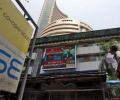
Analysts believe that investors should look at stocks that hit 52-week lows only if they have a dividend paying track record, are debt-free and have sound fundamentals.

The drop in net interest margin will separate the men from the boys, explains Tamal Bandyopadhyay.

While the collapse of a large financial intermediary can wreak havoc on the system because of the interconnectivity, a large business conglomerate too can play spoilsport if the banks have too much exposure to the entity, explains Tamal Bandyopadhyay.

The Deposit Insurance and Credit Guarantee Corporation (DICGC) will pay the depositors of 21 stressed cooperative banks, including the Punjab & Maharashtra Co-Operative Bank (PMC Bank), up to Rs 5 lakh within 90 days. The Reserve Bank of India (RBI) had imposed restrictions on the withdrawal of deposits from these banks. Of the 21 banks, 11 are from Maharashtra, five from Karnataka, and one each from Uttar Pradesh, Kerala, Rajasthan, Madhya Pradesh, and Punjab.

'We now understand things that we have to correct.'

The most common complaint of financial consumers is cumbersome processes, complicated products, usurious charges, and mis-selling of products, which finally don't deliver what is promised or as expect, notes Debashis Basu.

Investors are pushing back more often against companies' resolutions on what is paid out to top executives. In the first four months of financial year 2022-23 (FY23), there have already been five such rejections, according to shareholder voting data from tracker Adrian, a platform maintained by the proxy advisory firm Institutional Investor Advisory Services India (IiAS). Two of these have been at multiplex chain PVR and direct-to-home company Dish TV India.

The first tranche of Sovereign Gold Bonds 2021-22 will be open for subscription for five days from Monday, the finance ministry said in a statement. The bonds will be issued in six tranches from May 2021 to September 2021, it said on Wednesday. The subscription period for 2021-22 Series I will be May 17-21, and bonds will be issued on May 25.

'Banking is a business of trust.'
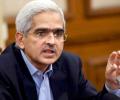
The increasing involvement of Big Tech in the financial system could give rise to concentration risk and there are potential spillovers, which call for closer attention, Reserve Bank of India (RBI) Governor Shaktikanta Das said on Tuesday. "...enormous amounts of consumer data is being generated and leveraged upon by a few entities (the so-called Big Tech) by virtue of their huge customer base. "Such developments raise concerns on concentration risk and potential spillovers as their level of engagement with the financial system strengthens in the years to come," Das said at the Global Fintech Fest 2022.

RBI Governor Shaktikanta Das kept the red flag on cryptocurrencies flying, warning that the next financial crisis can be triggered by private cryptocurrencies if such speculative instruments are allowed to grow.

Customers of stressed Punjab & Maharashtra Co-Operative Bank (PMC Bank) will not get up to Rs 5 lakh insurance cover in the first lot as the multi-state co-operative bank is under the resolution process. Deposit Insurance and Credit Guarantee Corporation (DICGC) in the first lot will pay customers of 20 stressed banks except PMC Bank. For the first lot, the mandatory 90 days period concludes on November 30.

Shaktikanta Das is a master of the finest balancing act who listens to all but takes his own decisions, discovers Tamal Bandyopadhyay.

Concerned over inflationary pressures in the economy, the Reserve Bank of India (RBI) is bringing down surplus liquidity in the system rapidly. It has fallen to pre-Covid levels and almost 2 per cent of banks' net demand and time liabilities (NDTL). NDTL shows the difference between the sum of demand and time liabilities (deposits) of a bank (with the public or the other bank) and the deposits in the form of assets held by the other bank.

'The money is readily available to the depositors.'

The government plans to bring down its stake to 26 per cent in these two banks, which are yet to be identified. This may not come in the way of getting investors for these banks, provided the government is willing to step back rather than run them the way it had been doing for over five decades since these banks were nationalised, points out Tamal Bandyopadhyay.

Every political party loves to use the bait of loan waiver to woo the electorate. If their hearts bleed for the poor, they can always use the party funds to pay off the lenders, suggests Tamal Bandyopadhyay.

Employees across segments, including those involved in specialised jobs such as technology, compliance and risk management, have started leaving the bank fold in hordes, observes Tamal Bandyopadhyay.

The BJP MP said the guidelines for grant of licences were 'brazenly flouted'.

India's largest carmaker, Maruti Suzuki India (MSIL), is focused on getting 50 per cent of its customers' car-financing transactions executed through its Smart Finance platform by next year. Shashank Srivastava, executive director-sales, MSIL, said this will help the company turn its website into a single-window channel through which customers can select their models, find dealers, and arrange financing. He said there is a likelihood that 100 per cent of its customers availing of financing will take it through Smart Finance. To date, the company has disbursed Rs 6,500-crore loans via Smart Finance to around 100,000 customers, accounting for 28 per cent of all finance-based car-purchase transactions for the company.

In Chanda's defence, one can always say, why would the Videocon Group take care of her husband as a quid pro quo to get a loan? After all, the group has taken money from the entire banking industry and ICICI Bank's share in the pie is not even 10 per cent. So, if it had a quid pro quo with Chanda to get the money, it must have had similar arrangements with other banks, too. If this is not the case, one must accept that it had got money from all banks, including ICICI, without any under-the-table conditions, points out Tamal Bandyopadhyay.

Isn't it time to review the 'fit and proper' criteria for banking licence, particularly with reference to individuals applying for it, asks Tamal Bandyopadhyay?

The RBI refuses to classify a cryptocurrency as an asset since it doesn't have future cash flow and its value is always fluctuating because of speculation. There is also no consumer protection, observes Tamal Bandyopadhyay, and hence the e-rupee trial run.

Fraud-hit Punjab and Maharashtra Cooperative (PMC) Bank on Tuesday invited expression of interest (EoI) from potential investors for investment or equity participation in the bank for its reconstruction. Subsequent to commencement of the normal day-to-day operations, it will be open for the investors to convert the bank into a small finance bank by making an application to the RBI, the lender said.

Collectively, the pack of 12 has posted a 50 per cent rise in profits -- Rs 25,685 crore. On a quarter-on-quarter basis (that is, September over June), the rise is 68 per cent. Public sector banks have never had such a stellar performance, explains Tamal Bandyopadhyay.

RailTel Corporation of India, Indigo Paints, Home First Finance Company, Indian Railway Finance Corporation, and Suryoday Small Finance Bank are among the companies looking to tap the market.

If you are running a sweetmeat shop, will you manage a dairy for milk supply or buy milk from the market? Banks are running a dairy (which has its cost for processing milk), while NBFCs are buying milk from the market, observes Tamal Bandyopadhyay.
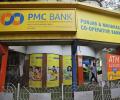
the three investors that have submitted their final bids are not commercial banks. Among the three, one is a non-banking financial company. Another distinctive feature of the revival is that PMC may lose its cooperative bank characteristic after its reconstruction.

That's the only way to convince those who have money to return to the bank fold, ditching other asset classes, says Tamal Bandyopadhyay.

The niche banks - small finance and payments banks -have been set up to further the regulator's objective of deepening financial inclusion.

An internal working group set up by the RBI has proposed to raise the cap on promoters' stake in private banks from the current 15 per cent to 26 per cent in 15 years. The group has also recommended that large corporate or industrial houses may be allowed as promoters of banks only after amendments to the Banking Regulation Act and strengthening of the supervisory mechanism for conglomerates, including consolidated supervision. The Reserve Bank of India had constituted the internal working group (IWG) on June 12, 2020, to review extant ownership guidelines and corporate structure for Indian private sector banks.

Ajit Mishra, vice president, research, Religare Broking, answers your stockmarket queries.

Probably 35 bps. There could be even an encore in February 2023 to take the policy rate to 6.5% before the financial year ends, predicts Tamal Bandyopadhyay.

Of the 2,562 customer complaints received between January 2020 and March 2021, a majority relate to illegal apps. At least two dozen suicide cases have been reported, perpetrated by the harassment by loan app operators, points out Tamal Bandyopadhyay.
 © 2026 Rediff.com - Advertise with us - Disclaimer - Privacy Policy - Sitemap - Feedback - About us - Terms of use - Grievances