
Sri Lanka's main opposition party Samagi Jana Balavegaya (SJB) on Monday said it is ready to lead the next government to bring stability to the bankrupt island nation as it grapples with political and economic crises and any resistance to the move in Parliament will be seen as a 'treacherous act'.

Anura Kumara Dissanayake was sworn in as Sri Lanka's ninth president on Monday, amid hopes that he will bolster the country's economy and eliminate corruption.

Anura Kumara Dissanayake, the leader of the Marxist Janatha Vimukthi Peramuna's (JVP) broader front National People's Power (NPP), on Sunday consolidated his lead in the Sri Lanka's presidential election.

After nearly two days of political deadlock, the stakeholders are engaged in prolonged talks to try and appoint a successor to Mahinda Rajapaksa.

Sri Lanka's main Opposition party Samagi Jana Balawegaya (SJB) on Tuesday handed over to the parliamentary Speaker motions of no-confidence against the Sri Lanka Podujana Peramuna (SLPP) coalition government and embattled President Gotabaya Rajapaksa, even as the government announced the appointment of a cabinet sub-committee to look into the proposal for a new Constitution.

Sajith Premadasa, the 55-year-old leader of Sri Lanka's principal opposition party Samagi Jana Balawegaya, said on Tuesday that he was withdrawing from the race of President to provide support to Alahapperuma.

The SJB has begun to collect signatures from MPs for the no-confidence motion, according to media reports.

Rajapaksa fled the country and resigned last month in the face of a popular uprising against his government for mismanaging the island nation's economy.

The 73-year-old United National Party was appointed as the prime minister by President Gotabaya Rajapaksa after they held closed-door discussions on Wednesday.

Delicious recipes from the palaces of Nepal.

Sri Lankans were on the edge on Tuesday as they waited whether embattled Gotabaya Rajapaksa will honour his offer to resign as president, amid signs that key members of the erstwhile powerful ruling family were attempting to flee in the face of massive public anger against them for mishandling the economy that has bankrupt the country.

Sri Lankan President Gotabaya Rajapaksa, who is under pressure to resign, was dealt a further blow on Wednesday when three more parliamentarians withdrew their support to the government.

Sri Lanka's embattled President Gotabaya Rajapaksa, under immense pressure from the public and the Opposition to quit over the island nation's worst economic crisis, said on Thursday that the abolition of the executive presidency, a move that will curb his powers, will be considered by Parliament.
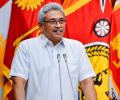
Only 68 MPs voted in favour of the motion, it said, giving the 72-year-old President a comfortable victory.

The 225-member Parliament will elect the new president by a secret vote on July 20, Speaker Mahinda Yapa Abeywardena said on Friday.

Thousands of demonstrators have hit the streets since April 9, as the government ran out of money for vital imports; prices of essential commodities have skyrocketed and there are acute shortages in fuel, medicines and electricity supply.

The anti-government protesters in Sri Lanka on Sunday continued to occupy the residences of President Gotabaya Rajapaksa and Prime Minister Wickremesinghe, a day after they stormed into the premises and set on fire one of the buildings protesting over the nation's severe economic crisis even as the island nation is still in the dark about the embattled President's whereabouts.

Despite mounting pressure, Gotabaya, and Prime Minister Mahinda have refused to quit office.

The SLPP, led by prime minister Mahinda Rajapaksa, has won in 145 constituencies, bagging a total of 150 seats with its allies, a two-thirds majority in the 225-member Parliament, according to the results announced by the election commission.

Parliament met for a brief special session on Saturday to announce the vacancy in the presidency following the resignation of Rajapaksa.

Sri Lanka's former finance minister Basil Rajapaksa, who is the youngest brother of President Gotabaya Rajapaksa, was stopped from boarding a flight to Dubai on Monday evening, local media reported.

Sri Lanka's main Opposition parties on Sunday agreed to form an all-party interim government after the anticipated resignation of President Gotabaya Rajapaksa on Wednesday, following unprecedented political turmoil that forced him and Prime Minister Ranil Wickremesinghe to offer their resignations over the mishandling of the nation's crippling economic crisis.

During the 13-minute special session, Dhammika Dassanayake, ecretary general of Parliament, announced the vacancy for the post of president.

Sri Lanka's Acting President Ranil Wickremesinghe on Monday imposed emergency giving him sweeping powers ahead of the key election on July 20 to pick a new President as he urged the political parties to put aside differences and form an all-party government, with the Opposition dubbing his decision as an 'undemocratic draconian act'.
Mahinda Rajapaksa, along with his wife and family, fled his official residence -- Temple Trees -- and took shelter at the naval base in Trincomalee.

'India has given assistance that we required, otherwise we would not have been able to survive this far.'
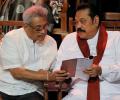
President Rajapaksa and Prime Minister Rajapaksa will transform Sri Lanka's political landscape after Thursday's electoral triumph, predicts N Sathiya Moorthy, veteran Colombo watcher.

Unofficial results indicate that the SLPP would comfortably win at least 17 out of the 22 districts on offer.
 © 2026 Rediff.com - Investor Information - Advertise with us - Disclaimer - Privacy Policy - Sitemap - Feedback - About us - Terms of use - Grievances