
The incident remains a reminder of the inherent fragilities of all geopolitical relationships.
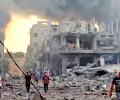
India is one of the few countries in the region that enjoys good relations with both Israel and Saudi Arabia, and IMEC would allow it to recreate the old Spice Route to Europe. All this is in jeopardy now, notes Rajeev Srinivasan.

The Islamic State terror group plans to seize Iran's nuclear secrets, unleash a vicious campaign of ethnic cleansing and Nazi-style eugenics to consolidate and expand its self-declared caliphate, according to a seized policy manifesto of the dreaded outfit.
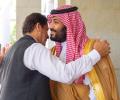
Given all the turbulence created by Pakistan Foreign Minister Qureshi's unexpected tirade against Saudi Arabia, it is likely to be business as usual between the two countries, albeit with a bit of caution on the part of both, observes Lieutenant General Syed Ata Hasnain (retd).

'In India foreign policy is generally handled by the prime minister.' 'One can clearly see the Vajpayee stamp on all this.' 'Only a person with poetic imagination can weave such a complex web,' says Colonel Anil A Athale (retd).

'As matters stand, Russia and Saudi Arabia, two of the world's biggest oil producers, are set for a hard landing as they didn't diversify their economies as much as they should have when the oil prices were booming.'

The possibility of a deal between Iran and the world on its nuclear programme has some perils but much promise for India, says Uday Abhyankar

A disparate global network of violent fundamentalist Islamic groups threatens India's eastern flank as much as the north and west with a real possibility of these spilling over into our borders, says Shyam Saran.

The Geneva agreement is a signal, which at least Saudi Arabia and Israel are so reading, that normalisation of relations between US and Iran is not merely about the nuclear fuel cycle, says K C Singh.
 © 2026 Rediff.com - Investor Information - Advertise with us - Disclaimer - Privacy Policy - Sitemap - Feedback - About us - Terms of use - Grievances