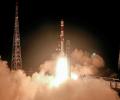
ISRO is preparing for the PSLV-C62 mission launch on January 12 from Sriharikota, carrying the EOS-N1 satellite and multiple other payloads.

The third and final test in the series of landing experiment (LEX-03) was conducted at 07:10 1ST at the Aeronautical Test Range in Chitradurga, Karnataka.

The test vehicle development flight (TV-D1) is aimed at testing the crew module that will carry Indian astronauts during the human spaceflight late next year.

EOS-01 is an earth observation satellite intended for applications in agriculture, forestry and disaster management support, ISRO has said.

The polar satellite launch vehicle's 52nd mission is scheduled for lift-off at 15.41 hours on Thursday from the second launch pad at the spaceport of Sriharikota 'subject to weather conditions'.

The launch is tentatively scheduled at 09.28 hrs IST on November 25, 2019 subject to weather conditions, ISRO said.
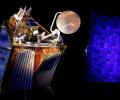
Bharti group-backed OneWeb and New Space India Limited, the commercial arm of the Indian Space Research Organisation, have entered into an agreement that will help ensure OneWeb completes its satellite launch programme. The first launch with New Space India is expected in 2022 from the Satish Dhawan Space Centre (SDSC) SHAR, Sriharikota. The launches will add to Low Earth Orbit (LEO) satellite communications firm OneWeb's total in-orbit constellation of 428 satellites -- 66 per cent of the planned total fleet -- to build a global network that will deliver high-speed, low-latency connectivity.

The space agency had earlier announced that the launch is tentatively scheduled at 09:28 hrs IST on November 25, subject to weather conditions.

CARTOSAT-3 is a third generation agile advanced satellite having high resolution imaging capability.

In its first multi-orbital launch, India's workhorse PSLV will on Monday inject eight different satellites, including the country's weather satellite SCATSAT-1 and five from other nations, into two different orbits.
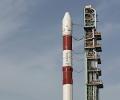
ISRO said, initially the launch was slated for 9.49 am, but now there is a 3-minute delay owing to the probability of space debris in the path of rocket.
 © 2026 Rediff.com - Investor Information - Advertise with us - Disclaimer - Privacy Policy - Sitemap - Feedback - About us - Terms of use - Grievances