
The Reserve Bank of India on Thursday projected a GDP growth of 7 per cent for 2024-25 financial year, which is lower than the 7.3 per cent expansion estimated for the current fiscal. Announcing the bi-monthly monetary policy, RBI Governor Shaktikanta Das said rural demand continues to gather pace, urban consumption remains strong and investment cycle is gaining steam on the back of increased capex.

Credit card spending in September recorded strong growth of 25 per cent year-on-year (Y-o-Y), marking the highest increase in six months. Even as many banks saw higher slippages during the July-September quarter of 2024-25, spending growth exceeded 20 per cent for the first time since February. According to the latest data released by the Reserve Bank of India (RBI), September spending reached Rs 1.76 trillion, compared to Rs 1.42 trillion in the same period a year ago. In August 2024, credit card spending was Rs 1.68 trillion.

The Reserve Bank on Friday retained inflation projection at 4.5 per cent for the current financial year, lower than 5.4 per cent in the last fiscal. Assuming a normal monsoon this year, CPI (consumer price index-based) inflation for the current year is projected at 4.5 per cent, with Q1 at 4.9 per cent, Q2 at 3.8 per cent, Q3 at 4.6 per cent, and Q4 at 4.5 per cent.
The Reserve Bank is unlikely to ease the benchmark policy rate during 2024 given the uncertainty over food inflation, State Bank of India (SBI) chairman C S Setty has said. The US Federal Reserve's first cut in interest rates in more than four years is expected soon, triggering central banks in other economies to follow suit. "On the rate front, a lot of central banks are taking independent calls.

Soaring vegetable prices pushed the retail inflation rate to a nine-month high of 5.49 pr cent in September, according to government data released on Monday. The consumer price index (CPI)-based retail inflation rate was 3.65 per cent in August and 5.02 per in September 2023. The previous high inflation rate was witnessed in December 2023 at 5.69 per cent.

"I mentioned to sir (Ratan Tata) that the son of a fellow army officer was handicapped below the waist and needed a job," he told PTI from Pune where he now lives. "Vijay Bisht, son of my then colleague in M&G area HQ Lt Col B S Bisht, had sustained severe leg injuries after falling from a horse and I came to know he was looking for a job," he added. Tata said the needful would be done. And it was.

Among the 30 Sensex firms, Asian Paints, Infosys, JSW Steel, UltraTech Cement, Power Grid, Larsen & Toubro, HCL Technologies and Tata Steel were the biggest laggards. Tata Motors, HDFC Bank, Bharti Airtel, ITC, IndusInd Bank and Axis Bank were the gainers.
The Reserve Bank of India (RBI) has barred four non-banking finance companies (NBFCs), including two microfinance institutions (MFIs), from sanctioning and disbursing loans for charging exorbitant interest rates to the borrowers. These four entities are Asirvad Microfinance, Arohan Financial Services (also an MFI), DMI Finance, which provides personal, consumption, and micro, small and medium enterprises loans, and Flipkart co-founder Sachin Bansal's Navi Finserv, which offers home and personal loans. The ban will take effect on October 21 to "facilitate closure of transactions in the pipeline", the regulator said in a statement.
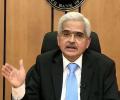
Reserve Bank of India (RBI) Governor Shaktikanta Das has said the decision on interest rate moderation will be based on long-term inflation trajectory and not monthly data. The Monetary Policy Committee (MPC) headed by the RBI Governor is scheduled to meet between October 7 and 9 and take call on interest rate. The RBI kept the repo rate unchanged at 6.5 per cent for the ninth time in a row amid risks from higher food inflation.

At a time when the government is nudging the private sector to ramp up its capital expenditure (capex), the Ministry of Statistics and Programme Implementation (MoSPI) is poised to kick-start the first-of-its-kind annual survey on the status of private sector capex from next month. "The inaugural edition of the annual exercise will start in October and will be completed by December. "The results will be made public by February next year," said Geeta Singh Rathore, director general, National Sample Survey Office (NSSO), at a data users' conference on Thursday.
The Reserve Bank on Friday said India is poised to become the growth engine of the world as it retained the GDP projection for the current fiscal at 6.5 per cent. Unveiling the bi-monthly monetary policy review, Reserve Bank of India (RBI) Governor Shaktikanta Das said the domestic economy exhibits resilience on the back of strong demand.
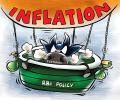
The Reserve Bank on Wednesday retained the retail inflation projection at 4.5 per cent for fiscal 2024-25, with Governor Shaktikanta Das stressing that the central bank will have to closely monitor the price situation and keep the "inflation horse" under tight leash lest it may bolt again. Unveiling the October bi-monthly monetary policy, the Governor also said the flexible inflation targeting (FIT) framework has completed 8 years since its introduction in 2016 and is a major structural reform of the 21st century in India.

The Reserve Bank of India has brought 100 metric tonnes of gold reserve from the UK to India as there is enough domestic storage capacity, and nothing more should be read into it, Governor Shaktikanta Das said on Friday. The RBI moved 100 metric tonnes of its gold stored in the UK to domestic vaults in FY24.

The Indian rupee is likely to depreciate further against the US dollar through the end of 2024. This is due to the continued strengthening of the greenback, combined with the weakening of the Chinese yuan, which is expected to keep pressure on the Indian currency.

The Reserve Bank of India's (RBI's) job to bring down inflation is not over, and any premature move on the policy front could undermine the success achieved so far on the price situation, according to RBI Governor Shaktikanta Das. RBI's rate setting panel, Monetary Policy Committee (MPC), had met for three days from February 6-8. The panel decided to leave the key policy rate unchanged at 6.5 per cent for the sixth time in row.

'After a long time, we have a governor who is approachable. The RBI's interactions with us are now much better.'

Allocation to bank deposits -- fixed deposits, savings account deposits, and current account deposits -- came down.

The recent depreciation of the rupee along with sharp fall in the country's foreign exchange (FX) reserves has sparked a debate whether stability of the exchange rate is necessary and desirable. The rupee was one of the least volatile currencies among peers for almost two years before the current downward pressure started in September after the US Federal Reserve lowered interest rate.

The Reserve Bank of India on Friday decided to keep the policy rate unchanged at 6.5 per cent for the fifth time in a row as it maintains a tight vigil on inflation. The rate increase cycle was paused in April after six consecutive rate hikes, aggregating to 250 basis points since May 2022. Announcing the bi-monthly monetary policy, RBI Governor Shaktikanta Das said the Monetary Policy Committee (MPC) unanimously decided to keep the repo rate unchanged at 6.5 per cent.

'Whether I am optimistic or pessimistic is not the issue; I am just going by the evidence available.' 'The Indian economy and financial sector are now well-placed and very resilient in dealing with any kind of spillover coming from the external world.'
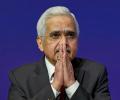
The highlights of RBI's bi-monthly monetary policy announced by Governor Shaktikanta Das:

Scenes from polling stations in Mumbai which voted in the Lok Sabha election on Monday, May 20, 2024.

The rupee tumbled 3 per cent against the US dollar in 2024 as concerns over slower economic growth and a stronger greenback in global markets weighed, but it was among the least volatile currencies in the world and the headwinds may be less intense in the coming year.

The Reserve Bank of India's (RBI's) caution on inflation, highlighted during the recent monetary policy meeting, may put investors' faith in fast moving consumer goods (FMCG) stocks to test, analysts said. They, however, believe FMCG stocks may ride through this near-term investor anxiety as related companies are, typically, well-equipped to handle inflation due to their pricing power and steady demand for essential goods.

Of the eight RBI governors who have held office since the 1991 economic liberalisation, Bimal Jalan had the longest stint and S Venkitaramanan, the shortest. Current Governor Shaktikanta Das will overtake Bimal Jalan before completing his second term in December, points out Tamal Bandyopadhyay.

The police said that the threat email was sent from the accused, Mohammed Arshil's ID.

'The RBI's MPC will maintain the current policy rates (6.50%) at the policy meeting, given ongoing inflationary pressures.'
The continuing global uncertainity has complicated the fight against inflation, opined Reserve Bank Deputy Governor Michael Debabrata Patra during the Monetary Policy Committee meeting held on February 8. According to the minutes of the MPC meeting released on Wednesday, RBI Governor Shaktikanta Das also mentioned that there is considerable uncertainty due to a host of global factors such as rising non-oil commodity prices. The RBI on February 8 hiked the key short-term lending rate by 25 basis points to 6.5 per cent, citing sticky core inflation.

It will be the second Budget of the Modi 3.0 government and eighth straight Budget for Nirmala Sitharaman, rare in Indian polity.

Even as the high inflation figure for October has ruled out any possibility of a rate cut by the Reserve Bank of India's (RBI's) monetary policy committee (MPC) in December, a rate cut in February also looks uncertain due to global uncertainties. Economists told Business Standard that unless domestic growth slows markedly, the outlook on rate cut remains unclear. India's headline inflation touched a 14-month high of 6.2 per cent in October, breaching the MPC's upper tolerance band of 6 per cent.

The Reserve Bank on Wednesday approved a Rs 2.11 lakh crore dividend payout to the central government for 2023-24, more than double the amount it paid for the previous 2022-23 financial year. The decision was taken at the 608th meeting of the Central Board of Directors of the Reserve Bank of India held under the chairmanship of Governor Shaktikanta Das.

Wholesale inflation fell to a 3-month low of 2.04 per cent in July on decline in prices of food items especially vegetables, government data released on Wednesday showed. The decline in wholesale price index (WPI) based inflation in July came after it rose for four months in a row till June, when it was 3.36 per cent. It was (-) 1.23 per cent in July last year. In April wholesale inflation stood at 1.19 per cent.

IT and interest rate-sensitive bank, realty, and auto stocks ended with sharp gains.
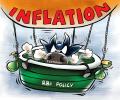
Reserve Bank Governor Shaktikanta Das on Friday said there is no plan to loosen interest rates as inflation continues to be the top priority for the central bank. Speaking to reporters at the central bank headquarters here, Das clarified that the inclusion of "over tightening" in his statement while announcing the fifth consecutive status quo in rates, should not be construed as anything else. A "loosening" in rates is not on the table, Das added.

Concerned over household savings moving towards alternative investment avenues, RBI Governor Shaktikanta Das on Thursday asked banks to mobilise deposits through innovative products and services by leveraging their vast branch network. "Banks are taking greater recourse to short-term non-retail deposits and other instruments of liability to meet the incremental credit demand. "This, as I emphasised elsewhere, may potentially expose the banking system to structural liquidity issues," he said.
The Reserve Bank of India on Wednesday decided to keep the policy rate unchanged for the tenth time in a row but changed its stance to 'neutral' that may lead to a cut in the forthcoming policies. RBI maintained status quo despite the US Federal Reserve lowering the benchmark rates by 50 basis points last month.

'A mule operates someone else's account to transfer illegal money.'

The Reserve Bank on Thursday tightened norms for consumer credit as it asked banks and NBFCs to assign a higher risk weight for unsecured personal loans, a move aimed at making the lenders more cautious on such advances. The risk weight on unsecured consumer loans has been raised by 25 percentage points. The new regulations, however, will not be applicable on housing loans, education loans, vehicle loans and loans secured by gold and gold jewellery, the Reserve Bank said in a circular.

The share of equity and investment funds in the total financial wealth of households increased by more than 50% between 2011-2012 and 2022-2023.

The RBI under former governor Shaktikanta Das resisted pressures to cut interest rates through 2024 as it kept its 'Arjuna's eye' trained on inflation, but the central bank under a new detail-oriented head will soon have to take a call if it can continue sacrificing growth. Das, a career bureaucrat who in 2016 oversaw Prime Minister Narendra Modi's highly disruptive demonetisation move, left a lasting legacy as he demitted office towards the end of 2024 after expertly navigating monetary policy for six years, the highlight of which was steering India's recovery through the pandemic.
