
Under the watchful eyes of five wise men, who know the industry well, banks will not find it easy to hoodwink the system, says Tamal Bandyopadhyay.

What will be its impact on the banks's balance sheets? Since banks need to provide for 10 per cent of the loans restructured, they would need Rs 50,000 crores to Rs 80,000 crore for this purpose, notes Tamal Bandyopadhyay.

The new circular provides for a framework for early recognition, reporting and time-bound resolution of bad loans.
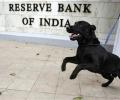
Banks to get more aggressive and act like PE investors

Bankers said the SC verdict might prolong the resolution process and force lenders to bring back cases to the drawing board.

Banks given 180-day time for NPA resolution, matter to be referred to Insolvency Board within 15 days.

The S5 is bigger than its previous iterations, and design-wise, is similar to the Note 3.

The non-watchlist stress emanated from over five year-old loans in the iron and steel, infrastructure and construction sectors.
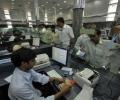
Banks need assistance to complete projects that they have taken over

These together account for 40 per cent of bad loans of around Rs 4 trillion.

The RBI has been critical of banks for using restructuring schemes to hide the stress.

So far, among the IBC cases, SBI has been able to recover Rs 8,500 crore from Tata Steel's acquisition of Bhushan Steel. Another Rs 1,500 crore is in an escrow account on account of Electrosteel Steels.

The gross bad debt of the Indian banking system as of March was at Rs 7.11 lakh crore

Punjab National Bank has made a name for itself in recovery of bad loan dues. Usha Ananthasubramanian, managing director and chief executive officer of the government-owned lender, explains how it has achieved this reputation.

The increase in prices across model range available in India would range from 3-5 per cent, effective January 1, 2014, the company said in a statement.

It is a national economic problem and one that requires a political solution hand in hand with a clear government commitment to stand behind core national assets, says Vinayak Chatterjee.

An estimated 47 per cent voters exercised their franchise on Sunday in the Kalyan-Dombivli Municipal Corporation polls
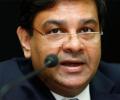
Janmejaya Sinha lays down Urjit Patel's agenda - cleaning up bank balance sheets, evaluating robustness of CPI and pushing for digitisation in financial services.
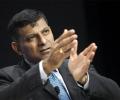
Rajan, as expected, furthered his predecessors' agenda and continued with the same resolution to make India's financial system safer, and direct the economy towards further liberalisation
 © 2026 Rediff.com - Investor Information - Advertise with us - Disclaimer - Privacy Policy - Sitemap - Feedback - About us - Terms of use - Grievances