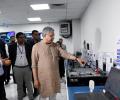
'I think that kind of change is coming. We should stay prepared for that change, whichever industry or sector we are in, we must be prepared.'

Vaishnaw travelled in the engine of a Kavach-fitted train, which, while speeding at 130 kmph, stopped 50 metres before red signal on its own without any manual interference with the braking function by the loco pilot.

The Railway Board has reduced the speed of semi-high speed trains Gatimaan Express and Vande Bharat from 160 kmph to 130 kmph till the automatic train protection system gets operational.

The Opposition party asked whether the prime minister will take responsibility for the 'deadliest rail tragedy' of this century.
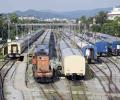
'Kavach', which literally means armour, is being promoted by the railways as the world's cheapest automatic train collision protection system.

The Railway's research arm RDSO is likely to issue 'speed certificate' to the much-awaited Mumbai Metro this week.
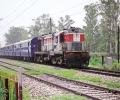
Globally, London's Tube and French railway networks are already using this technology in their corrosion-prone areas.
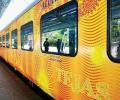
A slew of draft documents -- for Request for Qualification (RFQ), Concession Agreement Guiding Principles, Project Information Memorandum (PIM) along with a presentation on the salient features of the project -- for discussion on private participation in passenger trains have been uploaded by Niti Ayog on its website which outline the railways' plans of running 150 trains on 100 routes by private operators, envisaging an investment of Rs 22,500 crore.

The Indian Railways is replacing its outdated signalling system with the latest automated train protection technologies - European Train Control System and Train Collision Avoidance System.

As the national transporter is planning to come out with semi-high speed routes where trains can clock an average speed of 160-200 kmph, dedicated testing becomes essential.

A Japanese delegation will soon visit India to study the opportunities

One of the beneficiaries is Jindal Steel and Power, which had earlier been kept out of procurement for rails
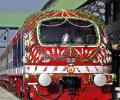
He said that efforts were being made either to close or man such crossings in the next two years.

As of now, the Delhi-Mumbai Rajdhani Express runs at an average speed of 85 km per hour.

The first high-speed train between Delhi and Agra with a speed of 160 km per hour is expected to run on November 10 as Kapurthala Rail Coach Factory is all set to roll out the first rake of fourteen coaches of the train.
The first high speed train with a speed of 160 kilometer per hour will run on Delhi-Agra section in November this year as Kapurthala Rail Coach Factory (RCF) is all set to roll out first rake of fourteen coaches of the train.

The train with nine lightweight coaches will start its journey at 7.55 PM from New Delhi station and is expected to reach Mumbai at about 8.31 AM in the morning

India had its own battle over gauges.
 © 2026 Rediff.com - Investor Information - Advertise with us - Disclaimer - Privacy Policy - Sitemap - Feedback - About us - Terms of use - Grievances