
Merely bringing down the government stake below 51% may not find any taker for the PSBs. The government must bring down its holding to at least 26%, recommends Tamal Bandyopadhyay.

Bank strike continued for day-two on Tuesday, led by nine unions of public sector banks (PSBs) in the country, opposing government's policy to privatise the lenders. Customers will be inconvenienced to get services such as cash withdrawals, deposits, cheque clearances, remittance services. Government transactions related to treasury as well as business transactions will also be impacted. United Forum of Bank Unions (UFBU), an umbrella body of nine unions, had given a strike call for March 15 and 16.

The gap between the highs and the lows in April for the benchmark S&P BSE Sensex was just 4.1 per cent - the narrowest since July 2021 and nearly half its three-year average. The absence of major positive triggers, sectoral rotation, and cautiousness due to earnings and economic uncertainty have kept a tight leash on the markets, observe experts. Remarkably enough, during the 17 trading sessions in April, the Sensex didn't even log an advance or a decline of more than 1 per cent.
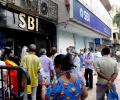
Amendments would be required in the Banking Companies (Acquisition and Transfer of Undertakings) Act, 1970 and the Banking Companies (Acquisition and Transfer of Undertakings) Act, 1980 for privatisation, sources said.

The first quarter of calendar 2023 will see new faces heading four large public-sector banks -- Canara Bank, Bank of Baroda, Indian Overseas Bank, and Bank of India.

While the fiscal year has just begun, any windfall surplus will be welcomed by the government as it bids to meet the fiscal deficit target of 5.9 per cent of GDP, amidst lack of clarity on exactly to what extent will recession in the West impact India's trade and tax collections.

By the end of March 2022, only 2,140 million pieces of Rs 2,000 denomination currency notes were in circulation, or 13.8 per cent of the total value of notes.

Moody's Investors Service on Thursday said loans to retail customers, especially those to low-income borrowers, will remain most affected due to the shock caused by the coronavirus pandemic. Despite the pandemic challenges, asset quality at Indian banks has performed better than expected at the start of the outbreak, Moody's said. "Corporate loans, in particular, have performed well because banks prior to the pandemic had largely provisioned for legacy problem loans and tightened underwriting standards," Moody's vice president and senior credit officer Srikanth Vadlamani said. Addressing an online conference organised by Moody's and its affiliate Icra, Vadlamani said an increase in non-performing loans in both public and private sector banks is subdued.

Your promise to protect bankers for their commercial decisions is a huge confidence booster, but how does one define a commercial decision? Are our investigative agencies well equipped to dissect lending decisions of bankers?

'Chasing sectors which have reported strongest earnings is not always the right strategy for outperformance.'

In FY23, the State Bank of India (SBI) reported a 57.4 per cent jump in its net profit to Rs 55,684.17 crore. But the chairman of the country's largest bank, Dinesh Khara's annual pay for this creditable performance was just Rs 37 lakh (his peers at state-run banks are no better off). Look at his private bank rivals - most pocketed in excess of Rs 7 crore annually - plus stock options.

The entire operation was meant to have a chilling effect on independent journalists, those not completely subservient to the regime, the small section still doing what the Fourth Estate should do -- raising questions to those in power.

Why did the company zero in on RBL Bank to understand the business of banking? While the M&M investors heaved a sigh of relief, one gentleman must have been all smiles after this, RBL Bank MD and CEO R Subramaniakumar, notes Tamal Bandyopadhyay.

'As our per capita income increases and various demographic segments emerge, the need for various kinds of protection and risk covers will become even more explicit.'

A gradual approach to privatise public sector banks (PSBs) is more ideal than taking a big-bang approach, a study by Reserve Bank of India (RBI) staff has concluded. It has backed the government's idea to privatise two PSBs initially. Such a gradual approach would ensure that large-scale privatisation does not create a void in fulfilling important social objectives of financial inclusion and monetary transmission, the study has argued.

Scheduled commercial banks have written off loans amounting to over Rs 10.09 lakh crore in the last five financial years and the process of recovery of dues from the borrowers continues, Union Finance Minister Nirmala Sitharaman informed the Lok Sabha on Monday.

Small queues were witnessed at some bank branches on Tuesday for the exchange of Rs 2,000 notes against smaller denominations as part of the withdrawal exercise. As per the RBI guidelines issued on Friday, the exchange of Rs 2,000 facility is available from Tuesday. A person can exchange up to a limit of Rs 20,000 at a time without filling any form or requisition slip.
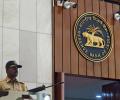
Reserve Bank of India on Thursday said a centralised portal would be ready in three to four months wherein depositors and beneficiaries can access details of unclaimed deposits across various banks. As of February this year, about Rs 35,000 crore of unclaimed deposits were transferred to RBI by public sector banks in respect of deposits which were not operated for 10 years or more. "In order to improve and widen the access of depositors/beneficiaries to such data, RBI has decided to develop a web portal to enable search across multiple banks for possible unclaimed deposits based on user inputs," RBI Governor Shaktikanta Das said while announcing the first bi-monthly monetary policy for the current financial year.

The Indian banking system's latest record on wilful defaulters shows Rs 62,970 crore, or around 10 per cent increase, in the additional amount outstanding since the pandemic began. The total outstanding amount increased to Rs 6.85 trillion in June from Rs 6.22 trillion in December 2019, shows a Business Standard analysis of numbers from the TransUnion CIBIL database. India recorded its first case of Covid-19 in January 2020.The amount outstanding to wilful defaulters had touched a post-pandemic peak of Rs.7.6 trillion in December 2020 (or Rs 1.4 trillion more than pre-pandemic levels).

The government can also individually exempt the PSBs, that are to be privatisated from the two Bank Nationalisation Acts. This will bring such lenders under Banking Regulation Act, and make them companies, reports Nikunj Ohri.
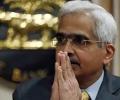
Reserve Bank Governor Shaktikanta Das will hold a meeting with CEOs of public sector banks on Wednesday to discuss issues concerning slow deposit growth and sustainability of high credit demand. As per the Reserve Bank of India (RBI) data, deposits rose by 9.6 per cent as compared to 10.2 per cent on a year-on-year basis, while credit offtake witnessed a jump of 17.9 per cent as against 6.5 per cent a year ago. According to an agenda circulated for the meeting, sources said, sustainability, including pricing and slow growth of deposits, would be discussed.

We as customers have to be conscious and careful to sidestep numerous types of frauds made possible under a mindless shift to a digital ecosystem without customer-redress procedures, warns Debashis Basu.

The global turmoil in the banking sector has made analysts cautious, who advise that investors stay away from stocks of this sector till the overall sentiment improves. The recent trouble for the banking sector started with the collapse of US-based Silicon Valley Bank (SVB), Silvergate Capital and Signature Bank. On its part, Moody's Investors Service has also cut its outlook for the US banking system to 'negative' from 'stable', citing the run on deposits at these three banks that led to the collapse of these banking majors in less than a week.

'If we want faster growth and want greater flow of credit towards the private sector, it's important to have many more of such large entities.'

'One by one we are seeing these private banks taking people's money and mismanaging it.' 'In the last 30 years, 30 private banks have collapsed.' 'Nationalise all banks so that people's money is safe.'

The share of listed public sector undertakings (PSUs) in the overall market capitalisation has hit a three-year high of 11.4 per cent. This comes on the back of the sharp outperformance of the PSU pack over the past two years. In 2021 and 2022, the BSE PSU index gained 41 per cent and 23 per cent, respectively. Market participants said a combination of factors like value buying and bullishness, particularly in public sector banks (PSBs), were the reason for the improved prospects.

Ahead of the Budget, the government has achieved almost half the divestment target of Rs 65,000 crore. FY23 divestment receipts are unlikely to be anywhere close to the budgeted target.

Public sector banks may have to bear a burden of Rs 1,800-2,000 crore arising due to a recent Supreme Court judgement on the waiver of compound interest on all loan accounts which opted for moratorium during March-August 2020, sources said. The judgement covers loans above Rs 2 crore as loans below this got blanket interest on interest waiver in November last year. Compound interest support scheme for loan moratorium cost the government Rs 5,500 crore during 2020-21 and the scheme covered all borrowers including the prompt one who did not avail moratorium.

Over 8.5 lakh employees, majorly from public sector banks (PSBs), will get a 15 per cent hike in pay, with the conclusion of the 11th Bipartite Wage Negotiations on Wednesday. After three years of intense negotiations, the UFBU, which represents four bank officer associations and five workman unions, and the IBA on July 22 entered into a memorandum of understanding (MoU) for an annual wage hike of 15 per cent.
Advice to the new finance minister from former RBI governor Raghuram Rajan: 1. Clean up banks by reviving projects that can be revived after restructuring debt. 2. Improve governance and management at public sector banks. 3. De-risk banking by encouraging risk transfers to non-banks and the market. 4. Reduce the number and weight of government mandates for public sector banks, and for banks more generally.

Leaders of several opposition parties were stopped by the police at Vijay Chowk in New Delhi as they took out a protest march from Parliament House to hand over a complaint to the Enforcement Directorate on the Adani issue.

The meeting is believed to be called to chalk out the strategy of the Opposition in Rajya Sabha on Monday.

'What do the moves towards protectionism suggest?' 'That we do not have Aatmavishwas.' 'If you have self-confidence, confidence in your ability to compete with the best in the world, why do you need protectionism?'

Education finance is a complex and dynamic sector. There are too many variables -- the course, the calibre of students, the universities, and the job prospects once the course is over, notes Tamal Bandyopadhyay.

Both the Lok Sabha and Rajya Sabha were adjourned till 2 pm after opposition members held protest in Parliament seeking a discussion on the issue.

Currently, banks are closed every second and fourth Saturday of a month. Why shouldn't they be shut every Saturday? When most customers carry their banks in their pocket (the app on the mobile phone), there is no need to keep banks open on Saturdays, argues Tamal Bandyopadhyay.

Services such as deposits and withdrawal at branches, cheque clearance and loan approvals would be affected due to the strike.
United Forum of Bank Unions (UFBU), an umbrella body of nine unions, has given a call for a two-day strike from March 15 to protest against the proposed privatisation of two state-owned lenders. In the Union Budget presented last month, Finance Minister Nirmala Sitharaman had announced the privatisation of two public sector banks (PSBs) as part of its disinvestment plan. The government has already privatised IDBI Bank by selling its majority stake in the lender to LIC in 2019 and merged 14 public sector banks in the last four years.

It is high time the Indian government signalled discomfort with the UK providing refuge to those accused of financial crimes in India, states Jaimini Bhagwati.

Finance Minister Nirmala Sitharaman on Friday chaired a meeting with chiefs of public sector banks and assessed their readiness to tackle any possible disruptions due to the Omicron variant. In a tweet, the finance ministry said during the meeting with CMDs/MDs, held through virtual mode, the minister also reviewed various steps taken by PSBs in implementing pandemic-related measures initiated by the government and RBI.
 © 2026 Rediff.com - Investor Information - Advertise with us - Disclaimer - Privacy Policy - Sitemap - Feedback - About us - Terms of use - Grievances