
The government may delay Rs 14,000 crore (Rs 140 billion) fund infusion in the public sector banks in view of volatile market conditions.

The government has approved a Rs 517 crore (Rs 5.17 billion) package to clear the pending salaries and statutory dues of 4,500 employees of 24 ailing PSUs, Heavy Industries Minister Santosh Mohan Deb said on Thursday.

Infosys was the top gainer in the Sensex pack, jumping over 4 per cent, followed by Tech Mahindra, Tata Steel, ICICI Bank, ITC, Maruti, SBI and Axis Bank. On the other hand, HCL Tech, M&M, Dr Reddy's, Asian Paints, Bajaj Auto and Bharti Airtel were among the laggards.

ETFs function like a mutual fund scheme and have underlying assets of government-owned companies.
Nearly 55,000 officers of 14 public sector oil companies have decided to strike work indefinitely from January 7 to seek higher wages, Association of Scientific & Technical Officer's vice president P K Sharma said in New Delhi on Tuesday

Public banks face slowdown heat.
Amid stiff competition from private and foreign players, the country's 27 public sector banks logged 35 per cent growth in profit at Rs 16,546 crore (Rs 165.46 billion) while their bad assets fell below 3 per cent during 2003-04.

The minister said RBI maintains a list of non-suit filed borrowers of banks and financial institutions, while CIBIL had a database on suit-filed accounts of Rs 1 crore (Rs 10 million) and above.

'It really doesn't matter that investors getting allotments sell their IPO stock holdings on listing day because a new set of investors are entering.' 'This explains the continued rise in stock prices even after the first day of listing.'
Unwilling to compromise autonomy for a hefty pay hike announced on Thursday, several PSUs chiefs on Friday conveyed displeasure to the government over a directive asking them not to create senior posts in their units without the approval of their administrative ministries.

Omkeshwar Singh, Head, Rank MF, a mutual fund investment platform, answers your queries.
The Centre on Monday said nationalised banks, which were provided equity as part of capital restructuring need not return it.
Public sector banks have suddenly developed cold feet on raising lending rates even if it means sacrificing on their bottom lines.
Top level public sector executives, including directors and chief executives, will not be able to join private firms after retirement or resignation unless they get go-ahead from the government.

'The correction could take two to three months and traders need to be careful.' 'For investors, this could be a good time to nibble in.'
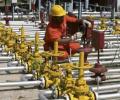
Offloading shares in ONGC, CIL, NHPC may fetch govt more than the year's target.

Ulhas Joshi, Head -- Sales, Rank MF, a mutual fund investment platform, answers your queries.

It is in no way a government of the economic Right. The Right is limited to religion and nationalism. The rest is as Left as the Congress or any other party, observes Shekhar Gupta.

State-owned companies have been set stiff targets to increase accountability as they get ready for divestment. Nikunj Ohri explains why meeting them will be challenging.
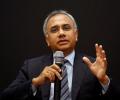
Infosys CEO Salil Parekh has got a massive 88 per cent jump in annual remuneration to Rs 79.75 crore, making him one of the highest-paid executives in the country. The software services firm has sought shareholders' approval for the reappointment of Parekh as chief executive officer and managing director for a second five-year term beginning July 1. According to the company's annual report released on Thursday, Parekh, 58, took home a salary of Rs 71.02 crore in the fiscal year ended March 31, 2022.

With the new financial year kicking in and the equity markets showing signs of stability, the government is expected to soon initiate its divestment programme with renewed vigour.
The move comes even as Bank of India on Wednesday said its corporate clients will suffer mark-to-market losses of around Rs 125 crore. It has 34 clients with 74 derivative transactions. Last week, State Bank of India said its clients may incur MTM losses of up to Rs 700 crore at the end of March 2008.
A host of public sector banks had cut interest rates in the earlier part of this year following an advisory from Finance Minister P Chidambaram in January. Private and smaller state-owned banks, however, did not cut rates.

Nikunj Saraf, Vice President Choice Wealth, answers your queries.
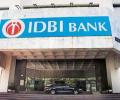
The department of investment and public asset management is racing against time to launch the LIC IPO, which could become the largest-ever listing on the Indian bourses. This would lead to some delay in the strategic divestment of IDBI Bank.
The LIC and some PSU general insurers are expected to maintain dominant position in the coming years even in the liberalised scenario, ICRA said in a research report.

If you are buying a bond to cater to your regular income needs, check the interest distribution schedule.
"There has been (a) slowing down of credit growth... However, this slowing down of credit has indeed, to some extent, affected flow of credit in the housing sector and consumer durables sector," he told reporters after a review meeting with heads of PSU banks.

Omkeshwar Singh, head, Rank MF, a mutual fund investment platform, answers your queries.
India Inc is looking at the public sector to steer its ambitions, as former PSU heads are taken on board to lead the private sector.

As per the structure proposed, 99 per cent of government holding in the bank will be shifted to the Holding Company and the government will retain 1 per cent with itself so that it remains a state-owned bank.

Despite the current bout of volatility, debt-oriented hybrid funds remain well suited for risk-averse investors.
