
Currently open access to ATF facilities exists at Delhi, Hyderabad and Bangalore airports, sources said on the sidelines of the Petrotech 2012 Conference in New Delhi.

In August, the Reserve Bank of India Governor Shaktikanta Das held a meeting with chief executive officers/ managing directors (CEOs/ MDs) of large non-banking financial corporations (NBFCs). The discussions included diversifying borrowing sources for NBFCs and housing finance companies (HFCs) to contain increasing reliance on bank borrowing, risks associated with high credit growth in retail segment in unsecured loans, prioritising IT upgrades and cyber-security, improving provisioning, monitoring of stressed exposures and slippages, ensuring robust liquidity and asset-liability management, ensuring transparency in pricing, creating robust grievance redress mechanisms.

The Oil Sector Officers' Association said 50,000 officers in 14 oil PSUs will strike work from Tuesday over non-revision of wages that was due from January 1, 2007. A strike by officers may immediately impact oil and gas production from offshore fields of Oil and Natural Gas Corppration and would also affect production of fuels like petrol, diesel, LPG and kerosene from refineries if the strike lasts more than two days.
A major reshuffle of top executives in 11 PSU banks is on the cards with the chairmen of Allahabad Bank, Corporation Bank, Syndicate Bank, Union Bank of India and Vijaya Bank slated to retire between March-July 2006.

For the first time, PSU banks will have a non-executive chairman, giving operational responsibility to managing director and chief executive officer.

'For a responsible person like him to utter such nonsense is shameful.' 'He is not fit to be a director on the RBI central board.'

Fundraising through qualified institutional placement (QIP) has revived this year, led by commercial banks, after a lacklustre 2022. According to data compiled by Prime Database, Indian companies have raised Rs 53,070 crore in 2023 so far, of which seven banks - Union Bank of India, Indian Bank, Bank of India, Federal Bank, IDFC First Bank, Bank of Maharashtra, and J&K Bank - account for Rs 21,290 crore, or about 40 per cent. If other financial institutions are included, the figure surges to Rs 26,690 crore.
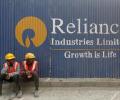
Reliance Industries Ltd was the biggest wealth creator during the five-year period from 2018 to 2023 while Adani Enterprises Ltd was the top all-round wealth creator, according to a study by Motilal Oswal Financial Services. The study, based on stock market performance of companies, said for the fifth time in succession, Reliance emerged as the largest wealth creator, adding Rs 9,63,800 crore wealth over 2018-23. It was followed by Tata Consultancy Services (Rs 6,77,400 crore wealth addition), ICICI Bank (Rs 4,15,500 crore), Infosys (Rs 3,61,800 crore) and Bharti Airtel (Rs 2,80,800 crore).
Take the rediff business quiz and see how much you know about the India's public sector companies.

A local official confirmed the incidents but said the causes of these suicides were yet to be ascertained.

The government in the Budget 2021-22 has made an allocation of Rs 20,000 crore for the capital infusion in the state-owned banks. The capital position of banks would be reviewed in the next quarter, and depending on the requirement, the infusion will be made to meet the regulatory needs. In the current fiscal so far, all 12 public sector banks have posted a profit, which is being ploughed back to bolster the balance sheet of the banks, sources said.

Arun Jaitley had promised to provide more than the budgeted amount.

'The Nifty index looks to be 20 per cent overvalued as per our model after moving up more than 10 per cent in the last two months.'
The government has cleared a second round of voluntary retirement scheme for shedding 10 per cent of the total workforce of public-sector general insurance companies involving a cash outgo of Rs 1,000 crore.

IDBI ranked as the 2nd most trust PSU bank.

rediffGURU Kanchan Rai, founder, Let Us Talk, offers advice on how to navigate life's problems.

Despite high exposure of public sector banks to power, iron and steel sectors, analysts remain in a wait-and-watch mode.

Employees of public sector banks (PSBs) on Thursday went on two-day strike against the move to privatise public sector banks impacting normal banking operation across the country. Many branches across different parts of the country were shut as the United Forum of Bank Union (UFBU), an umbrella body of nine bank unions including All India Bank Officers' Confederation (AIBOC), All India Bank Employees Association (AIBEA) and National Organisation of Bank Workers (NOBW) had given two day strike call. As a result, services such as deposits and withdrawal at branches, cheque clearance and loan approvals might be affected due to the strike. But ATMs are expected to function as usual.

Mechanical failure in a chemical reactor at the company's TDI plant caused leakage of poisonous phosgene gas.

The AAP on Wednesday last had posted a video story on 'X' featuring industrialist Gautam Adani and Prime Minister Modi. The next day, the party posted a picture of Adani and Modi, and alleged that the prime minister works for the industrialist and not the people.

'Investors should ideally consider equity allocations from a medium-to-long term perspective.'

'Historically, the markets tend to perform well during election years as governments aim to increase spending and call attention to growth.'

Arun Kumar Singh, former chairman of oil refining and marketing company BPCL, was on Wednesday appointed chairman and managing director of ONGC -- the first instance of a retired person being appointed the head of a Maharatna PSU. "The Appointments Committee of Cabinet (ACC) has approved the proposal of ministry of petroleum and natural gas for appointment of Arun Kumar Singh, ex-CMD, BPCL as chairman, ONGC for a three-year tenure with effect from the date of his assumption of charge of the post," an official order said. PTI first reported of Singh's appointment on November 17.

Jaitley said the total gross NPA ratio has gone up to 4.03 per cent in 2013-14 from 3.42 per cent in 2012-13 and 2.94 per cent in 2011-12.

Central Bank of India's 21.5 per cent assets are either bad or have been restructured.

The dream-run in railway stocks may soon run out of steam, caution analysts. The rally, which has lasted nearly a year, may meet time-wise correction post the Union Budget announcements as investors begin scalping profits. "There is going to be a build-up in expectations for the sector from the Union Budget, which is still two-odd months away.

Institutional investors lapped up Coal India shares in this fiscal's maiden government stake-sale, with Rs 6,500 crore bids pouring in on the first day of the offer-for-sale. The government had offered over 8.31 crore shares to institutional investors on Thursday under the offer-for-sale (OFS), but received bids for 28.76 crore shares or 3.46 times. At the indicative price of Rs 226.12 a share, the bids of institutional buyers are worth Rs 6,500 crore.

Anil Rego, CEO, Right Horizons, answers your personal income tax queries.

Public banks may have a tough time in 2015 as they had to write off Rs 1 trillion.

The bank unions had threatened to go on 4-day strike from February 25.

The Reserve Bank of India's (RBI's) latest order on unsecured loans is set to hit the banking sector's growth in the near-term, cautioned analysts, as they see banks slowing down on aggressive retail lending. Besides, cost of funds for non-banking finance companies (NBFC) is expected to inch up as banks will pass on higher capital charge to NBFCs. "We believe the fallout of the RBI action will be mainly on growth, given the rising dependence on unsecured retail loans and lending to NBFCs for growth.

There's a straightforward relationship between economic activity and power consumption. If economic activity increases, so does power consumption. Since the latest GDP (gross domestic product) data indicates India's growth rates exceeded expectations in the second half if the 2022-23 financial year (H2FY23) and GDP estimates of FY24 are strong, we would expect power consumption to rise as indeed it has. There is also a direct relationship between power consumption and National Thermal Power Corporation or NTPC's results since the public sector undertaking (PSU) is the largest power generator in India.

The decision in this regard, however, is expected to be taken by the new government.

'This is not just the IREDA's IPO. It is the success of the ministry of new and renewable energy and of the renewable energy industry.'
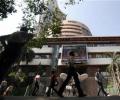
Putting money in key PSUs a better option

Among the Sensex firms, Axis Bank, Power Grid, Maruti, State Bank of India, Tata Motors, ITC, Nestle and Mahindra & Mahindra were the major gainers. Bajaj Finance and Larsen & Toubro were the laggards.

During his visit to the Bastar district headquarters in the poll-bound state, the prime minister is scheduled to address a Bharatiya Janata Party rally.

The annual pay of a PSU employee on an average increased by 13.7 per cent to Rs 6.6 lakh in 2010-11, the Public Enterprises Survey for 2010-11 has revealed.

The Union Cabinet on Thursday approved a proposal to allow 100 per cent foreign direct investment (FDI) in public sector refiners, expanding the scope for FDI in the privatisation of Bharat Petroleum Corporation Ltd (BPCL). The approval by the Cabinet will enable the sale of the government's 52.98 per cent stake in BPCL to a foreign buyer, and, at the same time, will open the door for FDI in other public sector companies in the oil sector put up for privatisation.
