
'Punjab, Haryana, Gujarat, Maharashtra, Tamil Nadu, Kerala and Delhi are the richest states in the country. Except Haryana and Punjab, the remaining states produce 40 to 90 per cent less than their food grain requirement. It is states like Punjab, Haryana and UP that are feeding these rich, food-deficit states,' says Pradeep Bhargava, thinker.

Private firms will have to maintain a minimum net addition to their workforce each month from October this year to June 2021 to get the Employees' Provident Fund subsidy for the new recruits.

In the draft rules, among 681 listed professions, armed security guards, supervisors, surveyors, and carpenters (class I) are proposed to be treated as highly skilled professionals; electricians, tailors and drivers are skilled; cooks and cobblers as semi-skilled and dairy coolies, office peons and sweepers as unskilled.
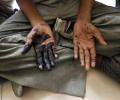
After assuming power in 2014 with a full majority of its own, the BJP-led NDA government started an ambitious process of reforming labour laws in the form of codes aimed at making the framework less cumbersome with a variety of alterations. It had planned four codes each for industrial relations, wages, social security and welfare, and occupational safety, health and working conditions. To this end, 35 central labour laws were to be converted into four codes that would have had the virtue of streamlining labour relations. But none of the proposed code Bills could be converted into a law principally because neither trade unions nor industry representatives came on board. They hold the key to India's low-growth-high unemployment paradigm but the government may struggle to push them through this time as well. Somesh Jha explains why
 © 2026 Rediff.com - Investor Information - Advertise with us - Disclaimer - Privacy Policy - Sitemap - Feedback - About us - Terms of use - Grievances