
'Global uncertainty is something which definitely occupies the minds of officials when we are preparing for the Budget.'

Here are the key numbers to watch out for in the Union Budget for 2025-26:

The idea of back-loading the target of fiscal consolidation is perhaps guided by the government's desire to be prepared for any adverse developments in the coming year, points out A K Bhattacharya.

The country's primary capital markets delivered a robust performance in FY26, emerging as a global leader in initial public offerings (IPOs) despite an uncertain environment, the Economic Survey said on Thursday.

Finance Minister Nirmala Sitharaman's biggest challenge will be to find a new growth driver, particularly against the backdrop of a global economy ravaged by heightened uncertainty and fragmentation, financial markets on a precipice, and global commodity prices on a continued uptrend.
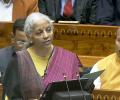
Budget 2026 sticks to fiscal discipline, shuns populist measures despite five key state elections coming up, but ends up rattling stock markets with a higher transaction tax on derivatives trading.

The Indian government has expressed its disagreement with the IMF staff's 'baseline' assumption that the 50 per cent US tariffs on its goods exports 'would remain in place indefinitely', based on which the staff pegged the country's GDP growth at 6.6 per cent this year, and pared its 2026-27 projection by 20 basis points to 6.2 per cent.

Personal income tax as a percentage of GDP has gone up from 2.11 per cent in 2014-15 to 2.94 per cent in 2021-22 fiscal, indicating that taxpayer base is widening as a result of the steps taken by the present government led by Prime Minister Narendra Modi.

'Personal income tax collections have been high on account of impressive advance tax mop-up.'

GST Reform 2.0, which trims tax slabs from four to two, signals a push for demand-led growth, and together with recent income tax cuts, sets the stage for sustained economic growth, experts said. The Goods and Services Tax (GST) Council on September 3 approved an overhaul of the indirect tax regime by taxing essentials at 5 per cent and other goods at 18 per cent. A new 40 per cent tax will be applicable on luxury and sin items.

Net direct tax collection so far this fiscal stood at Rs 4.59 lakh crore, 1.39 per cent lower compared to the mop-up during the corresponding period of last fiscal, as advance tax collections slowed, government data showed. Advance tax collection during April 1-June 19, 2025 grew a meagre 3.87 per cent to Rs 1.56 lakh crore.

Companies may foot less of the tax bill for some time yet. The corporate share of net direct tax collections has been lower in 2024-25 than in previous years. The corporate segment accounted for 45.6 per cent of total net direct tax collections as of March 16, compared to 48.1 per cent on the same date in 2023-24 (FY24).

India is well-positioned to deal with the negative effects of US tariffs and global trade disruptions as domestic growth drivers and low dependence on exports anchor the economy, Moody's Ratings said on Wednesday.
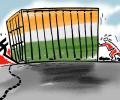
'We believe that in the new world order FTAs or bilateral trade agreements (BTAs) are the way forward.' 'They are enablers for our participation in global value chains. Today, around 70 per cent of global trade is tied to these chains.'

According to CNBC's list based on KPMG's 2011 survey of 96 countries, these eight nations don't have to pay any income tax to their government.

They are not just underreporting income; they are reshaping what the income tax system perceives, says study.

Passenger vehicle dispatches in India from factories to dealers rose to record levels at over 43 lakh units in FY25, with utility vehicles accounting for 65 per cent of the total sales in the segment, industry body SIAM said on Tuesday. Passenger vehicle (PV) dispatches rose to 43,01,848 units in the last fiscal year, marking a 2 per cent increase compared to 42,18,750 units in FY 2023-24.

The peak rate of 30% applies on annual income of individuals above Rs 10 lakhs.

'The bull market cycle ran for five years. It's the end of that cycle.' 'The next cycle is a down cycle, and in that down cycle, you will see the Sensex falling from their highs of around 68,000 to maybe 40,000-50,000 at the bottom of the cycle.'
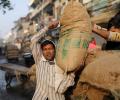
The World Bank on Wednesday lowered India's growth forecast for the current fiscal by 4 percentage points to 6.3 per cent amid global economic weakness and policy uncertainty. In its previous estimate, the World Bank had projected India's growth at 6.7 per cent for the fiscal year 2025-26.
Net direct tax collection grew 18.3 per cent to about Rs 11.25 lakh crore as of October 10 this fiscal, government data showed on Friday. The mop-up includes personal income tax collection of Rs 5.98 lakh crore and corporate tax collection of Rs 4.94 lakh crore.
Net direct tax collection grew 13.13 per cent to over Rs 21.26 lakh crore so far this fiscal aided by by higher advance tax mop up, government data showed on Monday. During the year, the government collected Rs 10.44 lakh crore from four instalments of advance tax as against Rs 9.11 lakh crore in the previous fiscal, registering a growth of 14.62 per cent.

Majority of respondents feel that the government in the forthcoming Budget will increase the standard deduction and give more incentives for housing loans.

Ask rediffGURU and PF expert Milind Vadjikar your insurance, stocks, mutual fund and personal finance-related questions.

Geopolitical tensions, trade policy uncertainties, volatility in international commodity prices and financial market uncertainties pose considerable risks to India's economic growth in the coming year, the finance ministry cautioned on Wednesday. "Global trade continues to be affected by uncertainty in the policy environment... tariff-related developments in multiple countries have heightened trade-related risks, affecting investment and trade flows globally.

The government in FY26 Budget should announce an "effective" personal income tax cut to support consumption and demand, Barclays said on Thursday. In its FY25-26 Union Budget preview, Barclays said the key ask from the Budget, to be presented on February 1, is to support growth while adhering to fiscal consolidation path.

Filing your tax returns may seem like a lot of paperwork, but it is swift and smooth once you start with a clear plan, says Anil Rego.
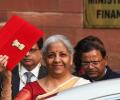
'... that it once again shies away from renewing its commitment to strategic divestment,' points out A K Bhattacharya.

Passenger vehicle dispatches from companies to dealerships witnessed an increase of 1.6 pc year-on-year in January at 399,386 units driven by robust demand for utility vehicles, industry body SIAM said on Thursday. It was the highest-ever passenger vehicle dispatch for the month of January.
Net direct tax collection grew 16.12 per cent to over Rs 9.95 lakh crore so far this fiscal on higher advance tax mop up. Refunds worth over Rs 2.05 lakh crore were issued, a 56.49 per cent jump over the same period last fiscal. The net personal income tax (PIT) collection grew 19 per cent to Rs 5.15 lakh crore between April 1 and September 17.

From the 30-share blue-chip pack, ITC Hotels, IndusInd Bank, Mahindra & Mahindra, Sun Pharma, UltraTech Cement and NTPC were among the biggest gainers. Titan, Kotak Mahindra Bank, Nestle, Asian Paints, HCL Tech and ICICI Bank were among the laggards.

'The increase in the limit for TDS on interest to Rs 1 lakh will ensure greater cash flow in the hands of senior citizens.'
Finance Minister Nirmala Sitharaman on Saturday unveiled 'transformative' tax reforms that ranged from a simpler income tax law to higher TCS threshold for remittances and income tax benefits for middle class.

Finance Minister Nirmala Sitharaman will present her 8th straight Budget and all eyes will be on the much-expected tax relief for the middle class. Sitharaman had in her first Budget in 2019 replaced the leather briefcase -- which had been in use for decades for carrying Budget documents -- with a traditional 'bahi-khata' wrapped in red cloth.

The old tax regime remains unchanged. 'Taxpayers opting for it will continue to follow the existing slab rates and deductions.'

'Stay disciplined, and remain invested.' 'Volatile times are the best to invest in structural opportunities at the right price.'

These are the highlights of the Union Budget 2025-26 presented by Finance Minister Nirmala Sitharaman in Parliament on Saturday.

The need for a manufacturing policy, reining in food inflation and raising investment in the country were among key suggestions given by economists who met Finance Minister Nirmala Sitharaman and senior ministry officials in the first round of pre-Budget consultations on Friday.

While this will incur a revenue loss amounting to 0.2 per cent of GDP, it will provide a strong boost to consumer sentiment and spending, points out Rajani Sinha.

'2025 is the year to build a portfolio for the future. Focus this year should be on valuations and visible growth.'
 © 2026 Rediff.com - Investor Information - Advertise with us - Disclaimer - Privacy Policy - Sitemap - Feedback - About us - Terms of use - Grievances