
Crude oil prices could dip to the low $60s by the end of 2025 after rising to $80 a barrel in the last quarter (October-December) of 2024 - up nearly 10 per cent from current levels, suggest analysts at JP Morgan. The main players in West Asia, including Saudi Arabia and the UAE, have a strong incentive to keep the conflict contained, according to the JP Morgan report.

The oil industry experienced three upheavals between 1973 and 1991, which seem to be etched in the memory of the industry's decision makers. Naturally, at the sign of a new crisis, the decision makers like to dip into those tumultuous decades to find ways to deal with the new shock, in addition, of course, to expert reports and forecasts. So, the industry bigwigs turned the pages of history to get a peek into the future of oil price movements after Russia invaded Ukraine in 2022, Israel attacked Gaza in 2023, Iran-linked Houthi rebels pounded tankers crossing the Red Sea in support of Palestine the same year, and Iran rained missiles on Israel in 2024.

'The hacker replaced original emails and planted fraudulent emails with a request letter and invoices to be paid to fraudulent bank accounts.'
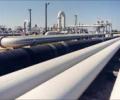
Countries with spare capacity, including UAE, have made additional crude available to international oil companies requiring extra volumes for their refining needs.

Global head of equity strategy at Jefferies, Christopher Wood, has cut his exposure to Indian equities by one percentage point in the Asia-Pacific ex-Japan relative-return portfolio, and Australia and Malaysia by half a percentage point each in favour of China, which has seen a hike in exposure by two percentage points. The rally in China has been fast-forwarded by the approach of a seven-day holiday with the CSI 300 Index up 8.5 per cent on Monday, and 25.1 per cent in five trading days, he said.

The Organisation of the Petroleum Exporting Countries (OPEC) has decided to cut its daily oil production by about 2 million barrels. OPEC's daily output target is 27.3 million barrels.
The organisation of oil producing and exporting countries on Monday ruled out any increase in oil output to cool the high international oil prices.

OPEC agrees to keep pumping as oil glut fears persist.

These countries are feeling the heat from the US shale oil producers.
OPEC expects an additional daily average output growth of 1.2 million barrels or a daily average oil output of 87 million barrels in 2008. The OPEC output quota this year will be less than 32 million bpd and non-OPEC output would be about 50.3 million bpd, according to a report . OPEC's actual production will be higher than the quota but that will not be sufficient to coverup the demand-supply imbalance in the international market.

Indian companies place orders worth $600 million for US crude, which is likely to increase by nearly $2 billion in the near future.
With crude oil flirting with the $100 a barrel mark, world's largest oil producer Saudi Arabia is emulating marketing savvy West to showcase oil cartel Organisation of Petroleum Exporting Countries in a new light when it organises the third OPEC Summit in Riyadh this week.
Trends in the global energy markets are crucial if India's growth outlook is to remain healthy. Prices for the Indian crude basket were averaging around $86.2 per barrel through Q1FY25 and then moderated to $84 in July and to $78-79 in August (so far). But global crude supply may outpace weak global demand in the short term.
The UAE will comply with the Organisation of Petroleum Exporting Countries' directive to reduce its output by 1 million barrels a day, from the official quota of 28 million barrels, Minister of Energy Mohammed bin Dhaen Al Hameli said.
India to urge OPEC to hike oil production

Escalation of the conflict in West Asia between Israel and Iran has had a direct impact on the energy markets, and more broadly on the financial markets as well as the global economy.
India has asked oil cartel Organization of the Petroleum Exporting Countries to raise crude oil production to stem the relentless rise in international oil prices that have threatened to derail import dependent economies such as India.
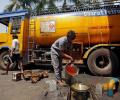
After a spike in crude oil and gas prices in October following the Hamas terror attack, prices eased down 9 per cent month-on-month in November. The Organization of the Petroleum Exporting Countries (Opec) and Opec+ agreed to a further voluntary production cut in January-March 2024 to try and support global crude prices. The best guess here is that crude prices (currently at $75/barrel, or bbl) will not likely cross significantly above $80, and gas prices are also likely to remain subdued unless there's a further escalation in the Israel-Hamas conflict.
The ministry of finance is likely to assume crude oil price to remain within $85 per barrel while estimating subsidies for the Interim Budget 2024-25 (FY25), to be presented on February 1. Brent crude prices moved up on Thursday, ending at $78.9 per barrel. Crude oil and cooking gas prices, which move in tandem, impact fertiliser and cooking gas subsidies, constituting 53 per cent of the government's total subsidies.

Global financial markets are wrong in hoping that the worst is over in geopolitical crises such as the Iran-Israel conflict and the Russia-Ukraine war, wrote Christopher Wood, global head of equity strategy at Jefferies, in a recent note to investors called 'GREED & fear'. While most investors and the media are focused on United States (US) Federal Reserve policy and the "endless chatter" of Fed governors, Wood believes the news flow in the financial sphere "pales into complete insignificance" compared with the "tectonic shifts" going on in geopolitics.

The latest flashpoint in West Asia has derailed India's preliminary plans to resume crude oil imports from Iran, officials said. In January, officials of the Ministry of Petroleum and Natural Gas had told Business Standard that the government had been studying proposals for the same, given that India was trying to expand sources of imports. "We are always monitoring the situation when it comes to crude flows.

Equity markets would take cues from domestic inflation data announcement, global trends and trading activity of foreign investors in a holiday-shortened week ahead, analysts said. Markets would remain closed on Tuesday for 'Diwali Balipratipada'. "As we enter a truncated week with Muhurat trading on Sunday, global cues will play a pivotal role in shaping the market direction.

India's import of cheap Russian oil scaled another record in May and is now more than the combined oil bought from Saudi Arabia, Iraq, UAE and the US, industry data showed. India took 1.96 million barrels a day from Russia in May, 15 per cent more than the previous high in April, according to data from energy cargo tracker Vortexa. Russia now makes up for nearly 42 per cent of all crude oil India imported in May.

'2019 was fought on delivery. But in 2024, you can see the before and after effects.'

India's crude oil imports are coming in from a changing mix of countries, with the top three accounting for around 60 per cent of total imports. Russia emerged as the largest source of crude oil imports for India in June, as per the latest available data from the Organization of the Petroleum Exporting Countries (OPEC). The data which is released with a lag, showed that Russian imports accounted for 24 per cent of the total crude imports into the country.

Brent crude oil prices may rise to $110 a barrel in 2023, up nearly 33 per cent from the current levels, said analysts at Morgan Stanley, in a recent note. This is, however, lower than the peak level of nearly $127 touched earlier in 2022 as geopolitical concerns took centre stage amidrising demand. "Looking ahead, Brent oil price growth will decelerate even more in the coming quarters. "This comes even as our global oil strategist expects a rise in oil prices back to $110 a barrel by the second half of 2023.

While prices sustaining lower levels is crucial, Govt actions are also a key monitorable given the forthcoming elections in 2024.

RBI's interest rate decision, macroeconomic data, global trends and trading activity of foreign investors are the crucial factors to drive equity markets in a holiday-shortened week ahead, analysts said. Markets would remain closed on Monday for Gandhi Jayanti. "While global cues will continue to dictate trends in local markets, focus will shift to RBI's monetary policy announcement on Friday. "Although the market is expecting a status quo on interest rates, global concerns like rising US dollar index and bond yields coupled with surging crude oil prices continue to weigh on investors' minds.

'With China falling out of favour, India is where investors see the demographic and digital dividend apart from the benefits of reforms playing out.' 'Your prime minister has also done a great job of sharing this story with the world.'

The government has brought back the windfall profit tax on domestically produced crude oil after international prices firmed up while the levy on export of diesel has been cut to nil, according to an official order. The levy on crude oil produced by companies such as Oil and Natural Gas Corporation (ONGC) is now Rs 6,400 per tonne with effect from Wednesday, the order dated April 18 said. At the last revision on April 4, windfall tax on domestically produced crude oil was cut to nil as international oil prices dipped below $75 per barrel.

Puri said the government has a moral duty to provide energy at affordable rates to consumers.
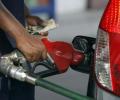
India's demand for petroleum products like petrol and diesel will grow by 7.73 per cent in 2022, the fastest pace in the world, an OPEC report said. India's demand for oil products is projected to rise from 4.77 million barrels per day (bpd) in 2021 to 5.14 million bpd in 2022, OPEC said in its monthly oil report. The growth in demand is the fastest in the world ahead of 1.23 per cent of China, 3.39 per cent of the US and 4.62 per cent of Europe.
Investors are showing some interest in the downstream energy cycle. Refiners and marketers, especially the public sector (PSU) oil marketing companies (OMCs) could see a revival of marketing margins. Lower crude oil and gas prices may also improve margins in industries like paints, logistics, synthetic fabrics, plastics, and fertilisers. In the medium-term, however, there could be a supply overhang affecting OMCs as new refining capacities are scheduled to be commissioned, especially in China, and this may lead to a drop in the refining margins as capacity would be surplus to demand until and unless there's a pick-up in global growth.
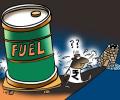
Diesel sales in India fell 3 per cent in September as a receding monsoon continued to dampen demand and slowed industrial activity in some parts of the country, preliminary data of state-owned firms showed. While diesel sales by three state-owned fuel retailers fell year-on-year, petrol sales rose in September. Consumption of diesel, the most consumed fuel in the country -- accounting for about two-fifths of the demand, fell to 5.81 million tonnes in September from 5.99 million tonnes demand in the same period a year ago.

Crude and gas supply concerns have eased amid reports that Israel and Hamas have struck a peace deal. The International Energy Agency estimates oil demand may drop slightly in calendar 24 but Opec probably has enough pricing power to maintain $80/ barrel Brent prices. Russia's share of India's crude imports remained strong at about 35 per cent in September 2023.

Major General S C N Jatar, who passed into the ages on Monday night, thwarted anti-national forces at the peak of the Assam agitation. Colonel Anil A Athale (retd) salutes this officer and gentleman.
The medium-term scenario for oil marketing companies (OMCs) is high risk due to the surging crude and gas prices. Apart from OPEC-plus cutting production, the Hamas-Israel conflict has caused fears of supply disruption. The July-September quarter of 2023-24 (Q2FY24) saw positive surprises for OMCs. Strong gross refining margins (GRMs) more than offset weak marketing margins.

The Organization of Petroleum Exporting Countries (OPEC) in its latest monthly oil market report projected the world's third-biggest energy consumer to add 0.39 million barrels per day (bpd) of crude oil demand in 2022. India's oil demand rose from 4.51 million barrels per day in 2020 to 4.76 million bpd in 2021, recording a 5.61 per cent growth.
 © 2026 Rediff.com - Investor Information - Advertise with us - Disclaimer - Privacy Policy - Sitemap - Feedback - About us - Terms of use - Grievances