
With increasing terror attacks in Pakistan raising concerns over the safety of its nuclear arsenal, Defence Minister A K Antony said the threat of these weapons falling in wrong hands was an "area of serious concern" and its consequences would be "unimaginable".
A German national was deported from Tamil Nadu in the wee hours on Tuesday after he was picked up by police in Nagercoil for his alleged "active involvement" in the protests against the Kudankulam nuclear power plant project.
India will seek a "liberal" regime of technology transfer from the US and an early operationalisation of the civil nuclear deal, Prime Minister Manmohan Singh has said ahead of his visit here next week.

The Washington Post said the deliberate act of proliferation was part of a secret nuclear deal struck in 1976 between Chinese leader Mao Zedong and Pakistan's then Prime Minister Zulfiquar Ali Bhutto.
Ajit Jain, rediff India Abroad, managing editor, Canada, who is traveling with Canadian Prime Minister Stephen Harper on his first-ever visit to India, reports on future course of the civilian nuclear deal that is underway between the two countries.
Libyan leader Moamer Gadaffi stirred up a storm by saying that Arab nations and even the Palestinians had the right to nuclear weapons as long as Israel's nuclear ambitions were tolerated.
The recent terrorist attacks in Pakistan including its army headquarters does not pose a threat to the country's nuclear arsenal, even though the United States remains watchful about it, US Secretary of State Hillary Clinton said on Wednesday.
Union Minister V Narayanasamy on Saturday said it is the responsibility of the Centre and the Tamil Nadu government to allay fears of locals over the Koodankulam nuclear power plant and asked religious groups not to instigate anti-nuclear protesters.
Russia's Nerpa nuclear-powered attack submarine was handed over to the Indian Navy at a ceremony in the far eastern port of Primorye, making India the sixth operator of such subs in the world.
As Pakistan remained mum on disgraced scientist A Q Khan disclosing the government and army hand in nuclear proliferation, its High Commissioner to UK said on former premier Benazir Bhutto never "indulged in that sort ofthing." Wajid Shamsul Hasan also said the publication of Khan's letter in this regard in a British daily was timed to "embarass" President Asif Ali Zardari who is visiting the US.
Former Defence Research and Development Organisation scientist K Santhanam, who had questioned the success of the thermonuclear device during the Pokhran-II tests, has favoured an inquiry to determine the results of the 1998 experiments, saying creation of nuclear power could not be based on myths.
US President George W Bush has defended the civilian nuclear energy arrangement with India, saying it is a "good policy" for America
Nuke scientists support AEC chief's contention
The sources said evolving public opinion in favour of the agreement would not be difficult in France, unlike that of the US.
India does not need to carry any more nuclear tests, Atomic Energy commission chief Anil Kakodkar said on Wednesday in the backdrop of the controversy over whether the 1998 Pokhran thermo-nuclear explosion was a fizzle.
An Indian-American Republican leader has questioned the characterisation of Senator Edward Kennedy, who died last week, as an "unsung hero" of the Indo-US civilian nuclear deal.
Former President A P J Abdul Kalam said the Pokhran tests of 1998 were successful as desired yield was obtained. Kalam was reacting to former senior Defence Research and Development Organisation scientist K Santhanam's contention that Pokhran-II tests had not met the desired objective.
The Indian Navy is all set to join the global elite club on Sunday when Prime Minister Manmohan Singh formally launches the indigenously-built nuclear-powered submarine INS Arihant at the naval dockyard of the Eastern Naval Command in Visakhapatnam.Prime Minister will arrive at the ENC's airbase INS Dega in Visakhapatnam by a special Indian Air Force plane along with his wife at 11 am and drive straight to the naval dockyard to commission INS Arihant into the sea.

The Indian government's identification of two 'greenfield' sites for commercial nuclear development, that will utilise US technology has been welcomed by the US-India Business Council (USIBC).
Yusuf Raza Gilani, despite being Pakistan's elected prime minister, has little or no control over the country's nuclear arsenal and the armed forces, explains Amir Mir
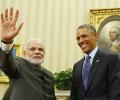
With their landmark 2005 civil nuclear deal still in limbo, India and the United States have established an inter-agency contact group to sort out outstanding liability and technical issues to fast-track its full implementation.
The report by security expert Andrew Cockburn also says that the US ignored disgraced nuclear scientist A Q Khan's proliferation activities in the 1990s.
An independent website run by the 'Shan Herald Agency for News' said the project was being constructed at a 'secure site' near Maymyo.
US President Barack Obama exuded confidence that the nuclear weapons of Pakistan are safe and secure, about which a lot of concerns have been expressed in the recent past. "I have confidence that the Pakistani government has safeguarded its nuclear arsenal. It is Pakistan's nuclear arsenal," Obama told the Dawn television of Pakistan in an interview.

Activists strongly opposed to the Koodankulam Nuclear Power Project have now turned to God. In their letter, they have urged the Almighty to save them from a 'nuclear disaster'.

The US also blasted China and Russia for not joining hands with the international community in their efforts to combat the North Korean threat.
Russia warned the United States on Sunday, that it is not going to reduce its nuclear arsenal until America made its position on the missile shield in Europe clear.
Some people, who talk about the high expenses of nuclear programme, do not know the importance of nuclear capability, Dr Samar Mubarakmand, Member Science and Technology, Planning Commission of Pakistan, said.
President George W Bush and other US leaders do not fully understand the chances of a conflict breaking out and must do more to avert it, the expert said.
Iran's top nuclear negotiator Ali Larijani held talks with External Affairs Minister Natwar Singh on Wednesday in New Delhi on strategic partnership, particularly in the field of energy.
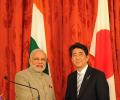
The "understanding" between India and Japan on civil nuclear issue has "improved", Prime Minister Narendra Modi said on Monday, after talks with his counterpart Shinzo Abe even as the much-anticipated remained deal remained elusive.
.jpg)
India and Japan on Monday agreed to enhance their defence and strategic cooperation to a new level during talks between Prime Minister Narendra Modi and his counterpart Shinzo Abe, who also decided to speed up negotiations on civil nuclear deal that could not be concluded now.
The spread of the Taliban in Pakistan has senior American officials concerned about the safety and security of Pakistan's nuclear arsenal, including the potential for terrorists to get their hands on a weapon in transport or to infiltrate laboratories and nuclear fuel-production facilities.

Refuting reports about an increase in its nuclear arsenal, China on Monday said it has kept its capability at the "lowest level", commensurate with the need for national security. "We always kept our nuclear capability at the lowest level, commensurate with the need for national security," Chinese foreign ministry spokesman Hong Lei told a media briefing.
At present, India's focus has been on making the US co-operate against the activities of the anti-India terrorist groups and their infrastructure in Pakistani territory. This should continue, but this should not be the only subject of co-operation between the two countries. It is necessary to expand it to cover likely threats to Pakistan's nuclear establishments.
The Obama Administration is awaiting the advent of the new government in India to engage New Delhi on the final implementation details of the US-India civilian nuclear deal, the Acting point person for South Asia at the US Department of State has said.
Protesters on Thursday formally ended their 12-day fast against the Koodankulam Nuclear Power Project, a day after the Tamil Nadu government promised to pass a resolution at the Cabinet for halting the project.
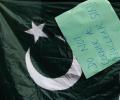
Pakistan should review its stand on India as its "restrained" policy is being taken as "weakness", believes Jamaat-ud-Dawa chief Hafiz Saeed.
India's sea ports do not have equipment to detect radioactive or contaminated consignments, exposing the country to security and safety risks, besides damaging reputation of goods manufactured in the country.
US Secretary of State Hillary Clinton, said on Wednesday that Washington would do "everything it could" to prevent Iran from obtaining nuclear weapons, even as Obama Administration aims at political engagement with Tehran.
 © 2026 Rediff.com - Investor Information - Advertise with us - Disclaimer - Privacy Policy - Sitemap - Feedback - About us - Terms of use - Grievances