
Retail inflation rose marginally to 4.91 per cent in November, mainly due to an uptick in food prices, government data showed on Monday. The Consumer Price Index (CPI) based retail inflation was 4.48 per cent in October 2021 and 6.93 per cent in November 2020. As per the data released by the National Statistical Office (NSO), food inflation was at 1.87 per cent in November this year compared to 0.85 per cent in the preceding month.

Retail inflation remained above the RBI's comfort level for the second consecutive month despite slipping slightly to 6.26 per cent in June while the factory output recorded a growth of 29.3 per cent in May, mainly on account of the base effect, the government data showed. The marginal slippage in the Consumer Price Index (CPI)-based inflation was noticed despite little firmness witnessed in the food inflation which inched up to 5.15 per cent in June from 5.01 per cent a month ago. Retail inflation based on Consumer Price Index (CPI) was 6.3 per cent in May 2021 and 6.23 per cent in June 2020.

India's economy grew 6.1 per cent in the fourth quarter of 2022-23, pushing up the annual growth rate to 7.2 per cent, official data showed on Wednesday.

India's economic growth surged to 20.1 per cent in the April-June quarter of this fiscal, helped by a low base of the year-ago period, despite a devastating second wave of COVID-19. The gross domestic product (GDP) had contracted by 24.4 per cent in the corresponding April-June quarter of 2020-21, according to data released by the National Statistical Office (NSO) on Tuesday. The government had imposed a nationwide lockdown at the onset of the COVID-19 pandemic last year.

Chief Economic Advisor (CEA) V Anantha Nageswaran on Thursday said describing India's recovery as 'K-shaped' was wrong as both rural and urban economies were recovering, albeit at different paces. Speaking to reporters at the Finance Ministry, Nageswaran said the gross domestic product (GDP) growth print for the recent October-December quarter (Q3FY23) will likely be revised upwards. "The notion of using the letter 'K' to denote urban and rural is somewhat wrong because it is almost as if one is growing and one is contracting. "I would say one segment's slope is more positive, and the other one slope is less positive but it is positive," Nageswaran said.

Unemployment rate for persons of age 15 years and above in urban areas dipped to 12.6 per cent in April-June 2021 from 20.8 per cent in the same month of the previous year, showed a periodic labour force survey by the National Statistical Office (NSO). Joblessness or unemployment rate (UR) is defined as the percentage of unemployed persons in the labour force. The joblessness was high in April-June in 2020 mainly due to the impact of lockdown restrictions in the country which were imposed to curb the spread of deadly coronavirus.

Unlike Israeli company NSO, whose sale of Pegasus cyber tech grabbed worldwide attention, and other manufacturers of offensive-cyber products, Cellebrite operates in a grey area between security exports and civilian ones.

On October 29, WhatsApp announced it was suing NSO Group for selling its software, Pegasus, which has the ability to compromise a device and get access to all of a target's data. Spooked by revelations that activists and journalists were spied upon by using NSO Group's spyware, many have moved to alternative messaging platforms such as Signal and Telegram.

The parliamentary panel on information technology will question government officials on allegations relating to suspected phone tapping of politicians, journalists and others using Pegasus spyware, the committee chairman and senior Congress leader Shashi Tharoor said on Tuesday, and asserted that it is the "most important issue" for many members.

The Index of Industrial Production (IIP) grew by 1.4 per cent in November as most components like manufacturing, electricity, mining, primary goods, and consumer durables witnessed a slowdown, according to data released by the National Statistical Office (NSO) on Wednesday. This is on the base of a decline of 1.7 per cent in November 2020 and before the new Covid variant started impacting economic activity. IIP growth was lower than the 4 per cent expansion recorded in the previous month but was better than a 1.6 per cent contraction seen in November 2020. Separately, rising prices of kitchen staples pushed retail inflation, or rate of price increase, to 5.59 per cent in December 2021, bringing it close to the upper band of Reserve Bank's comfort zone.

Gross enrolments of new subscribers with the ESIC were 1.49 crore during 2018-19.

India's economic growth slowed to 8.4 per cent in the second quarter of 2021-22, mainly due to waning low base effect, official data showed on Tuesday. The GDP growth in April-June quarter this fiscal stood at 20.1 per cent. The Indian economy had contracted by 24.4 per cent in April-June last year.

The Wire has reported that phone numbers of multiple people close to Dubai Princess Sheikha Latifa, who was captured by Indian soldiers in 2018, were added to a list of potential targets for surveillance.

'The phone numbers of over 40 Indian journalists appear on a leaked list of potential targets for surveillance, and forensic tests have confirmed that some of them were successfully snooped upon by an unidentified agency using Pegasus spyware,' report Anuj Srivas and Kabir Agarwal in The Wire.

Mining output climbed 23.3 per cent and power generation increased 7.5 per cent in May. The IIP had contracted 33.4 per cent in May 2020. Industrial production has been hit due to the coronavirus pandemic since March last year when it had contracted 18.7 per cent. It shrank 57.3 per cent in April 2020 due to decline in economic activities in the wake of the lockdown to curb the spread of coronavirus infections. The IIP had registered a growth of 5.2 per cent in February last year.
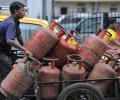
Only 48.3 per cent of the rural households used LPG, while the figures were much higher in urban areas at 86.6 per cent, according to a NSO report.

Unemployment rate for all ages in urban areas rose to 9.3 per cent in January-March 2021 from 9.1 per cent in the same month of the previous year, showed a periodic labour force survey by the National Statistical Office (NSO). Joblessness or unemployment rate (UR) is defined as the percentage of unemployed persons in the labour force. The UR for in CWS (current weekly status) in urban areas for persons of age 15 years and above was 10.3 per cent in October-December 2020, the ninth Periodic Labour Force Survey (PLFS) showed.

Claims of a spike in poverty and inequality in India during the Covid-19 pandemic are patently false as such claims are based on uncomparable different surveys, according to a paper co-authored by eminent economist Arvind Panagariya. The paper also noted that inequality fell in the country during Covid years, both in rural and urban areas as well as nationally. Panagariya, Columbia University Professor and former vice chairman of NITI Aayog and Vishal More of Intelink Advisors, New Delhi have co-authored a detailed paper 'Poverty and Inequality in India: Before and After Covid-19'.

India's economy grew by 1.6 per cent in the fourth quarter of 2020-21, restricting the full-year contraction to 7.3 per cent, official data showed on Monday. The fourth quarter growth was better than the 0.5 per cent expansion in the previous October-December quarter of 2020-21. The gross domestic product (GDP) had expanded by 3 per cent in the corresponding January-March period of 2019-20, according to data released by the National Statistical Office (NSO).

Gross enrolments of new subscribers with ESIC were 1.49 crore during the entire financial year 2018-19, the National Statistical Office (NSO) said in a report.
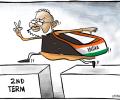
The government's decision to release the reports comes two days after over 200 scholars from across the globe issued a statement demanding release of all withheld reports produced by the NSO, including the household consumer expenditure survey that was junked.

As per the data released by the NSO, the overall food inflation rose to 14.12 per cent in December as against (-) 2.65 per cent in the same month of 2018.

Domestic ratings agency Icra on Monday forecast a 2 per cent GDP growth in the fourth quarter of 2020-21, and a 7.3 per cent contraction for the full fiscal year. From a GVA or gross value added perspective, the agency pegs Q4 growth at 3 per cent and the full year contraction at 6.3 per cent. According to the agency, the 2 per cent projected GDP growth will help the economy avoid a double-dip recession as indicated by the National Statistical Office (NSO) for Q4. Icra's projection is better than the 8 per cent contraction forecast by the NSO as it sees Q4 growth at only 1.1 per cent.

Retail inflation eased to 4.06 per cent in January, mainly on account of a decline in vegetable prices, as per government data released on Friday. The inflation based on Consumer Price Index (CPI) was 4.59 per cent in December 2020.
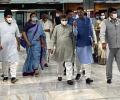
BJP members of the panel who were present in the meeting room didn't sign the attendance register in protest leading to a lack of quorum required for holding the meeting.

Sounding a note of caution, former Reserve Bank Governor Raghuram Rajan has said that India is "dangerously close" to the Hindu rate of growth in view of subdued private sector investment, high interest rates and slowing global growth. Rajan said that sequential slowdown in the quarterly growth, as revealed by the latest estimate of national income released by the National Statistical Office (NSO) last month, was worrying. Hindu rate of growth is a term describing low Indian economic growth rates from the 1950s to the 1980s, which averaged around 4 per cent.

Counsels for AgustaWestland VVIP chopper scam accused Christian Michel and fugitive diamantaire Nirav Modi were also the potential targets of Israeli spyware Pegasus.

She also took a swipe at the Bharatiya Janata Party over its defeat in the just-concluded Himachal Pradesh assembly elections, saying the ruling party's president could not hold on to his home state. "Who is the Pappu now?" she asked.

The pleas are related to reports of alleged snooping by government agencies on eminent citizens, politicians and scribes by using Israeli firm NSO's spyware Pegasus.

Gross enrolments of new subscribers with ESIC were 1.49 crore during the entire financial year 2018-19.

More than 300 verified mobile phone numbers, including of two serving ministers, over 40 journalists, three opposition leaders and one sitting judge besides scores of business persons and activists in India could have been targeted for hacking through an Israeli spyware sold only to government agencies, an international media consortium reported on Sunday.

The guild's members and all journalists have the duty of holding all branches of government accountable by seeking information, explanations and constitutionally valid justifications for state action and inaction, it said.
After contracting for two quarters in a row, the Indian economy entered the positive territory with a growth of 0.4 per cent in the October-December quarter, mainly due to good performance by farm, services and construction sectors, official data showed on Friday. Trade and hotel industry registered a contraction of 7.7 per cent during the third quarter this fiscal, as the sectors continued to suffer on account of coronavirus pandemic. According to the data released by the National Statistical Office (NSO), the farm sector recorded a growth of 3.9 per cent, and the manufacturing sector output grew by 1.6 per cent in the quarter under review.

A massive political row has erupted after media reports claimed that Pegasus spyware was used to conduct surveillance on about 300 Indians, including ministers, political leaders, government officials and journalists.

Experts said a dip in consumption expenditure indicated an increasing prevalence of poverty in the country.

Home ministry sources say there are fears that international lobbies might have been involved in spying, to create a narrative around Indian governance as well as the economy.

The country's GDP is likely to grow at 1.3 per cent in the fourth quarter of 2020-21 and may see a contraction of around 7.3 per cent for the full financial year, according to an SBI research report 'Ecowrap'. The e-National Statistical Office (NSO) will release the GDP estimates for the March 2021 quarter and provisional annual estimates for the year 2020-21 on May 31. "Based on our 'nowcasting model', the forecasted GDP growth for Q4 would be around 1.3 per cent (with downward bias) as against NSO (National Statistical Office) projection of a negative (-)1 per cent," the research report said.

Pegasus, which is capable of attacking both Android and iOS, has been around for three years and is considered one of the most sophisticated spyware in the market.

Retail inflation softened to 6.71 per cent in July due to moderation in food prices but remained above the Reserve Bank's comfort level of 6 per cent for the seventh consecutive month. With retail inflation continuing to remain high despite a fall in prices of vegetables and edible oils, among other commodities in July, the Reserve Bank of India (RBI) might go for another rate hike in September. The Consumer Price Index (CPI) based retail inflation was at 7.01 per cent in June and 5.59 per cent in July 2021. It was above 7 per cent from April to June this fiscal.
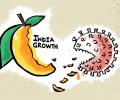
The economic growth may have slowed to 3.5 per cent in fourth quarter of 2021-22 from 5.4 per cent in the previous three-month period due to the impact of higher commodity prices on margins, decline in wheat yields and on higher base, Icra Ratings said on Monday. The agency said the hiccups in the recovery of the contact-intensive services attributable to the third wave of Covid-19 in the country may have also affected the economic growth in the quarter. Even the gross value added (GVA) at basic prices (at constant 2011-12 prices) in Q4 FY2022 seems to have eased to 2.7 per cent from 4.7 per cent in Q3 FY2022, it said.
 © 2026 Rediff.com - Advertise with us - Disclaimer - Privacy Policy - Sitemap - Feedback - About us - Terms of use - Grievances