
Apart from SBI, UPI 2.0 partner banks are HDFC Bank, Axis Bank, ICICI Bank, IDBI Bank, RBL Bank, YES Bank, Kotak Mahindra Bank, IndusInd Bank, Federal Bank and HSBC.

The Reserve Bank of India's (RBI's) recent decision to allow credit cards for payments through the Unified Payments Interface (UPI) is likely to attract a merchant discount rate (MDR), said a top payment industry source. For smaller merchants, a subsidy for MDR could be provided. "With credit card-UPI linkage, UPI will not only be a payment instrument but also a lending platform. "How can banks lend without a commercial model? Also, the government has said MDR will be zero for payment products but not for lending products," the source said, indicating the MDR regime for credit card-linked UPI payments.
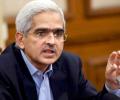
The increasing involvement of Big Tech in the financial system could give rise to concentration risk and there are potential spillovers, which call for closer attention, Reserve Bank of India (RBI) Governor Shaktikanta Das said on Tuesday. "...enormous amounts of consumer data is being generated and leveraged upon by a few entities (the so-called Big Tech) by virtue of their huge customer base. "Such developments raise concerns on concentration risk and potential spillovers as their level of engagement with the financial system strengthens in the years to come," Das said at the Global Fintech Fest 2022.

In August, the central bank had announced that it will set up the Reserve Bank Innovation Hub (RBIH) to promote innovation across the financial sector by leveraging on technology and creating an environment that would facilitate and foster innovation.

21 banks have launched United Payments Interface application.

As the government is all set to roll out direct cash transfer for its welfare schemes, the National Payment Corporation (NPCI) on Thursday said seven banks have already implemented the Aadhar-enabled payment system (AEPS) and seven more are in the process of doing so.

'Hacking of an ID or an account will have the same impact on a user in a city and one in a small town.' 'Security is like a railroad, you create it to last for every customer.'

Tokenisation is the process of replacing debit and credit card numbers with a set of characters or tokens.

Unified Payments Interface (UPI), the flagship payments platform of the National Payments Corporation of India (NPCI), touched a record high both in terms of volume and value of transactions in June after a slump in April and May. The platform recorded 2.8 billion transactions worth Rs 5.47 trillion in June, up 10.6 per cent in volume terms and 11.56 per cent in value terms over May. This is in sync with the opening up of the economy as Covid cases gradually came down from its peak in mid-May and lockdowns were eased in various places.

The NITI Aayog may want us to believe this is one of the easiest payment systems in the world, but Tinesh Bhasin decodes the many unanswered queries and concerns involving the United Payments Interface.

Telecom operator Bharti Airtel's CEO has warned customers about rising cases of cyber-frauds, citing a recent instance of a fraudster who posed as company executive and under the guise of updating KYC form, tricked a user into revealing bank details to transfer large amount from the bank account. In an email outreach to subscribers, Gopal Vittal, CEO of Airtel urged users to be vigilant against such cases of cyber fraud that are becoming "alarmingly frequent". Vittal spoke of a recent case where a cyber-fraudster posing as company executive called up an Airtel customer on the pretext of updating his Know Your Customer (KYC) form, tricked him into revealing his bank details and transferred a large sum of money from his bank account.

Facebook co-founder and CEO Mark Zuckerberg on Tuesday said India is a very special and important country with a remarkable entrepreneurship culture, as he sought to push deeper the just-launched payments services that allow users to make payments over WhatsApp. Last month, Facebook-owned WhatsApp received approval from the National Payments Corporation of India (NPCI) for rolling out its payments services in India. In 2018, WhatsApp started testing its UPI-based payments services in India -- a global first -- with about a million users.

Delays in returning money for disputed transactions have also come under RBI's scanner.

An analysis for the first eight months of CY18 shows that the value of RuPay and UPI transactions constitute 65.2 per cent of all transactions done through debit and credit cards, in value terms, across retail outlets by the end of August.

The recent Reserve Bank of India (RBI) norms on tokenisation services, which will be offered by card networks, are likely to result in merchants and payment aggregators incurring a cost as they have to pay a fee to the networks. The merchants and the payment aggregators, in turn, may pass on the cost to the customers. The norms, which were issued by the banking regulator released on September 7, allow card networks like Visa and Mastercard to offer the tokenisation service.
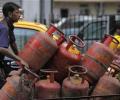
Many users did not know that their entitlement was not coming to their regular bank account but going to an account which they had not applied for.

National Payments Corporation of India is currently in the process of testing sound-based payments with three companies: PhonePe, ToneTag and UltraCash.

Once implemented, customers making payments using Rupay card or BHIM UPI will get a cashback of 20 per cent of the total GST amount, subject to a maximum of Rs 100.

The launch of e-RUPI, a person- and purpose-specific digital payment solution, by the government is expected to completely negate any pilferage and will ensure full benefit to intended beneficiaries, India Inc said on Monday. Prime Minister Narendra Modi has launched e-RUPI, which is aimed at improving transparency and targeted delivery of benefits. PHD Chamber of Commerce and Industry president Sanjay Aggarwal said that the move is a significant step to enhance the digitisation process of the country.

Uncertainties on account of COVID-19 pandemic have increased the demand for currency notes not only in India but across the globe, official sources said, dismissing the criticism that demonetisation has failed to reduce cash in the economy. Government sources said that growth of the digital payments system post-demonetisation will ultimately curb the dependence on cash. Official data points out a jump in digital payments through different modes, including plastic cards, net banking and Unified Payments Interface (UPI).
The Unified Payment Interface could propel banking into a new era

Nandan Nilekani talks about moving towards a cashless economy and freedom of Internet, among others

In this month itself, UPI can hit 2 billion transactions and by March 2021, it should reach 2.15 billion transactions in a month.
With vehicular activity picking pace in May, toll collection also saw a huge uptick. Fastags posted an impressive jump of more above 400 per cent in transaction count at 55.17 million, and an over-300 per cent jump in value at Rs 1,142 crore.

As unified payments interface gets popular, cash transactions will come down as most small payments will be routed through this.

The RuPay card is accepted at all ATMs (1.6 lakh plus), 95 per cent of PoS terminals (9.45 lakh plus) and most of the eCom merchants (about 10,000) in the country.

This year, PhonePe is focussed on bringing more partners across categories, including travel, commute, food, hyper-local, retail and entertainment on the platform.
NPCI calls bids to cover all e-payment transactions where consumer followed procedure; both state and private insurers show interest.

Computer emergency response teams will be strengthened with ethical hackers who will respond to cyberattacks.

In the wake of scrapping of old Rs 500/1,000 banknotes, Niti Aayog has asked National Payments Corporation of India to frame a new scheme to incentivise digital payments.
Banks have launched services that will allow account holders to transfer Rs 50,000 a day.

Rapid strides in digital payments notwithstanding, the Indian economy will likely remain cash-dependent for many years to come, at least that's what the automated teller machine makers and cash logistics companies are betting on. After growing at over 20 per cent for most of 2020, currency in circulation growth fell to 8.5 per cent as of October 29 this year, shows data from the Reserve Bank of India (RBI). The reason for the steep rise in currency last year was the uncertainties related to the Coronavirus (Covid-19) pandemic, where people preferred to hoard cash to meet exigencies.

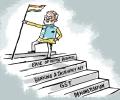
The temptation to get into businesses that are hot is perhaps too great for any politician, no matter what his public slogans are. Nehru plunged into hot sectors of his time -- engineering and iron and steel. Modi has plunged into digital payments -- the hot sector of his time, notes Debashis Basu.

Consumers can effectively make payments using UPI and other debit cards, credit cards and internet banking across 120 banks and over 120 billers, Xiaomi said.
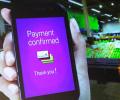
BBPS allows you to pay electricity, telephone, water supply, gas and DTH bills. Its scope will be expanded to include other payments like school and university fees, government taxes, insurance premiums, mutual fund investments, even credit card bills.
Move over Visa, MasterCard and American Express. Here's an indigenous, cheaper alternative that will not only benefit Indian banks but Indian who use debit cards and credit cards to make payments.

Experts believe that the sector should not jump to conclusions on WhatsApp Pay, which is still in its 'Beta testing' phase.

But what do banks gain by opening their apps for all? The answer -- rival bank's customers under their fold.

Unified Payments Interface launched to simplify mobile banking.

Under the scheme, which seeks to open 75 million accounts by January 26, 2015, an accident insurance cover of Rs 100,000 is provided with every RuPay debit card offered by the National Payments Corporation of India.
