
The visit comes a week after 20 Indian Army personnel were killed in a brutal assault by the Chinese military in Galwan Valley which escalated the border tension.
The two armies had mutually decided not to resort to use firearms during face-offs in sync with provisions of two agreements on border management.
The last time the Chinese military had taken Indian soldiers captive was in July 1962 after a clash in Galwan Valley.

Four army personnel were killed in a Dhruv helicopter crash in north Sikkim near the Sino-India border, days after a Pawan Hans chopper went down in the northeast claiming 17 lives.
The Advance Light Helicopter Dhruv helicopter of the Army Aviation Corps had taken off from Sewak Road Base in Siliguri at 10.30 AM, army sources said.
Indian military sources said no firearms were used in the clashes and that most of the injuries were sustained following stone-pelting and use of rods by the Chinese side.
'India's challenge is status quo ante. China's challenge is a face-saving exit'

The last conversation between the two leaders was on April 4 on the issue of hydroxychloroquine.
China's state-run media said that the leadership of the two countries successfully solved the Doklam standoff in 2017 with 'concerted efforts and wisdom'.

Presenting part two of the best of #India-Photos we received from you this year.
The meeting primarily focused on implementation of certain decisions taken at the fifth round of talks between Corps Commanders of the two armies last week on the disengagement process as well as to bring down prevailing tension in the region, sources said.

The next phase of the de-escalation process will kick off only after the fourth round of talks between corps commanders of the two sides.
We invited readers to send in their favourite travel pic. Here are some of the responses we received. Share yours!
The two militaries are set to hold extensive talks on finalising modalities for restoring normalcy and bringing back peace and tranquillity in the region after the verification of the disengagement exercise is completed.

The visit is also aimed at boosting morale of the army personnel engaged in the seven-week bitter border faceoff with the Chinese troops in the region, sources added.
Sources said the process of disengagement along the Line of Actual Control is "complex", and in such a context, speculative and unsubstantiated reports need to be avoided.
This is the third round of Corps Commander-level talks being held. The first two rounds had taken place in Moldo on the Chinese side of the LAC.

The two sides held diplomatic talks through video conference on the border standoff in midst of fresh details emerging that China has strengthened its position in several areas in eastern Ladakh including Galwan Valley where a violent clash on June 15 left 20 Indian soldiers dead.
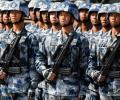
Chinese military has also deployed a sizeable number of its troops in Galwan Valley, the site of the violent clashes on June 15 that left 20 Indian soldiers dead.

The Chief of the Army Staff interacted with almost all the injured soldiers and complimented them for their bravery.

India has already mobilised fighter jets and sent thousands of additional army troops to forward locations along the border with China after 20 Indian Army personnel were killed in a brutal attack by Chinese troops in eastern Ladakh's Galwan Valley on June 15.
China and India have agreed to work to maintain peace along the Line of Actual Control and resolve the border standoff through talks while implementing the consensus reached between the two countries' leadership that 'differences' do not escalate into 'disputes', a top Chinese official said.

The Army has also further bolstered overall surveillance mechanisms in all areas along the Line of Actual Control (LAC) in eastern Ladakh after foiling China's fresh attempt to occupy an area on the southern bank of Pangong lake, they said.
In yet another incident of Chinese transgressions into Indian territory, the People's Liberation Army personnel entered Indian territory in Sikkim and returned after spending some time.
The Indian side is expected to present specific proposals at the talks to deescalate tension in Pangong Tso, Galwan Valley and Demchok -- the three areas in eastern Ladakh where the two sides have been on a bitter standoff for last one month, the sources said.
Singh said a meeting between senior Indian and Chinese military leaders has been scheduled for June 6 even as he asserted that India is not going to back off from its position. Asked about the current situation in sensitive areas in eastern Ladakh, he said Chinese have come up to what they claim is their territory while Indians believed it is theirs.

Defence Minister Rajnath Singh on Saturday asserted that the government will not allow India's pride to be hurt under any circumstances even as he said bilateral talks were on at military and diplomatic levels to resolve the row.
The MEA spokesperson did not reply to questions like whether the US had approached India with the offer, whether New Delhi has communicated its response over it to Washington, DC or whether the Trump administration has been briefed about the current standoff between Chinese and Indian soldiers in eastern Ladakh.

The Indian Army will continue to maintain its aggressive posturing in all disputed areas in eastern Ladakh and will not back off till status quo is maintained, sources said.

The US president previously offered to mediate between India and Pakistan, a proposal rejected by New Delhi which maintains that there is no role for any third party in bilateral issues.
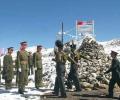
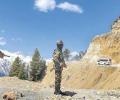
Amidst reports of tension on the Sino-India border in north Sikkim, the army border personnel of the two countries held a meeting at the famous Bum La pass in Arunachal Pradesh to maintain tranquility on the frontier. Senior officers from both the armies met "in an atmosphere of cordiality" to discuss "functional issues", a defence ministry spokesman said in Delhi on Monday.
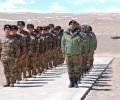
The sources said both sides held extensive deliberations on modalities for disengagement of troops from all the friction points in eastern Ladakh at the talks.

The Chinese military has already completed moving back its troops from the face-off sites in Galwan Valley, Gogra and Hot Springs in line with the first phase of the disengagement process from the friction points on the LAC in eastern Ladakh, sources said. The main focus now shifts to Pangong Tso. India has been insisting that China must withdraw its forces from areas between Finger Four and Eight.
While confirming this, Army Chief Gen Deepak Kapoor on Tuesday sought to downplay the survey, saying there was nothing unusual about it as 'we are carrying out such exercises in other places'. The report comes days after the government has asked the Survey of India to carry out a fresh survey of the northern plateau in Sikkim using latest methods to validate India's position.
In the next few days, Indian Army will carry out a detailed verification to check actual implementation of the disengagement process, he said. It is learnt that the mutual disengagement in Gogra (patrolling point 17A) is expected to be completed by Thursday.
The sources said the mutual disengagement of troops at the two friction points is likely to be completed within two days, and that there has been 'substantial' withdrawal of forces by Chinese military from the areas.
The focus of the deliberations was on finalising modalities for disengagement of troops in eastern Ladakh.

Air Chief Marshal Bhadauria was at the Leh IAF base on Wednesday where he reviewed operational preparedness of the force in effectively guarding the sensitive border areas in eastern Ladakh where Indian and Chinese armies have been on a nearly six-week standoff.
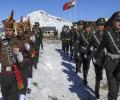
Sources said the Indian delegation was warmly greeted by senior officials of the Chinese Army before the talks began.
The two sides have already held at least 12 rounds of talks between local commanders and three rounds of talks between major general-rank officials but no positive outcome came out from the discussions, they said.
 © 2026 Rediff.com - Investor Information - Advertise with us - Disclaimer - Privacy Policy - Sitemap - Feedback - About us - Terms of use - Grievances