
The revelation may have come late in the century but the Congress disclosed on Thursday, May 29, 2025, that the Indian Army conducted six surgical strikes against Pakistan during UPA-2, the Congress-led United Progressive Alliance government's second term in power.

In a letter to Prime Minister Manmohan Singh and his Pakistani counterpart Shaukat Aziz Khan, the Durga Nag Trust has asked them to allow a delegation to visit the temple, located on the banks of Krishan Ganga in Neelam valley in PoK.

The Indian retaliation came a day after Pakistan military resorted to unprovoked firing in Tangadhar sector along the Line of Control in which two Indian Army personnel and a civillian were killed. Three others were also injured in the attack, the sources said.
In a statement, a spokesman of the Inter-Services Public Relations denied the 'Indian claim of unprovoked firing by Pakistani troops on the Line of Control in Neelam valley'. A flag meeting was scheduled later in the day to 'clarify the issue', he said.
The UPA government carried out six surgical strikes -- Bhattal sector in Poonch (June 19, 2008); Sharda sector, across Neelam River Valley, in Kel (August 30-September 1, 2011); Sawan Patra checkpost (January 6, 2013); Nazapir sector (July 27-28, 2013); Neelam Valley (August 6, 2013); and one on December 23, 2013, Congress spokesperson Rajeev Shukla said.
The children had found the device in farms near their school in Neelam Valley in PoK, news channels said.

Pakistan has been resorting to heavy mortar shelling along LoC in Jammu and Kashmir for the past over one month.

Pakistan's military spokesman Maj Gen Asif Ghafoor in a midnight tweet expressed disappointment at Gen Rawat's assertions.

In a reminder of Kargil incursion of 1999, around 40 terrorists along with Pakistani special troops are 300-400 metres inside the Indian territory in Keran sector of Kashmir and are getting logistics support through a supply line across the Line of Control.
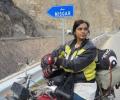
Inspired by the dream of her father, now deceased, who 'wanted to travel the world on a bike', this girl travelled through Kashmir (on the Pakistani side), riding through regions of the country where it is considered taboo for women to venture out alone.

The plan hinged on two critical assumptions: India would not be able to replenish supplies quickly to launch a counter-attack. India could not respond in enough strength to dislodge the Pakistanis. Both assumptions would be proved wrong due to the ferocity of the Indian response, reveals former RAW officer Tilak Devasher in his new book, Pakistan At The Helm.
 © 2026 Rediff.com - Advertise with us - Disclaimer - Privacy Policy - Sitemap - Feedback - About us - Terms of use - Grievances