
A senior government official asserts India's independence in purchasing Russian oil, stating that US sanctions waivers merely remove friction but do not dictate India's energy policy. The official highlights India's commitment to energy security and affordability for its citizens.
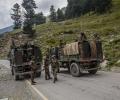
The US House of Representatives and the Senate on Tuesday passed the National Defense Authorization Act (NDAA), which included key components of Indian-American Congressman Raja Krishnamoorthi's resolution language urging the Chinese government to end its military aggression against India along the LAC.
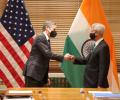
The legislative amendment was passed on Thursday by voice vote as part of an en bloc (all together as a single unit) amendment during floor consideration of the National Defence Authorisation Act (NDAA).
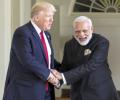
Now, the NDAA needs to be passed by the Senate before it can be sent to the White House for the US President Donald Trump to sign into law.

India on Thursday downplayed the United States Senate rejecting a key amendment recognising the country as "global strategic and defence partner", saying it would be "premature" to speculate about its final content.
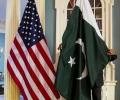
"Our expectations are straight forward: Taliban and Haqqani leadership and attack planners should no longer be able to find safe haven or conduct operations from Pakistani soil," Pentagon Press Secretary Army Col Rob Manning told reporters during an off-camera news conference.

The resolution was introduced by Senator John Cornyn, Republican Senate Majority Whip, and Senator Mark Warner, ranking member of the Senate Select Committee on Intelligence.

The US said it has strong evidence that China has deployed anti-ship missiles, surface-to-air missile systems and electronic jammers to contested features in the Spratly Islands region of the South China Sea.
The Senate said that Pakistan should show that its taking demonstrable steps against the dreaded Haqqani Network terror outfit.

When Obama signs the NDAA 2017 into law this week, the US-India partnership will be enshrined in US legislation, binding every succeeding administration, whatever its inclinations, to treat India as a 'major defence partner,' says Ajai Shukla.

A senate panel has approved a legislation which blocks $300 million United States military aid to Pakistan.

The conditions are related to Pakistan's support to terrorists and terror outfits.

United States President Barack Obama has signed into law the $618 billion defence budget for 2017, which enhances security cooperation with India and conditions nearly half of the funding to Pakistan on a certification that it is taking demonstrable steps against the Haqqani Network.

A key United States Congressional Committee on Thursday overwhelmingly passed a bill that imposes conditions on Pakistan for receiving American economic and military aid which will depend on the action Islamabad takes against terrorists and the menace of improvised explosive devices.

Defence Secretary Mattis said he cannot certify that Islamabad has taken 'sufficient actions' against the dreaded Haqqani terror network.
The White House has strongly opposed the conditions on United States aid to Pakistan by the powerful House Armed Services Committee in the National Defence Authorisation for the fiscal year 2013.
As a result, as per the House version of the Bill, the Obama administration must certify that Pakistan has met before releasing $450 million in aid.
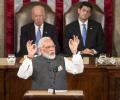
A day after Prime Minister Narendra Modi's recent address to a joint session of Congress, top Republican senator John McCain had moved an amendment to the National Defence Authorisation Act which if passed would have recognised India as a global strategic and defence partner.

A White House statement in this regard along with other objections of the administration to NDAA-2017 came as the bill made its way to the House of Representatives from House Armed Services Committee.

The amendment urges the US to enhance India's military capabilities in the context of combined military planning, and promote co-production/co-development opportunities.

General Mattis has been the most steadfast champion in Trump's cabinet of the US-India defence relationship. If Trump chooses a more pliable successor, the Pentagon's attention could go off India.

Friends of India in the US hope that New Delhi will receive a presidential waiver, given that Trump Administration has recognised India as a major defence partner and is in advance stage of selling billions of dollars' worth of equipment to India in the next few years.

The United States on Friday exempted some countries, including India and China, from the tough Iranian sanctions act as they continue to reduce their dependence on Iranian oil.

Introduced by Republican Congressman Ted Poe and Democratic lawmaker Rick Nolan, the legislation calls for revoking MNNA status of Pakistan, which was granted to it in 2004 by the then president, George Bush, in an effort to get the country to help the US fight Al Qaeda and the Taliban.
The legislation, the National Defense Authorisation Act-2019, gets rid of the certification requirements for Pakistan's action against the Haqqani Network and it also gets rid of the authority to reimburse Pakistan for counter-terrorism.
 © 2026 Rediff.com - Investor Information - Advertise with us - Disclaimer - Privacy Policy - Sitemap - Feedback - About us - Terms of use - Grievances