
Nayara Energy, a private fuel retailer in India, has increased petrol and diesel prices following a surge in global oil prices due to Middle East tensions. This move contrasts with state-owned retailers who continue to freeze prices.

Nayara Energy, India's largest private fuel retailer, has reduced petrol prices by Rs 5 per litre and diesel by Rs 3 per litre nationwide, marking the first such cut in over two years. This reduction follows easing tensions in West Asia and stabilised international crude oil prices, though public sector retailers have not yet followed suit.
Despite international crude oil prices falling to a four-month low, retail petrol and diesel prices in India are unlikely to be cut immediately because state-run refiners are still processing costlier crude purchased during the peak of the West Asia crisis, Oil Minister Hardeep Singh Puri said.

Petrol price has been increased by 87 paise in Delhi from Rs 98.64 to Rs 99.51 per litre. Diesel rates have gone up by 91 paise from Rs 91.58 to Rs 92.49.

A sovereign cloud, our own DNS root and Root CA, a defence-led research base that builds for keeps, and a real national cybersecurity strategy that outlives electoral cycles are not vanity projects. They are the difference between a nation that can be switched off and one that cannot, points out Venkata Satish Guttula.

Indian refiners are recalibrating their crude sourcing strategy due to supply disruptions in West Asia, leading to Venezuela and Brazil emerging as top five suppliers in April, replacing traditional sources like Iraq and the United States.

Petrol and diesel prices in India have been increased for the second time in a week, following a long freeze on revisions. The increase comes as global crude prices surge and state-run oil firms look to recoup losses.

The Petroleum Planning and Analysis Cell (PPAC) has denied an RTI request for data on oil imports from Russia, citing its 'commercial and confidential' nature and exemptions under the RTI Act. The Central Information Commission supported this decision, referencing strategic and economic interests.

Petrol and diesel prices in India have seen their fourth increase in less than two weeks, pushing cumulative hikes to nearly Rs 7.5 per litre since May 15, reaching their highest levels since May 2022. This surge, driven by global crude oil costs and the Iran conflict, is expected to exacerbate inflationary pressures and raise transportation costs across the economy.

Petrol and diesel prices in India have been increased by Rs 3 per litre each, marking the first rate hike in over four years. This decision follows a period of stable prices during recent state elections, despite rising global crude oil prices and significant losses for fuel retailers.

Petrol and diesel prices have been increased by Rs 3 per litre each, marking the first hike in over four years, as state-run fuel retailers pass on some of the impact from surging global crude prices, which have been exacerbated by the Iran war.

Elevated global crude oil and natural gas prices, driven by geopolitical developments in West Asia, could significantly influence the Government of India's fiscal position for 2026-27, according to a report by ratings agency Icra.

After Reliance Industries Ltd and its partner bp plc of the UK, Nayara Energy - the nation's largest private fuel retailer - has started selling petrol and diesel at Re 1 less than the fuel sold by state-owned retailers, officials said. While state-owned Indian Oil Corporation (IOC), Bharat Petroleum Corporation Ltd (BPCL) and Hindustan Petroleum Corporation Ltd (HPCL) continue to hold prices despite a drop in international rates, private fuel retailers have started passing on the benefit to consumers. "To further stimulate domestic consumption and cater to local customers better, we have introduced a Re 1 discount in our retail outlets until the end of June 2023," a spokesperson for Nayara Energy said.

The Indian government has reduced excise duty on petrol and diesel to mitigate the impact of rising global crude prices, triggered by geopolitical tensions in the Middle East. This move aims to provide relief to consumers and oil companies amidst volatile international oil markets.
The government has sharply reduced excise duty on petrol to 3 and diesel to zero, offering major relief to consumers. Here's how the price cut will impact fuel rates and inflation.
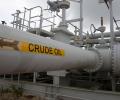
India will restrict crude oil purchases from Russia as part of an agreement reached with the US in exchange for lower trade tariffs, sources said, adding imports will continue for now by refiners such as Nayara Energy, which have no other alternative source. US President Donald Trump announced overnight that the United States will cut the reciprocal tariff on imports of Indian goods to 18 per cent from 25 per cent under a broader bilateral understanding.

Indian refiners have access to only limited Iranian volumes compared with Russian oil, and even the barrels on offer come with 'too many hassles'.
Private-sector oil refiner Reliance Industries Limited (RIL) last week received a general licence from the United States (US) government to buy Venezuelan oil, an industry executive said.

'No one can or will bar India from pursuing its energy goals as it wishes.' 'The US FTA wording may sound more restrictive, but the underlying reality will not undermine India's sovereign energy decisions.'
Microsoft Corp has restored all services -- including email access -- to Russian oil giant Rosneft-backed Nayara Energy, just before a scheduled hearing in the Delhi high court over the service suspension.

India is set to reduce its direct imports of Russian crude from late November, following new US sanctions on Rosneft and Lukoil, effective November 21.

Indian private sector and State-run refiners continued to receive crude oil from Russian suppliers even after November 21 -- the winding-down date for US sanctions on supplies from leading Russian oil producers imposed in October -- as new intermediaries sprung up in West Asia to sell the oil, according to senior refining sources and ship tracking data.
US sanctions against two of Russia's largest oil companies are expected to impact Reliance Industries' crude imports from Russia, while state-run refiners may continue purchases through intermediary traders for now.

India offset the decline in exports to traditional destinations by sharply ramping up shipments to Jordan (18,086 per cent), Hong Kong (17,006 per cent), Spain (13,436 per cent), the Philippines (2,235 per cent), and Namibia (1,068 per cent) in H1FY26.

Reliance Industries Ltd on Thursday said it has halted the use of Russian crude at its export-only refinery in Jamnagar, Gujarat, as the company moves to comply with European Union sanctions. Reliance is India's largest buyer of Russian oil, which it processes and turns into fuel, such as petrol and diesel, at its giant oil refining complex at Jamnagar.

Reliance Industries Ltd, India's largest buyer of Russian oil and most impacted by the latest US sanctions, on Friday said it will comply with all applicable restrictions and will adjust its refinery operations to meet compliance requirements.

'When global politics has some intervention on the core software one uses, and if you are cut off from your own data in critical workflows, sovereignty is no longer optional. It becomes a necessity.'
Reliance Industries' refining earnings will remain steady, supported by its position as India's largest importer of Russian crude and favourable global supplies, according to analysts at JM Financial and Goldman Sachs. Reliance imported more Russian barrels than any other Indian refiner in the past eight months, according to data from Bloomberg/Kpler.
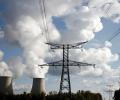
India's brittle energy security is inextricably linked to two opposing paradigms - fossil fuels, and the transition to green energy. The first powers the present; the second paves the way for Viksit Bharat in 2047.

Russian oil giant PJSC Rosneft Oil Company is in early talks with Reliance Industries for sale of its 49.13 per cent stake in Nayara Energy, which operates a 20-million tonnes-a-year oil refinery and 6,750 petrol pumps in India, sources said. Reliance has held preliminary talks for acquisition of Nayara, which will help it overtake state-owned Indian Oil Corporation (IOC) to become India's No.1 oil refiner as well as give a meaningful presence in the fuel marketing space.

India's annual oil import bill could rise by $9-11 billion if the country is compelled to move away from Russian crude in response to US threats of additional tariffs or penalties on Indian exports, analysts said. India, the world's third-largest oil consumer and importer, has reaped significant benefits by swiftly substituting market-priced oil with discounted Russian crude following Western sanctions on Moscow after its invasion of Ukraine in February 2022.
From just 0.2 per cent before the Russia-Ukraine war to now accounting for 35-40 per cent of total crude imports, India's reliance on Russian oil has surged -- drawing fresh scrutiny with US President Donald Trump announcing a penalty on top of a 25 per cent tariff, or tax, on all goods going to the US.

'Geopolitically and diplomatically it's a very difficult situation for India.'
Billionaire Mukesh Ambani's Reliance Industries Ltd is estimated to have earned 724 million euros (about Rs 6,850 crore) from exporting fuel made from Russian crude oil to the US in one year, an European think tank said in a report. "From January 2024 to the end of January 2025, the US imported EUR 2.8 billion of refined oil from six refineries in India and Turkey that process Russian crude.
The government on Monday scrapped 30-month old windfall profit tax on domestically-produced crude oil and on export of jet fuel (ATF), diesel and petrol following a decline in international oil prices. Minister of State for Finance Pankaj Chaudhary tabled a notification in Rajya Sabha scrapping the levy on crude oil produced by firms like state-owned Oil and Natural Gas Corporation (ONGC) and exports of fuels done by companies like Reliance Industries Ltd.

Russia's state-owned oil firm Rosneft has agreed to supply up to 500,000 barrels per day (bpd) of crude oil to Indian upstream oil and gas major Reliance Industries (RIL) in the largest-ever energy deal between the two countries, Reuters reported on Thursday. The 10-year agreement amounts to 0.5 per cent of global oil supply and is valued at roughly $13 billion per year at current prices, it said.
India's export of fuels like diesel to the European Union jumped 58 per cent in the first three quarters of 2024, with a bulk of them likely coming from refining discounted Russian oil, according to a monthly tracker report. The EU/G7 countries in December 2022 introduced a price cap and an embargo on the imports of Russian crude oil in a bid to cripple Kremlin's revenue and create a vacuum in its funding for the invasion of Ukraine.
The government on Tuesday increased the windfall profit tax on crude oil produced in the country and reduced the levy on exports of diesel. The tax, levied in the form of Special Additional Excise Duty or SAED, on domestically produced crude oil was increased to Rs 9,800 per tonne from Rs 9,050 a tonne, according to an official notification. SAED on the export of diesel was reduced to Rs 2 per litre from Rs 4 a litre and on jet fuel or ATF to nil from Rs 1, the notification said.

The government has cut the windfall profit tax on crude oil produced in the country while the levy on exports of diesel and ATF has been hiked, an official notification said. The tax, levied in the form of special additional excise duty or SAED, on domestically produced crude oil was reduced to Rs 6,700 per tonne from Rs 7,100 a tonne. SAED on the export of diesel was increased to Rs 6 per litre from Rs 5.50 a litre and on jet fuel or ATF to Rs 4 per litre from Rs 2, the notification said.

The price of diesel sold to bulk users has been hiked by about Rs 25 per litre in line with a near 40 per cent rise in international oil prices, but retail rates at petrol pumps remain unchanged, sources said. Petrol pump sales have jumped by a fifth this month after bulk users like bus fleet operators and malls queued up at petrol bunks to buy fuel rather than the usual practice of ordering directly from oil companies, widening the losses of retailers. Worst hit are private retailers like Nayara Energy, Jio-bp and Shell, who have so far refused to curtail any volume despite a surge in sales.
