
Fears around artificial intelligence (AI) sparked a global selloff in information technology (IT) stocks, dragging down domestic software shares and prompting the heaviest foreign portfolio investor (FPI) outflows since the second half of July 2025.

The first day of the year 2026 was positive for the debt market with foreign investors buying a net domestic debt of Rs 7,524 crore, the highest single-day inflow since May 29 last year.

Foreign investors pulled out Rs 17,955 crore (Rs 2 billion) from Indian equities in the first two weeks of this month, taking the total outflow to Rs 1.6 lakh crore (Rs 18.4 billion) in 2025.' This sharp withdrawal follows a net outflow of Rs 3,765 crore in November, extending the pressure on domestic equity markets.

In the mid-1990s, when the shares of listed companies first began to be held in electronic form, they accounted for less than 1 per cent of the stocks bought and sold on the stock exchanges. This climbed to 99.5 per cent by 2001.

Equity markets fell on Monday, with benchmark indices recording their worst session in over two months amid caution ahead of the US Federal Reserve's (Fed's) policy announcement and renewed uncertainty over the US-India trade deal. Sustained selling by foreign portfolio investors (FPIs) also weighed on sentiment.

The strong domestic flow offset selling by foreign portfolio investors who pulled out $23.3 billion (Rs 2.03 trillion) from domestic equity markets in CY25.

The IPO wave of 2025 is here, and it's bigger than ever. From fintech unicorns to financial powerhouses and infrastructure giants, some of India's biggest names are all set to make their stock market debut. PhonePe, Zepto, Tata Capital, NSE, NSDL, and JSW Cement are just a few of the highly awaited listings that have investors and analysts buzzing with excitement.

Fraudsters lure individuals with false promises of recovering bonuses or maturity proceeds from lapsed policies.

Over 60 companies are ready to launch IPOs in the coming months.

Foreign investment in bonds issued by Indian corporates touched a 10-year high in May at 20,996 crore, driven by $3.35 billion fundraise by the Shapoorji Pallonji (SP) group, which saw infusion from Deutsche Bank, BlackRock, Morgan Stanley, Davidson Kempner, and Cerberus Capital, among others. The SP group sold three-year bonds, offering 19.75 per cent yield compounded annually and payable at maturity.

A higher TER means a larger portion of the return goes to the AMC, leaving less for the investor, unless compensated by higher returns.

Global fund managers witnessed one of their largest-ever declines in assets under custody (AUC) during the ongoing correction in the Indian markets, as stocks came under pressure from foreign outflows and the weakening rupee.

Retail investors have been the hardest hit in the recent market downturn, with stocks where they hold over 20% falling 45% from their 52-week highs.

After two weeks of buying, FPIs turned net sellers in Indian equities this week, with a net withdrawal of Rs 976 crore amid a strengthening US dollar and steady rise in US 10-year bond yields, impacting investor sentiment. Foreign Portfolio Investors (FPIs) began the week on a positive note, investing Rs 3,126 crore in equities during the first two trading sessions (December 16-20).

The Indian markets have delivered high long-term returns, second only to the US.

Many are attracted by the potential for large gains, but don't necessarily seem to understand that a single trade gone wrong can wipe out their accumulated profits.

The total number of demat accounts in the country stood at 171.1 million as of August 31.
The number of dematerialised (demat) accounts required to hold shares and other securities in electronic format rose by 3.1 million in April, bringing the total tally to a fresh record of 154.5 million. Since December last year, the new additions have consistently remained above the 3 trillion mark, a sign that the stock markets continue to attract new investors despite a spike in volatility.

Foreign portfolio investors (FPIs) from Mauritius may face higher scrutiny after the amendment in the India-Mauritius tax treaty introduced a principle purpose test (PPT) to prevent treaty abuse by taxpayers. The Mauritius government had in February decided to amend the double taxation avoidance agreement (DTAA) with India to align with the Organisation for Economic Co-operation and Development's proposal on base erosion and profit shifting. Although the agreement between India and Mauritius was signed on March 7, the protocol of the amendment was made public for the first time on Wednesday, said legal experts.

Alternative investment funds (AIFs) are yet to fully demat the outstanding units even as the deadline ended on October 31. Industry players say they are working on the transition from physical to electronic with the depositories Central Depository Services (India) Limited (CDSL) and National Securities Depository Limited (NDSL). Some said they are hoping for some relaxation from the market regulator Securities and Exchange Board of India (Sebi), given the teething problems they are facing.

Foreign portfolio investors' (FPIs') net investments in the domestic debt market surged in December, marking a 77-month high, that is, since July 2017. According to market participants, this significant uptick in FPI inflows can be attributed to the post-domestic policy outcome and the US Federal Reserve's dovish stance at the December policy. FPI inflows into debt stood at Rs 18,393 crore in December against Rs 14,106 crore in November, according to data on the National Securities Depository Limited.

Capital markets regulator Sebi has kept in 'abeyance' the proposed initial share sale of securities depository NSDL. However, the Securities and Exchange Board of India (Sebi) did not clarify further. The National Securities Depository Ltd (NSDL) filed its preliminary papers with the capital markets regulator on July 7.

Shares of Adani group companies witnessed a massive drubbing in morning trade on Monday, tumbling up to 25 per cent, amid reports that the National Securities Depository Ltd (NSDL) has frozen certain FPIs accounts that have holding in some of these firms.

The Indian equity market valuation has been moving in tandem with the US 10-year treasury yield. While the benchmark US bond yield has witnessed a nearly 70 basis point decline since the end of October this year, dropping from 4.93 per cent to 4.23 per cent on Friday, the Sensex earnings yield has slipped by nearly 45 basis points - from 4.5 per cent to 4.05 per cent. Previously, Indian equities' earnings yields rose in sync with the US bond yields.

Eleven companies have launched their initial public offerings (IPOs) in December 2023, making this month the second-best December for public offerings since 1996. Collectively, they are raising Rs 8,182.7 crore this month. In December 2021, 11 companies raised Rs 9,534 crore. However, excluding December 2021, this month marks the best December for IPOs since 1996.

Deteriorating ties between India and Canada could have a bearing on flows into the domestic capital markets. At present, Canada is the seventh largest country for foreign portfolio investor (FPI) flows into India. According to the National Securities Depository Ltd (NSDL), the assets under custody (AUC) of FPIs domiciled in Canada stood at nearly Rs 1.8 trillion ($21 billion) at the end of August. Almost 85 per cent of these investments are in listed equity, while the remaining in debt and hybrid instruments.
Foreign portfolio investors' (FPIs') net investment in the domestic debt market in October was the third highest during the current calendar year as foreign investors rushed to lock in higher returns amid global uncertainty and geo-political tensions, market participants said. FPI inflows in debt stood at Rs 6, 322 crore in October against Rs 768 crore in September, according to data on the National Securities Depository Limited (NSDL). Market participants said that the majority of the inflows were channelled through corporate bonds.

The National Stock Exchange (NSE) has made a fresh attempt at settling a regulatory investigation into the misuse of Trading Access Point (TAP) software at the bourse. The Securities and Exchange Board of India (Sebi) rejected a similar application in 2022. "NSE and its employees have filed a consolidated settlement application dated May 4, 2023, with Sebi.

Finance Minister Nirmala Sitharaman stole the show at the silver jubilee celebrations of the National Securities Depository Limited in Mumbai on Saturday, May 7, 2022, when she offered a bottle of water to NSDL Managing Director Padmaja Chunduru during her speech.

The investor education and protection fund authority (IEPFA) has reached out to top hundred companies to reduce the documentation required for individuals trying to claim their shares, according to a senior government official. Recently, the Supreme Court-appointed expert panel on the Adani-Hindenburg case had raised issues such as capacity constraints faced by IEPFA in clearing these claims which are over Rs 5,000 crore. "Our immediate priority is to ensure that claims of those investors whose application was approved a year ago but the transfer has not gone through yet are settled first.

Despite the narrowing spread of yields between the benchmark 10-year Indian government bond and the 10-year US Treasury bond, foreign portfolio investors (FPIs) are continuing to invest in the domestic debt market this year -- a trend backed by a stable currency and a less volatile bond market. FPIs have been net buyers in the debt market in 2023 so far, marking the first time since 2019. The yield spread between the 10-year Indian government bond and the 10-year US Treasury note stood at 3.14 per cent on August 8 - the narrowest in over a decade.
It is pouring heavily not only in North India, but at Dalal Street too. However, the latter is seeing a flurry of initial public offers (IPOs). After a busy fortnight that ended on July 7 with seven IPOs - IdeaForge Technology, Cyient DLM, PKH Ventures, Pentagon Rubber, Global Pet Industries, Tridhya Tech, and Synoptics Technologies -- four more IPOs will hit the Street this week, including one mainboard IPO of Utkarsh Small Finance Bank. That apart, India's largest securities' depository National Securities Depository Limited (NSDL) has filed its draft red herring prospectus (DRHP) with the Securities and Exchange Board of India (Sebi) for an IPO.
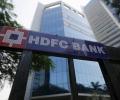
The country's most valuable lender HDFC Bank can perhaps no longer claim to be a favourite of foreign portfolio investors (FPIs). Two data indicators, both somewhat interconnected, point to this - the diminishing premium of HDFC Bank's American depositary receipts (ADRs) compared to local shares, and the ample investment opportunities available to FPIs in the domestic market. The ADR premium has shrunk to below 5 per cent, down from over 30 per cent in March 2021, and even lower than recent levels.

The equity cult has grown at a rapid pace in India in the last few years, with retail investors latching on to the stock markets like never before. At 126.6 million, the number of dematerialised (demat) accounts, where investors hold their securities in electronic form for trading purposes, are at record high levels. The growth rate, on an annualised basis, stood at 27 per cent in 2022-2023, up from barely 6 per cent a decade ago.

Earnings growth, attractive valuations and change in FPI flows from negative to positive over the next 12 months are some of the key triggers for an upside. "A poor monsoon, high inflation and further rate hike are some of the key risks

Shares of Adani group companies witnessed a massive drubbing in morning trade on Monday, tumbling up to 25 per cent, amid reports that the National Securities Depository Ltd (NSDL) has frozen certain FPIs accounts that have holding in some of these firms.

Infosys chairman and Aadhaar architect Nandan Nilekani will join a panel set up by the central government, along with eight other members, to advise the government on designing and accelerating adoption of Open Network for Digital Commerce (ONDC), aimed at curbing digital monopolies. The larger idea is to give 'free and fair' choice to consumers to buy products on an online platform, a senior government official said.

The Indian financial services space seems to be in a sweet spot as foreign investors have made a net investment of Rs 14,205 crore ($2.1 billion) in the sector in November amid strong credit growth and manageable non-performing loan portfolio. The investment comes following a net withdrawal of Rs 4,686 crore from financial services stocks in October on account of profit booking. Overall, foreign portfolio investors (FPIs) have made a net investment of Rs 36,238 crore in the country's equity markets in November.
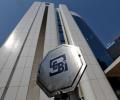
Capital markets regulator Sebi has penalised stock exchanges -- BSE and NSE -- for "laxity" on their part in detecting misuse of clients' securities worth Rs 2,300 crore by Karvy Stock Broking Ltd (KSBL). In two separate orders, the Securities and Exchange Board of India (Sebi) has imposed a fine of Rs 3 crore on BSE and Rs 2 crore on NSE. The matter relates to KSBL misutilising client securities worth Rs 2,300 crore, belonging to more than 95,000 clients, by pledging them from just one demat account. The funds raised against the pledge were used by KSBL for itself and its group entities.

Open Network Digital Commerce (ONDC) has expanded its pilot to 15 more cities. This comes at a time when it plans to begin operations next month. Snapdeal has also signed the onboarding agreement with the network and will debut on it next month. On Monday, ONDC expanded to Noida, Faridabad, Lucknow, Bijnor, Bhopal, Chhindwara, Kolkata, Pune, Chennai, Kannur, Thrissur, Udipi, Kanchipura, Pollachi, Mannar and Ramnathpuram.
 © 2026 Rediff.com - Investor Information - Advertise with us - Disclaimer - Privacy Policy - Sitemap - Feedback - About us - Terms of use - Grievances