
Sebi is working with other regulators to expand the CAS framework.

Even as non-life insurers reported muted premium growth in October, standalone health insurers saw a robust 38 per cent year-on-year (Y-o-Y) surge. This growth was driven by pent-up demand in the retail health insurance segment.
State-owned Life Insurance Corporation (LIC) is not keen on a composite license but it is looking to buy less than 50 per cent stake in a standalone health insurance company to enter the health insurance segment such that they have a say in the management of the company, without having to run the company, sources in the know said. "LIC doesn't need a composite licence. "Even if it is introduced, they will not opt for it.

Analysts say large issue sizes and high prices were key reasons for the poor response to IPOs of other public sector insurance entities. The high share price meant small investors did not foresee any listing gain

.jpg)
Pricing of products by hospitals was not regulated, Kumar said at an interaction organised by Merchants Chamber in Kolkata.
The State Commission concluded the insurer could not take advantage of a typographical error on the bank's part to repudiate a legitimate claim, points out Jehangir B Gai.

The four public sector general insurance companies -- New India Assurance, United India Insurance, Oriental Insurance, and National Insurance Company -- have lost 800 basis points (bps) in market share in last five years to their private counterparts, the data from the Insurance Regulatory and Development Authority (Irdai) revealed. In 2018-19, the four had a cumulative market share of 40.04 per cent, with New India Assurance having a market share of 14 per cent and United India Insurance with a market share of 9.63 per cent. But, gradually in the past five years, these state-backed firms have lost their market share to private sector players, due to the declining health of their business.

In a televised screening for Indian journalists on Wednesday, the Israeli Embassy in New Delhi held a screening that revealed horrific and chilling videos of October 7, the day when over 2,000 terrorists entered Israel from the Gaza Strip and carried out what is being considered the biggest terror attack against the Jewish nation.

Five state-run general insurance companies have a total exposure of Rs 347.64 crore, or 0.14 per cent of their total assets under management (AUM), in Adani group of companies, the finance ministry said on Monday. In a written reply to a question by Congress' Manish Tewari, Minister of State for Finance Bhagwat Karad said Life Insurance Corp (LIC) held Rs 35,917.31 crore in debt and equity of Adani group of companies as on December 31, 2022. This is 0.97 per cent of its total assets under management (AUM) of Rs 41.66 trillion.
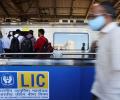
Life Insurance Corporation (LIC) on Monday said it has an exposure of Rs 36,474.78 crore to Adani group's debt and equity, and the amount is less than one per cent of the national insurer's total investments.

Sanjib Jha, CEO, Coverfox Insurance Broking answers your health insurance related queries.

Much of the tardy reaction to competition is the result of LIC's legacy.

The government has not set up any committee to probe allegations a US short seller labelled against the Adani Group, but stock market regulator SEBI is investigating market allegations against the group, the Lok Sabha was informed on Monday. A separate investigation into imports of Indonesian coal by the conglomerate hasn't reached finality, Minister of State for Finance Pankaj Chaudhary said. Lok Sabha saw several questions being put by MPs to the government on the Adani issue, which were replied through written responses by the minister.

Accompanied by her husband Hugh O'Leary and two daughters, Britain's shortest-serving Prime Minister ended her tenure by trying to strike an optimistic tone as she said that brighter days lie ahead.

The session will commence with the maiden address of President Droupadi Murmu to the joint sitting of both Houses of Parliament. The address essentially highlights the government's achievements and policy priorities.

Sanjib Jha, CEO, Coverfox Insurance Broking, answers your health and auto insurance related queries.

Sanjib Jha, CEO, Coverfox Insurance Broking, answers your health and auto insurance related queries.
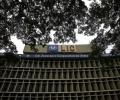
The IPO-bound national insurer LIC is not only the largest holder of government debt -- owning 19 per cent of the G-secs -- but also the single largest owner of equities, the largest fund manger as well as holder of household savings, dwarfing even SBI deposits, as per a report. Holding 17 per cent of the over Rs 80.7 lakh crore dated government securities, maturing by 2061, the Reserve Bank is the second largest holder of government debt, while led by public sector banks, commercial banks collectively own around 40 percent. Other insurers cumulatively own only 5 per cent.

According to the third batch of supplementary demands for grants tabled in the Lok Sabha, approval is being sought for gross additional expenditure of over Rs 1.58 lakh crore.

'The plan is to secure nod of the Union Cabinet and other relevant regulatory approvals within the next three months,' a senior finance ministry official said, requesting anonymity.

Multiple reasons accounted for the losses, including manpower crunch and lack of clarity on the merger of National, United and Oriental, reports Namrata Acharya.
The Rs 12,450 crore capital infusion will enable the three public sector general insurance companies to improve their financial and solvency position, meet the insurance needs of the economy, absorb changes and enhance the capacity to raise resources and improve risk management.

The Union Cabinet has approved amendments to the General Insurance Business (Nationalisation) Act, paving the way for privatisation of government-owned insurers. The amendments, approved by Cabinet, will remove the clause for the Centre to hold at least 51 per cent in public sector insurance companies at any given time. It will also have an enabling provision for the transfer of management control from the government to the potential buyer of the public sector insurance company. The finance ministry will move amendments to the insurance Act in the ongoing Parliament session.

Employees of public sector general insurance (PSGI) companies are observing nationwide one-day strike on Wednesday to protest against intended privatisation of state-owned insurers. The Joint Front of Trade Unions in PSGI companies met on Monday and decided to protest against the decision of the government to privatise PSGI companies. The unions have given a call for one-day strike against the passage of the General Insurance Business (Nationalisation) Amendment Bill 2021 in the Lok Sabha, General Insurance Employees All India Association general secretary K Govindan said. Employees of all four PSGI companies are participating in the day-long strike, he said.
Rakesh Kaul, CDO, Edelweiss General Insurance, answers your health insurance queries.
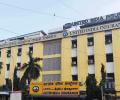
The NITI Aayog has recommended privatisation of state-owned insurer United India Insurance Company as the government aims to move ahead with its new public sector enterprise (PSE) policy for Atmanirbhar Bharat. The policy think tank has suggested that the public sector insurer be considered for privatisation in the banking, insurance and financial services sector, which has been classified as 'strategic' in the PSE policy, said an official. The policy proposes the "bare minimum" presence of government-owned companies in strategic sectors, and privatisation, merger or closure of remaining public sector undertakings (PSUs).

The Supreme Court on Wednesday directed the National Disaster Management Authority (NDMA) to issue fresh guidelines for providing minimum standards of financial help to families of those who lost their lives to COVID-19.

This will help expand the distribution channels, said Subhash Chandra Khuntia, chairman of the insurance regulatory and development authority of India.

Modi, 48, is currently living in a three-bedroom flat occupying half of a floor of the landmark Centre Point tower block, where rent is estimated to cost 17,000 (Rs 15 lakh) a month, The Telegraph reported.

Roopam Asthana, CEO and whole-time director, Liberty General Insurance Ltd, will answer your queries on HEALTH insurance and AUTO insurance.

There are four public sector general insurance companies.
The change in policy for the three companies, from listing to merger, shows the level of discomfort within the government about their ability to take on the expanded load for insurance coverage with their current financial strength, including the massive premium and claim settlement cover under the proposed universal health coverage plan announced in Budget 2018.

While the government has infused huge capital into PSBs, the same has largely been used to mitigate losses and has failed to contribute meaningfully to credit growth.

Since no insurance companies share data on their claims with each other, the finance ministry and Irdai suspect that a lot of the resultant claims are duplicates.

Friday's hearing is expected to be presided over by Chief Magistrate Emma Arbuthnot, the same judge who had ordered the extradition of former Kingfisher Airlines boss Vijay Mallya last December.

The finance ministry has asked state-run general insurers to increase premiums on health insurance, motor and other policies, and refrain from undercutting each other to get new business.

Besides the passports, Modi also possesses multiple residency cards, some of them expired, but covering countries/regions such as the UAE, Singapore and Hong Kong.

Rates fixed by New India Assurance, Oriental Insurance, United India Insurance and National Insurance after long discussions have been agreed to by the corporate chains

Presumably hurt on their balance sheets by the allegedly inflated bills for medical costs of people covered by cashless mediclaim facilities, these insurers have pruned the list of hospitals in four large cities for providing this facility with effect from this month.
 © 2026 Rediff.com - Investor Information - Advertise with us - Disclaimer - Privacy Policy - Sitemap - Feedback - About us - Terms of use - Grievances