
The government will formulate a strategy to make India self-reliant in edible oils by boosting domestic output of oilseeds and launch a comprehensive programme to support dairy farmers, Finance Minister Nirmala Sitharaman announced on Thursday. India imports a large quantity of edible oils to meet the domestic demand. During the 2022-23 marketing year (November-October), the country imported nearly 165 lakh tonnes of cooking oils, valuing a whopping Rs 1.38 lakh crore.

'As far as contract farming is concerned, we already have a model Act and states will be encouraged to adopt them.'
The high-level panel also asked the government to work towards re-orienting subsidies in a targeted manner from the crop sector to the non-crop sector and redesign the electronic National Agriculture Market.
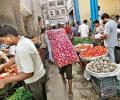
The agriculture ministry, in the last few weeks, issued guidelines and letters to states to ensure agriculture and food products reach consumers in a timely manner, while farmers don't have to come to the mandis to sell them.
Bharat Krishak Samaj demanded that the Pradhan Mantri Fasal Bima Yojana should be replaced with a new crop insurance and compensation scheme.

NITI Aayog has been working on an action plan to relieve rural distress and energise the agricultural sector
In April, RBI had projected retail inflation to be around 5 per cent.
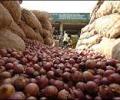
Country's onion output stood at 175.11 lakh tonnes in the crop year 2011-12, while in the year 2012-13 production is estimated at 166.55 lakh tonnes (provisional), Agriculture Minister Sharad Pawar said in a written reply in the Lok Sabha.
The government also proposed promoting 'one product one district' for better marketing and export of horticulture crops. It also called on states for early implementation of three key central model laws on land leasing, agriculture produce and livestock marketing and contract farming.

Advisory in this regard was issued by the Gujarat government three days before Prime Minister Narendra Modi announced demonetisation of Rs 500 and Rs 1000 notes.

The formula for success of farm economy is very simple -- farmers should be able to produce more from the same piece of land at reduced cost while minimising risk and be connected to market to get higher realisation for their produce, points out Siraj Chaudhry.

Endorsing Prime Minister Narendra Modi's vision of India outlined in his address to Parliament, India Inc said the efforts to improve farm productivity, rein in price rise and impart skills to youth will transform the nation in the days to come.

Reaching out to different sections of society, including farmers, Prime Minister Narendra Modi has said the well-being of 'annadaata' is a priority for the government

Agriculture and processed food exports dropped to a five-year low of $24 billion in 2015-16.
Critics argue that much more could have been done and that the government was slow to react to many events.

The Agricultural Produce Marketing Committee Act of a state regulates the purchase of agricultural products, such as cereals, pulses, fruits and vegetables for that region. It hobbles farmers, imposing multiple levies on produce and disallows direct sales to private companies.
The Budget has stuck to annual increases in agri credit targets.

Farmers have been availing crop loans upto Rs 300,000 at 7%.
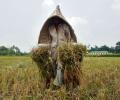
The focus is likely to be on consolidation and improvement of existing rural-centric programmes to ensure their completion ahead of the next general elections in 2019, rather than announcement of new schemes. Sanjeeb Mukherjee and Arup Roychoudhury report.

Major focus will be on adequately funding existing schemes to ensure their timely completion before the next General Elections.

Several speakers noted that Budget carried the weight of expectations.

Rajan retained the short-term lending rate at 6.5 and the cash reserve requirement of banks at 4 per cent.

'The policy is to consolidate farming into the hands of a few and to take away the food security of the country.' 'Once food is in the hands of 15 chosen corporate houses, you will get food, but at a price that they determine.'

Younger party leaders are livid with the Murli Manohar Joshi-headed manifesto drafting committee for not taking their suggestions, reports Archis Mohan.

'In the final analysis, all Budgets everywhere are like the schemes hatched by A A Milne's lovable Winnie-the-Pooh.' 'They may be well-intended, but often go awry.' 'Although Pooh and his friends agree that he 'has very little brain', he is occasionally acknowledged to have a clever idea, usually driven by common sense.' 'This Budget at a first glance does not appear to belong to that latter category,' says economist Shreekant Sambrani.

From farmers to cement, steel, logistics, transportation and automobiles, the back-end is struggling to get going due to the liquidity crisis.

Assessing the shape of the Indian economy just a couple of days ahead of the Union Budget for 2016-17, Saugata Bhatacharya, senior vice president and chief economist, Axis Bank, speaks about his budget wishlist and suggests measures that can help finance minister Arun Jaitley achieve the targeted fiscal deficit of 3.5 per cent of India's gross domestic product.

Contentious issues such as the construction of a Ram Temple in Ayodhya, abrogation of Art 370 giving special status to Jammu and Kashmir and enactment of Uniform Civil Code have been included in the Bharatiya Janata Party's election manifesto with the party making promises on them.

'India could become the newest Asian tiger under Modi's dynamic leadership. Modi could become the Nehru of the 21st century, and re-establish a new Tryst with Destiny, by stating once and for all that Mera Bharat Mahaan is and will always be a truly secular and inclusive democracy in the best spirit of Bharatiya-tva,' says Ram Kelkar, offering an NRI view of the Modi triumph.

Indian economy about to take-off
 © 2026 Rediff.com - Advertise with us - Disclaimer - Privacy Policy - Sitemap - Feedback - About us - Terms of use - Grievances