The policy unveiled by the home ministry is based on seven key pillars to counter the terror threats emanating from India or abroad -- prevention, responses, aggregating internal capacities, human rights and "Rule of Law"-based processes.

Union Home Minister Amit Shah emphasizes the need for a unified anti-terrorism structure and a strong anti-terrorism grid across India to effectively counter terror attacks. He also announced a new plan to combat organized crime.

He discussed with the chiefs of Intelligence Bureau, Research and Analysis Wing and Military Intelligence and other senior officials the modalities of the MAC related to the functions, powers and duties, which the MAC, established in the Intelligence Bureau, will now takeup.

The UN Security Council Resolution 2309 calls governments to meet their responsibility to keep citizens secure while travelling by air.
Will the much-hyped National Counter Terrorism Centre end up being just another agency to create jobs? Vicky Nanjappa tries to find some answers
Home Minister P Chidambaram indicated that the National Counter Terrorism Centre of India, the umbrella body which would deal with terror threats within the country is expected to get the cabinet nod within the next 15 days.
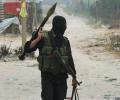
The government on Wednesday denied receiving any threat from Iraqi insurgent group Islamic State of Iraq and Syria.

Intelligence sharing is fine, but India needs to protect personal privacy.
The available information further indicates a declining trend of violence in Jammu & Kashmir and North Eastern States
'The government must covertly eliminate the leaders of terrorist organisations abroad so as to eliminate the problem at its roots,' recommends Brigadier Gurmeet Kanwal (retd).

The Corps Commander, who heads the army in Kashmir, was replying to a question about the possibility of the Islamic State forging an alliance with the militant outfits like Lashkar-e-Tayiba and Jaish-e-Mohammad for expanding its activities to the valley.
 © 2026 Rediff.com - Investor Information - Advertise with us - Disclaimer - Privacy Policy - Sitemap - Feedback - About us - Terms of use - Grievances