
The finance ministry on Thursday raised concerns over the possible impact of El Nio conditions on India this year, saying if recent forecasts came true, the country could see lower agricultural output and higher inflation. "Some meteorological agencies predict the return of El Nio conditions in India this year. "If these predictions are accurate, then monsoon rains could be deficient, leading to lower agricultural output and higher prices," the ministry said in its monthly economic review.
Reserve Bank will have to constantly re-assess the "dynamic and fast changing situation" and tailor its actions accordingly, Governor Shaktikanta Das said during the recent meeting of the Monetary Policy Committee (MPC) which decided to maintain status quo on key interest rate. According to the minutes of the six-member MPC meet released by Reserve Bank of India (RBI) on Friday, the five other members had also expressed a similar opinion amid the ongoing Russia-Ukraine conflict's impact on the global and domestic economies. MPC, which held its meeting from April 6-8, unanimously decided to keep the borrowing costs unchanged at a record low for the 11th time in a row in a bid to continue supporting economic growth despite inflation edging higher in the aftermath of Russia-Ukraine conflict.
Higher for longer' may be the narrative in the developed markets, but interest rates might not stay high for very long in India, with a section of the market expecting rate cuts to begin this year. The six-member Monetary Policy Committee of Reserve Bank of India (RBI) decided to keep interest rates unchanged at 6.5 per cent in the April review - after hiking the policy repo rate in six previous meetings. RBI Governor Shaktikanta Das emphasised that the pause was only for the April policy and that the central bank was ready to act if the situation demanded.

The Reserve Bank's rate setting panel on Thursday met to finalise a report for the government on why it failed to keep retail inflation below the target of 6 per cent for three consecutive quarters since January this year, said sources. The report will be presented to the government as per the Reserve Bank of India Act, they added. The six-member Monetary Policy Committee (MPC) is headed by Governor Shaktikanta Das.

The Union government could target a fiscal deficit of 5.8-6 per cent of nominal GDP for 2023-24, and it should continue its capital expenditure push and look to simplify the personal income tax regime, economists recommended Finance Minister Nirmala Sitharaman and her team during their pre-Budget interaction on Monday. Starting last week, Sitharaman had eight pre-Budget consultations this time. More than 110 invitees representing seven stakeholder groups participated in these meetings, the finance ministry said in a statement. The stakeholder groups included representatives and experts from agriculture and agro-processing industry; industry, infrastructure & climate change; financial sector and capital markets; services and trade; social sector; trade unions and labour organisations; and economists.

Host of lenders led by State Bank of India (SBI) and Bank of India hiked lending rates after the Reserve Bank raised the benchmark interest rate to tame inflation. The hike has been effected in their benchmark rate linked to the repo rate, which increased by half a percentage point to 5.9 per cent. Even financial institutions like mortgage lender HDFC Ltd hiked the lending rate by 50 basis points effective Saturday.

The Reserve Bank of India on Friday decided to keep benchmark interest rate unchanged at 4 per cent but maintained an accommodative stance even as the economy is showing signs of recovery after the second Covid wave.

Ahead of the 2023-24 Union Budget, the thinking at the top level of the central government is clear: Gross domestic product (GDP) growth of 6-6.5 per cent is a comfortable enough target for FY24 and the focus should be on fiscal consolidation to ensure that the sovereign cost of borrowing does not become prohibitively expensive in a high-interest rate environment, according to people in the know. Those aware of deliberations between the Prime Minister's Office (PMO) and the Ministry of Finance said while the Budget would look to strike a balance between infrastructure investment and welfare schemes, it is unlikely to be populist, though it will be the last full-year Budget before the 2024 Lok Sabha election. Incidentally, 6-6.5 per cent GDP growth is what the upcoming 2022-23 Economic Survey is expected to project for FY24.

Instead of only focusing on the tenure for which the best interest rate is available, investors should also focus on their own investment horizon.

'The rising cost of construction, the cost of doing business, high compliance, and inflation/interest rates going up have already reduced returns to single digits.'
The Reserve Bank of India (RBI) on Wednesday raised the benchmark lending rate by 35 basis points to 6.25 per cent in a bid to tame inflation, which has remained above its tolerance level for the past 11 months. With the latest hike, the repo rate or the short-term lending rate at which banks borrow from the central bank now has crossed 6 per cent. This is the fifth consecutive rate hike after a 40 basis points increase in May and 50 basis points hike each in June, August and September.
Monetary Policy Committee keeps key interest rate (repo) unchanged at 4% for 7th consecutive time; Consequently, reverse repo rate too remains unchanged at 3.35%; Bank rate also remains same at 4.25%;
The Reserve Bank of India's rate-setting panel on Wednesday began its three-day deliberations on the next bi-monthly monetary policy amid expectations of at least a 35-basis-point hike in the interest rate to check high inflation. If raised, it will be the third consecutive hike in the repo rate -- the short-term rate at which the RBI lends money to banks. The central bank has already announced to gradually withdraw its accommodative monetary policy stance.
The Reserve Bank of India (RBI) on Friday kept key repo rate unchanged at 4 per cent in view of rising inflation and faint signs of economic growth amid gradual lifting of coronavirus (COVID-19) lockdown. The central bank's newly-constituted monetary policy committee (MPC) began its three-day meeting on October 7 and maintained the stance as accommodative. It also kept the reverse repo rate unchanged at 3.35 per cent.

The government on Monday appointed three eminent economists Ashima Goyal, Jayanth R Varma and Shankanka Bhide as members of the rate-setting Monetary Policy Committee of the RBI
The Reserve Bank on Wednesday increased the benchmark lending rate by 40 basis points (bps) to 4.40 per cent in a bid to contain inflation, which has remained stubbornly above the target zone of 6 per cent for the last three months. The decision follows an unscheduled meeting of the Monetary Policy Committee (MPC), with all six members unanimously voting for a rate hike while maintaining the accommodative stance. While the inflation has remained above the targetted 6 per cent since January, RBI Governor Shaktikanta Das said the inflation print in April is also likely to be high.

India's consumer price index (CPI)-based inflation could ease in the coming months thanks to the arrival of kharif crops, lower international commodity prices, and a pass through of lower input costs to consumers, the finance ministry said in its Monthly Economic Review (MER) for October, which was released on Thursday. The MER, however, warned that the global macroeconomic situation remained precarious and a recession in many advanced economies would impact India's exports. "Easing international commodity prices and new Kharif arrival are set to dampen inflationary pressures in the coming months.

The MPC headed by RBI Governor Urjit Patel said that the recent excise duty cut by the government on petrol and diesel will help contain inflation.

Retail inflation fell to a 15-month low of 5.66 per cent in March, mainly due to a decline in food prices, government data showed on Wednesday. The inflation figure in March is within the RBI's comfort zone as it is below 6 per cent. The retail inflation based on Consumer Price Index (CPI) was 6.44 per cent in February 2023 and 6.95 per cent in the year-ago period.
Amid prolonged uncertainty, continued policy support will be crucial for sustained economic recovery from the coronavirus pandemic, Reserve Bank Governor Shaktikanta Das said at the recent meeting of the Monetary Policy Committee. "In this period of prolonged uncertainty, it would be wise to remain agile and respond in a gradual, calibrated and well telegraphed manner to the emerging challenges," opined Das, according to the minutes of the MPC meeting released by the Reserve Bank on Thursday. Observing that economic recovery from the pandemic remains incomplete and uneven, he said, "continued support from various policies remains crucial for a sustained recovery." The governor said the renewed surge in international crude oil prices, however, requires close monitoring.

After raising interest rate by a cumulative 250 basis points in 11 months, the Reserve Bank of India (RBI) on Thursday unexpectedly kept benchmark rate unchanged as global banking woes added uncertainty to the economic outlook. Five out of six members of MPC voted to remain focused on the withdrawal of accommodation to ensure inflation aligns with target while focusing on growth, RBI Governor Shaktikanta Das said on Thursday. The Monetary Policy Committee of the central bank decided to take a pause after a rate hike seen in previous six consecutive policies.
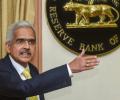
The Reserve Bank of India on Wednesday kept the benchmark interest rate unchanged at 4 per cent and decided to continue with its accommodative stance against the backdrop of concerns over the emergence of the new coronavirus variant Omicron.

The members of the Reserve Bank of India's (RBI's) Monetary Policy Committee (MPC) voiced different views on the interest rate and stance, with two of them indicating they may not vote for further rate increases even if Governor Shaktikanta Das and Deputy Governor Michael Patra maintain bringing down inflation as their primary objective, the minutes of the December review of the monetary policy showed. The other two members remained neutral. The MPC increased the policy repo rate by 35 basis points (bps) - which was lower than the previous three hikes of 50 bps. The repo rate has been hiked by 225 bps to 6.25 per cent since May this year.

New dates to be announced shortly, the RBI said.

The RBI has doubled the limit of maximum balance that an individual customer can hold with payments banks to Rs 2 lakh from Rs 1 lakh earlier with immediate effect to expand the ability of such lenders to cater to the needs of MSMEs and other businesses.

For all its claims to economic glory, the majority of India's population lives vulnerable lives, a situation that has only worsened over the past 15 years, to the extent that the government now fears to release economic data or even conduct a proper Census, notes Rathin Roy.

The government on Monday ruled out making public the RBI report detailing the reasons why the central bank could not keep inflation within the targeted 6 per cent upper limit for the three consecutive quarters. "Yes sir, RBI has furnished a report to the central government, as mandated under Section 45ZN of the RBI Act, 1934 and Regulation 7 of RBI Monetary Policy Committee and Monetary Policy process Regulations, 2016," minister of state for finance Pankaj Chaudhary said in a written reply. The said provisions of the RBI Act, 1934, and regulations therein does not provide for making the report public, he said.

Fitch Ratings on Tuesday retained India's economic growth forecast at 7 per cent for the current fiscal, but cut projections for the next two financial years saying the country is not impervious to global developments. In its December edition of the Global Economic Outlook, Fitch projected India's GDP to grow at 7 per cent in the current fiscal, at a slower rate of 6.2 per cent in 2023-24 and at 6.9 per cent in 2024-25. In September, Fitch projected 7 per cent growth for the current fiscal, followed by 6.7 per cent in 2023-24 and 7.1 per cent growth in 2024-25.

'The actions of Indian monetary authorities will depend on how quickly they want the inflation to come down to 4 per cent.'

The Reserve Bank on Wednesday hiked key benchmark policy rate by 25 basis points to 6.5 per cent, citing sticky core inflation. This is the sixth time interest rate has been hiked by the Reserve Bank of India (RBI) since May last year, taking the total quantum of hike to 250 basis points. Announcing the bi-monthly monetary policy, RBI Governor Shaktikanta Das said the Monetary Policy Committee (MPC) by a majority decided to raise the policy repo rate by 25 basis points and keep a 'strong vigil' on inflation outlook.

Tech Mahindra was the top gainer in the Sensex pack, rising over 3 per cent, followed by Dr Reddy's, PowerGrid, Kotak Bank, Sun Pharma, ICICI Bank and M&M. On the other hand, IndusInd Bank, Asian Paints, Maruti and Bharti Airtel were among the laggards.

The Indian services sector activity fell to a six-month low in September, as new business inflows rose at the slowest rates since March, amid inflationary pressures and competitive conditions, a monthly survey said. The seasonally adjusted S&P Global India Services PMI Business Activity Index fell to 54.3 in September, from 57.2 in August, highlighting the weakest rate of expansion since March. For the fourteenth straight month, the services sector witnessed an expansion in output. In Purchasing Managers' Index (PMI) parlance, a print above 50 means expansion, while a score below 50 denotes contraction.
India's services sector activity witnessed a sharp upturn in August on the back of stronger gains in new business, ongoing improvements in demand conditions and job creation, a monthly survey said on Monday. The seasonally adjusted S&P Global India Services PMI Business Activity Index rose from July's four-month low of 55.5 to 57.2 in August, amid a quicker upturn in business activity and the sharpest rise in employment for over 14 years. For the thirteenth straight month, the services sector witnessed an expansion in output.
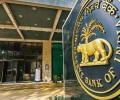
The Reserve Bank of India's rate-setting panel on Wednesday started discussions to firm up the next bi-monthly monetary policy amid expectations that it might retain status quo on interest rate but change its monetary policy stance amid rising inflation on account of geopolitical developments.

Amid fears of a third wave of coronavirus pandemic and hardening of retail inflation, the Reserve Bank is likely to maintain status quo on interest rate and watch the developing macroeconomic situation for some more time before taking any decisive action on monetary policy. The RBI is scheduled to announce its bi-monthly monetary policy review on August 6 at the end of the three-day meeting -- August 4-6 -- of the Monetary Policy Committee (MPC). The RBI Governor-headed six-member MPC decides on the key policy rates.
The Reserve Bank of India on Wednesday expectedly left interest rates unchanged and maintained an accommodative stance as the economy faces a renewed threat to growth due to the resurgence of coronavirus cases.

Analysts at Barclays pitched for a 0.25 per cent cut to generate demand advising the central bank to throw caution to the wind.

HDFC Bank was the top loser in the Sensex pack, shedding over 3.5 per cent, followed by Bajaj Finance, L&T, HDFC, Bajaj Finserv, HDFC and Kotak Bank.
The Monetary Policy Committee (MPC) may go for a hike of up to 0.25 per cent in the reverse repo rate at which the RBI absorbs excess liquidity and leave the repo rate at which it lends, to narrow the policy rate corridor, a British brokerage said on Thursday. "Growth concerns amid spread of the Omicron variant and relatively benign inflation out-turns provide the RBI with enough room to maintain its growth-supportive monetary policies," analysts at Barclays said, ahead of the resolution announcement next week. The RBI will hike the reverse repo rate by 0.20-0.25 per cent, given its liquidity management actions, it said.

The sector seems set for a rally that may be somewhat temporary.
 © 2026 Rediff.com - Advertise with us - Disclaimer - Privacy Policy - Sitemap - Feedback - About us - Terms of use - Grievances