
The decision to add capacity comes at a time when most auto majors have been resorting to production cuts.

Maruti Suzuki, the market leader in the passenger car market in India is betting big on the A2 segment which is the biggest contributor to the overall passenger car sales in the country.
India's car market leader Maruti Suzuki India unveiled two concept models - sedan Ciaz and crossover SX4 S-Cross - as it looks to enhance its position in the bigger sedan segment going forward.

The company had set an annual production target of 250,000 for its Hansalpur plant in Gujarat.

The recent currency volatility - rupee's depreciation against international currencies - may have given heartburns to automakers that rely on imports or pay royalty to parent companies abroad. But for Maruti Suzuki India, favourable movement of the yen - the currency that matters the most - against the Indian rupee, has given it reasons to cheer. The yen's sharp fall against the rupee and the rupee's depreciation against the US dollar, which in turn will bump up export realisations, are set to give a margin boost to the maker of Baleno and Brezza, said analysts. The softening of commodity prices and slew of new SUV launches in the coming months will also aid margins, they said.

Experts attribute the high valuation of Indian auto makers to the faster growth in India compared to the rest of the world.

'Some buyers get carried away by festival offers and purchase higher variants or larger vehicles than they truly need, which impacts running cost and long-term affordability.'

In terms of volumes, sales were up by 19.6 per cent to 2,75,586 units compared 2,30,376 to the year-ago period.

Country's largest car-maker Maruti Suzuki India (MSI) on Saturday reported 10.3 per cent decline in total sales in January at 1,02,416 units as against 1,14,205 units in the same month last year.
Maruti Suzuki India (MSI) on Tuesday said it will not resume full-scale production at its Manesar plant till workers sign a 'good conduct bond', as demanded by the company to ensure there is no repeat of quality issues that have surfaced at the plant.

Hyundai, which is also toeing Maruti's lines, said special schemes are offered to engage the cab aggregators, including annual-maintenance-contract packages and extended warranty.

Lenders have become worried as some dealers were not using the money provided to them for car financing.
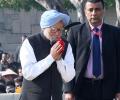
Singh's humility and grounded nature were highlighted in a heartfelt social media memoir by Uttar Pradesh Minister of State for Social Welfare (Independent Charge) Asim Arun.

Maruti Suzuki and Hyundai Motor India on Monday reported a dip in passenger vehicle dispatches to dealers in the domestic market last month as the companies tried to adjust vehicle inventory amid slowing demand. Maruti Suzuki India said it "calibrated supplies" to the dealers, aligning with the industry's retail sales projections amid India-Pakistan conflict and a dip in sales of entry-level cars.

Maruti Suzuki, Tata Motors, Mahindra & Mahindra, Hyundai and MG Motors are gearing up to introduce EVs in India.

Japan is expected to increase its investment target in India from the earlier 5 trillion yen ($34 billion) to almost 10 trillion yen.
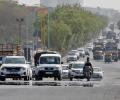
Domestic passenger vehicle wholesales were down 0.8 per cent at 3,44,656 units in May this year as compared to 3,47,492 units in the same month last year, Society of Indian Automobile Manufacturers said on Monday.

The proposed reforms in goods and services tax (GST) announced by the government last week, coupled with the eighth pay commission dole-out, is likely to push consumption-driven stocks - such as air conditioners (ACs), select automobiles, fast-moving consumer goods (FMCG), retail, and counters of quick-service restaurants (QSRs) - into higher orbit over the next few months, believe analysts.
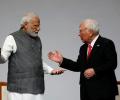
Osamu Suzuki, the man who took a risk and bet on India when no one else believed in having a viable automobile company in the country, has died at the age of 94, according to information shared by Japan's Suzuki Motor Corporation on Friday.

India's used car market, which has been growing steadily at 10-12 per cent over the last 2-3 years, is expected to reach $40 billion in FY26.

Maruti Suzuki India (MSIL) said on Thursday its operations are unaffected by the global rare earth magnet shortage, but added that the situation is "uncertain and evolving". The firm said it is exploring multiple solutions to maintain continuity in operations and will notify stakeholders in case of material impact.

'The reported deal between the European Union and China should mitigate it (shortage) for the medium to long term. Let's wait and watch how this plays out.'

Tesla needs to either sell the same models with reduced features to lower the cost for Indian market, or incur losses.

Passenger vehicle retail sales witnessed 3 per cent on-year decline in May with customers delaying purchases in several states due to India-Pakistan conflict and further softening of demand for entry-level models, dealers' body FADA said on Friday. The passenger vehicle registrations last month stood at 302,214 units, as compared to 311,908 units in May 2024.

Selected applicants will receive a monthly stipend of Rs 4,500 from the government and an additional Rs 500 from participating companies as a part of the Prime Minister Internship Scheme (PMIS) 2025.

Net sales, however, rose marginally to Rs 21,551.9 crore for the quarter under review

Do home prices really never fall? Ramalingam Kalirajan begs to differ.
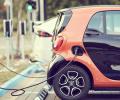
Despite the benefits of hybrid technology, a lack of government backing and few launches have kept the segment from gaining ground.
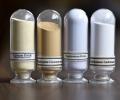
The automobile industry has sought government support in expediting approvals from the Chinese government for importing rare earth magnets used in various applications, including passenger cars. As per the industry sources, various domestic suppliers have already sought approval from the Chinese government through their local vendors in China.

Car purchases in India are largely limited to the top 12 per cent of households with an annual income exceeding Rs 12 lakh, while even small cars have become unaffordable for the remaining 88 per cent, said R C Bhargava, chairman of Maruti Suzuki India Limited (MSIL), on Friday. "How can you get high car sales growth if 88 per cent of the country are below the levels of income where they cannot afford these cars costing Rs 10 lakhs and above?

Global energy giant Shell has acquired Mumbai-based Raj Petro Specialities to deepen its foothold in the world's third biggest lubricants market in the world, a top company official said. Shell, which has already invested over $5 billion in India across the energy value chain -- from LNG import terminals and fuel stations to renewable energy and technology centres -- has acquired 100 per cent equity interest in Raj Petro Specialities Pvt Ltd from Germany's Brenntag Group.
The company said its cost reduction and localisation initiatives, growth in volumes and favourable foreign exchange helped improve the bottomline during the quarter.

Car sales in the quarter were up 3.9 per cent at 3,60,402 units, the company said, adding that the exports were at 27,009 units.
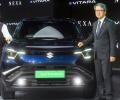
MSIL, which currently has a subscription service that allows customers to lease its petrol-run and strong hybrid vehicles on a flexible, long-term basis without ownership commitments, will introduce a leasing service as well.

Net sales of the company for the fiscal stood at Rs 48,605.53 crore.

Will you ditch Honda City or Hyundai Verna for Maruti's latest offering?

The country's biggest carmaker, Maruti Suzuki India, has raised concerns about the continuing slide in small car sales.

Net sales during the reported quarter rose to Rs 20,594.3 crore, up 14.4 per cent against the year-ago period.
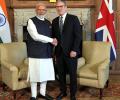
For UK automakers, market access to India will be limited by quantity caps and phased tariff cuts, especially on petrol, diesel and electric vehicles.
Siam argues that a 2040 ban could destabilise ongoing and future investments and threaten millions of jobs in the automotive value chain.
